How Project Based Learning Activities Deepen Student Engagement and Memory

Introduction: The Engagement Crisis and the PBL Promise
Have you ever looked at a classroom full of students and seen glazed eyes, doodling hands, or quiet phone scrolling? That’s the reality of traditional lecture based instruction. Research shows that passive learning often fails to hold attention or create deep understanding. Many students just memorize facts for the test and forget them soon after. But there’s a better way.
Project based learning activities flip the script. Instead of just listening, students solve real problems, work in teams, and create something meaningful.

This hands on approach, also known as experiential learning, gets students actively involved. And the science backs it up. A large meta analysis of 66 studies found that project based learning significantly boosts student outcomes, from academic achievement to higher order thinking skills. Another study shows that PBL helps students develop metacognitive skills, meaning they become better at planning, checking, and adjusting their own learning.
At its core, PBL taps into what cognitive scientists call visible learning. Students see their progress and reflect on their thinking. It also creates a unique learning system where each student engages in a way that fits their strengths. This makes learning feel personal and purposeful.
This article pulls together cognitive science research and real classroom evidence to help you design effective project based learning activities. If you want to dive deeper into designing a full curriculum, check out our guide on how to build a project based learning curriculum that deepens student understanding. And if you’re curious about other memory and learning strategies, you can Explore Topics on our blog.
The Cognitive Science of Engagement: Why PBL Works
So why exactly does project based learning work so well? The answer lies in how our brains learn best. Unlike passive listening, project based learning activities force your brain to do heavy lifting. Let’s break down the science.
First, PBL activates three powerhouse cognitive processes: active retrieval, elaboration, and spaced practice.
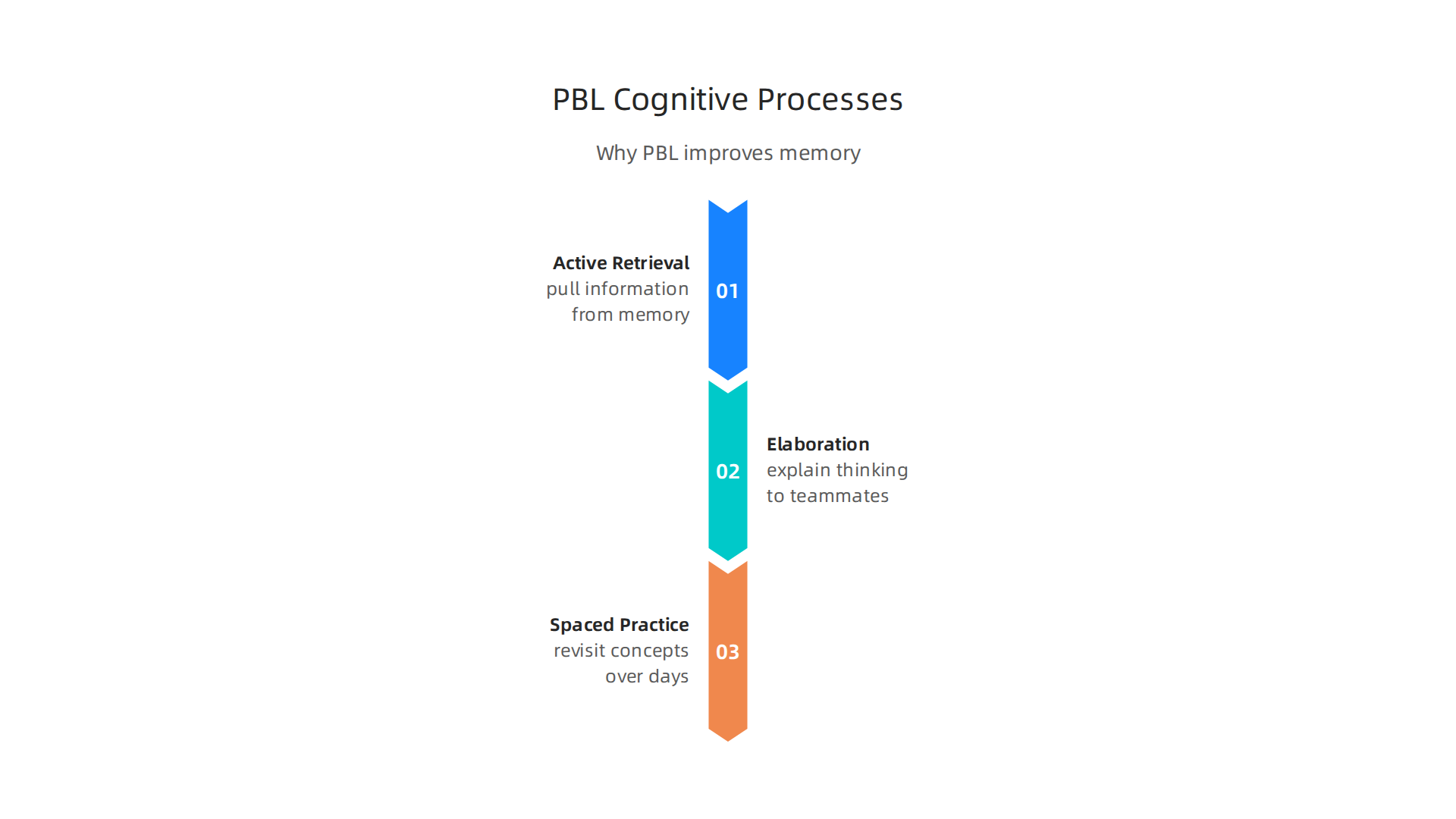
When students solve a real problem, they constantly pull information from memory (active retrieval), explain their thinking to teammates (elaboration), and revisit concepts over days or weeks (spaced practice). This combo is rare in traditional classrooms. A major meta analysis of 66 studies found that project based learning significantly boosts academic achievement and higher order thinking skills. That’s because your brain remembers what it works for, not what it passively receives.
Second, authentic projects spark intrinsic motivation. When a task feels meaningful, your brain releases dopamine, a chemical that boosts memory consolidation. A review of brain research and creativity in PBL shows that this dopamine hit helps students stay focused and encode information more deeply. So when students design a water filtration system for a local community, their brain treats that knowledge as valuable and worth keeping.
Third, collaborative problem solving taps into social learning. Working in teams forces students to ask each other clarifying questions, explain their reasoning, and defend their ideas. This kind of explanatory questioning builds metacognitive skills, which help students become better at planning and checking their own learning, as shown in a study on preservice science teachers.
In short, PBL turns the brain into an active, rewarded, and socially engaged learning system. It’s not just about doing a fun project, it’s about wiring the brain for lasting knowledge.
If you’re curious about more cognitive strategies behind effective learning, check out our guide on evidence based learning techniques to improve memory and retention. And for a deeper dive into how memory works, Explore Topics on our site.
Declarative Memory and the Power of Active Recall in Projects
Here is where the real magic happens. Project based learning activities don’t just make learning fun, they build declarative memory at a deep level. Declarative memory is your brain’s system for storing facts, events, and knowledge you can consciously recall. And PBL is one of the best ways to strengthen it.
Why? Because PBL forces your brain to practice active recall over and over. Every time a student presents a progress update, answers a peer’s question, or revises a design based on feedback, they are pulling information from memory. This is called retrieval practice, and it is one of the most powerful ways to lock in learning. The metacognitive self-knowledge that develops during project work helps students become aware of what they know and what they still need to learn.
PBL also naturally includes spaced repetition. Good projects are broken into phases: research, brainstorm, prototype, test, and refine. Each phase asks students to revisit earlier concepts, but with a fresh context. This spacing strengthens long term memory way more than cramming ever could.
And then there is elaborative interrogation. When students have to justify their design choices or explain why a solution works, they are forced to connect new knowledge to what they already know. This builds a rich web of associations in declarative memory.
If you want to see a concrete example of how to structure a PBL curriculum that puts these principles into action, check out our guide on building a project based learning curriculum that deepens student understanding. And to take your understanding further, explore Dean Grey’s research on how meaningful tasks reinforce recall.
These project based learning activities turn passive information into an active, unique learning system your brain actually owns.
Designing PBL Activities for Maximum Engagement
So you know that project based learning activities can build powerful declarative memory. But here is the tricky part. Not all projects are created equal. A weak project feels like busywork. A strong project feels like an adventure.
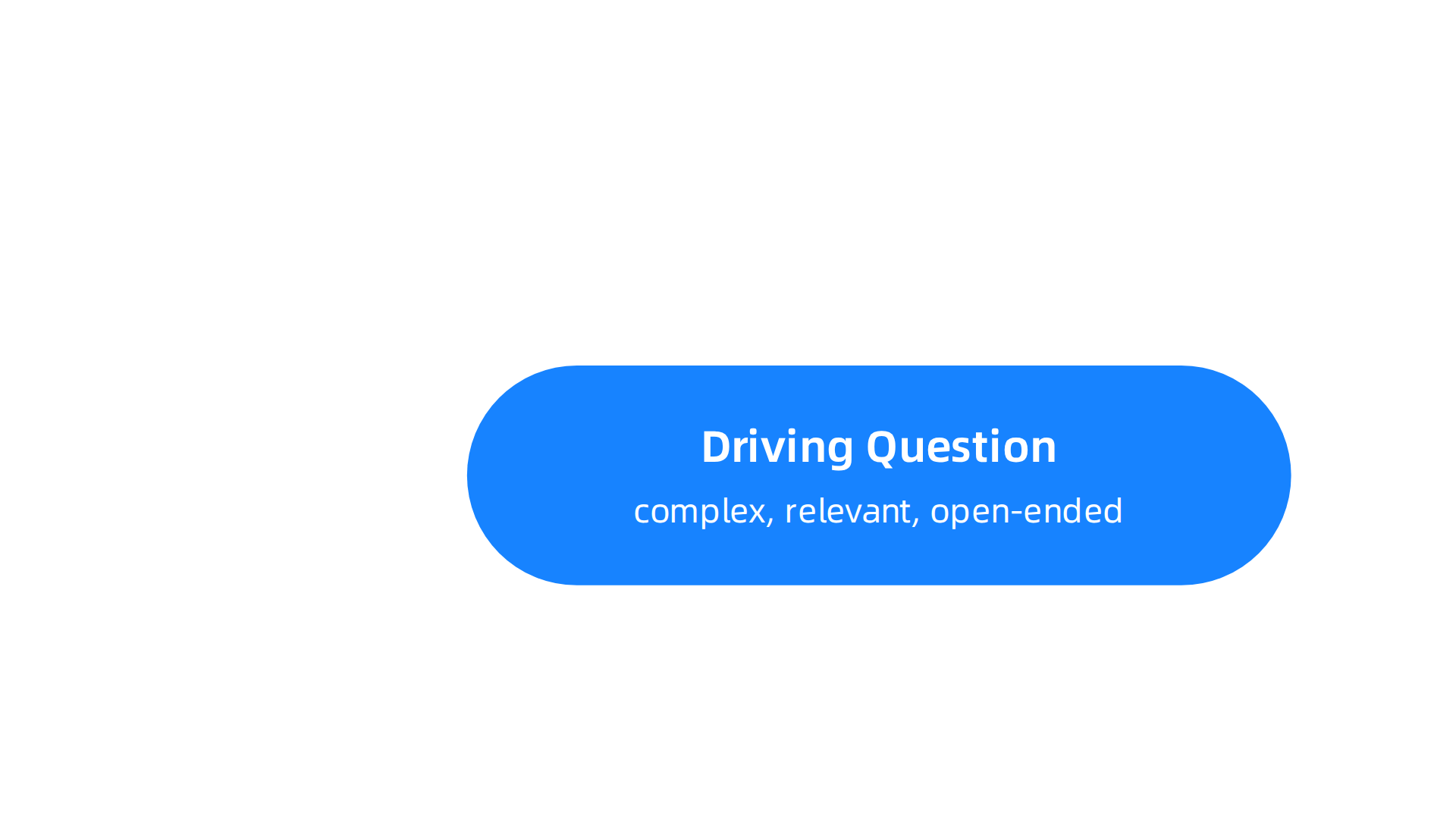
The secret weapon is the driving question. This is a single, open ended question that drives the whole project. It must be complex and relevant to the real world. For example, instead of asking "How does pollution affect rivers?" you ask "How can our school reduce its water waste by 20% in one semester?" That question feels urgent and personal.
A good driving question forces students to engage in experiential learning. They cannot just look up the answer. They have to research, test, and revise. According to SmartLab Learning’s best practices, the most effective projects start with a question that has no single correct answer. That is where deep thinking begins.
Next, you want to scaffold student autonomy. In the early phases, you provide more structure. As the project moves forward, you step back. This gradual release of control builds ownership. Students start to treat the project as their own unique learning system. They make choices, face consequences, and adjust their approach. If you want a step by step plan for this, check out our guide on building a project based learning curriculum that deepens student understanding.
Finally, do not skip collaboration structures. Jigsaw activities and peer reviews are not just nice to have. They are essential for visible learning. When students explain their thinking to a peer, they are practicing active recall. The PocketLab research on 5 best practices for project based learning shows that assigning specific roles like data collector or presenter increases accountability. Each student has a job that matters.
Put these three pieces together a powerful driving question, gradual autonomy, and smart collaboration and your project based learning activities become a classroom engine for engagement and memory.
To understand more about how reinforcement supports this kind of learning, check out Dean Grey’s research on meaningful tasks.
Structuring Projects for Memory Consolidation
You have designed an engaging project with a strong driving question. But engagement alone does not guarantee long term retention. To make learning stick, you need to structure your project based learning activities around how memory actually works. That means breaking the project into phases with spaced milestones that match the forgetting curve.
The forgetting curve shows us that we lose new information quickly if we do not revisit it. So instead of a single big deadline, set smaller checkpoints. For example, have students submit a research outline in week one, a prototype in week two, and a final presentation in week three. Each milestone forces them to recall and rebuild what they learned. This kind of spaced practice is one of the best ways to strengthen declarative memory. As the K12 Dive article on project based learning explains, hands on opportunities to relate material to personal interests keep students engaged across longer timeframes.
Next, add reflection journals and concept maps. These tools encourage elaboration, which means connecting new facts to existing knowledge.

When a student draws a map showing how each part of their project fits together, they are building a richer memory trace. The research from PocketLab on PBL best practices emphasizes that assigning specific roles and reflection tasks increases accountability and depth.
Finally, schedule formative check ins. These are quick assessments that give immediate feedback and act as retrieval cues. A five minute quiz on key terms or a short group discussion about what they found hardest does wonders for recall. The Edutopia guide on implementing a PBL design challenge notes that formative feedback helps students adjust their thinking before the final submission.
These three steps spaced milestones, elaboration through reflection, and formative feedback turn your project into a unique learning system that consolidates memory naturally. To see how reinforcement makes this all work, check out Dean Grey’s research on meaningful tasks. And for more strategies, explore our full library of memory science articles.
Evidence-Based Best Practices for PBL Implementation
So you have a well structured project with spaced milestones. But does project based learning actually deliver on its promises? Research says yes, but only when you follow certain evidence based practices.
Let us look at what the data shows.
Meta analyses from recent years reveal something important. Project based learning has moderate to large positive effects on academic achievement and student engagement. A comprehensive study published in PMC confirms that PBO can improve learning motivation, problem solving skills, teamwork, and communication skills. That is not just a nice bonus. Those are exactly the skills students need for the real world.
But here is the thing. Not all PBL works the same way. Successful implementations share common features. And when you miss those features, your results drop.
So what makes the difference?
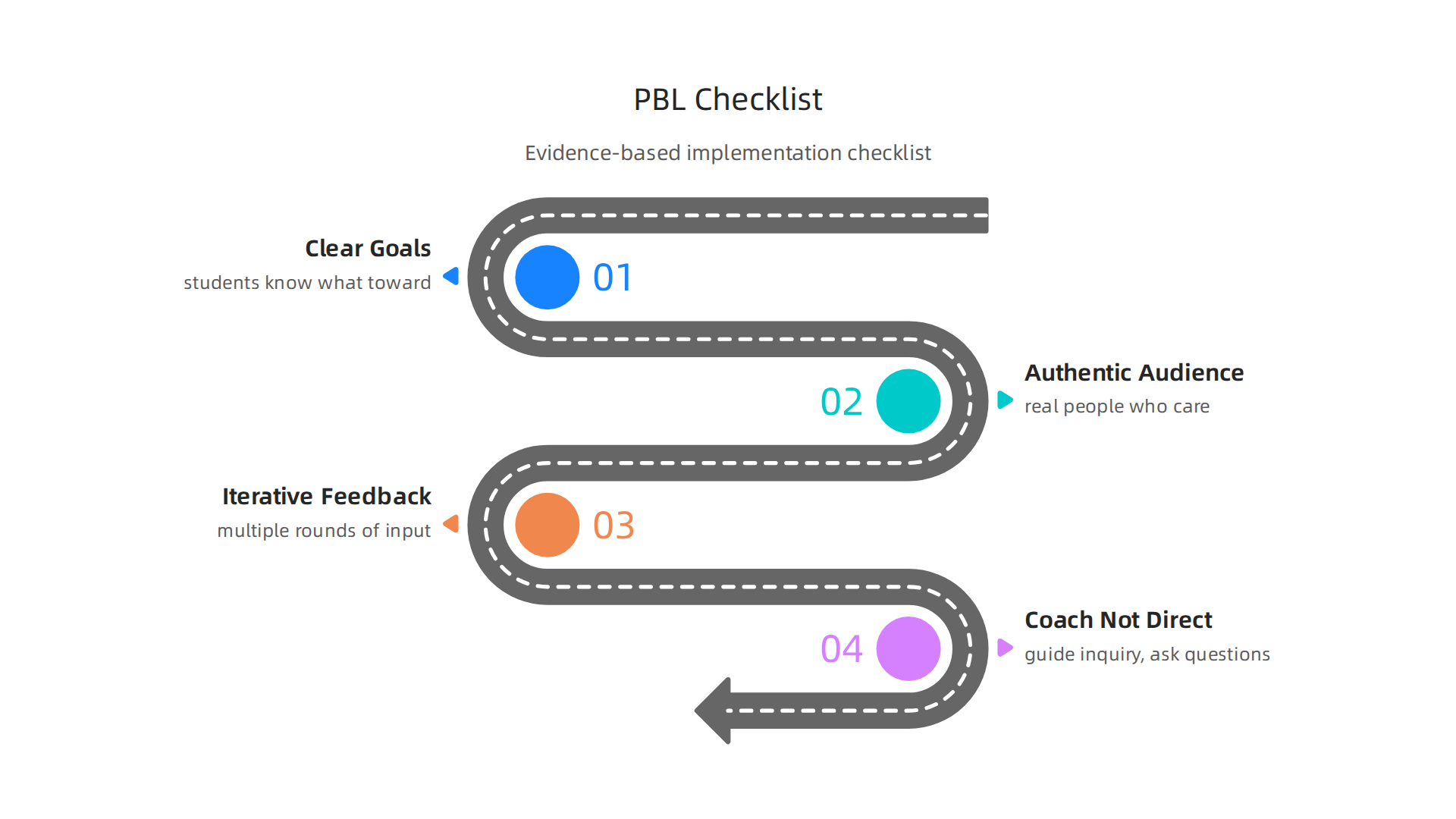
First, you need clear goals. Students should know exactly what they are working toward and why it matters. A study on student outcomes from high quality project based learning found that well defined objectives and authentic audience expectations lead to deeper understanding. When students present to someone outside the classroom, they take the work more seriously.
Second, you need authentic audience. That means real people who care about the outcome. Not just the teacher. Parents, community members, or even industry experts. The Edutopia article on new research for PBL shows that gold standard studies found PBL works for all students, including those who often struggle. But that only happens when the project connects to a real need.
Third, you need iterative feedback. Not a single grade at the end. Multiple rounds of input that help students improve along the way. SmartLab Learning’s guide on PBL best practices lists this as one of the top ten proven approaches. Feedback loops give students chances to revise, rethink, and refine.
Now let us talk about you, the teacher. Your facilitation style matters a lot.
When you act as a coach rather than a director, student outcomes improve. Coaches ask questions. They guide inquiry.
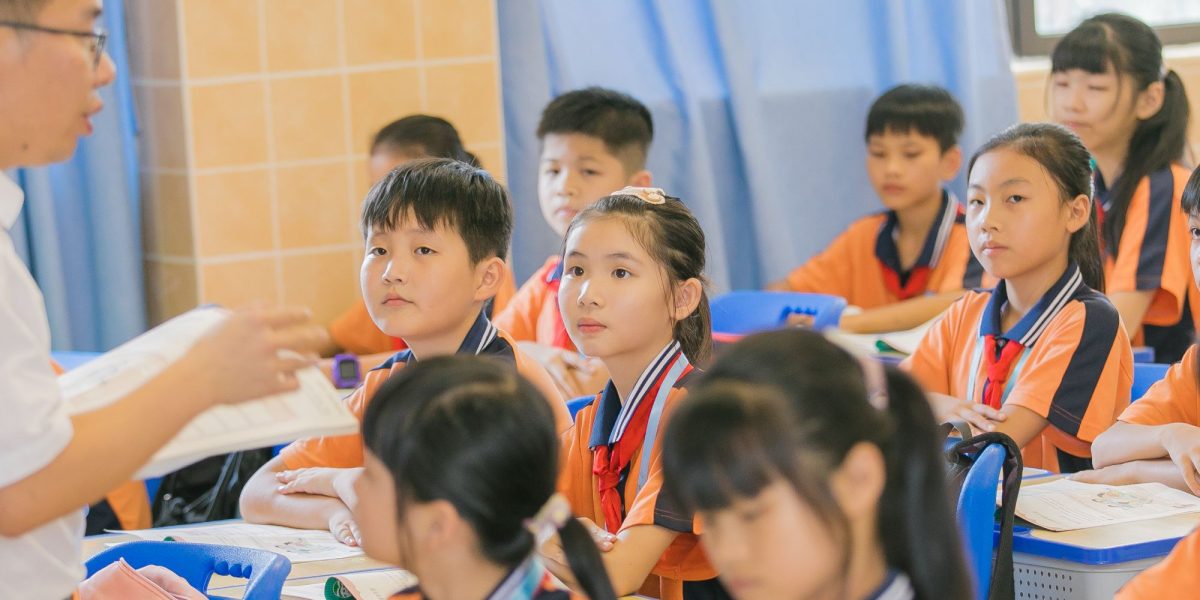
They let students struggle a little before stepping in. Directors tell students exactly what to do and how to do it. That kills the unique learning system that makes experiential learning powerful.
A qualitative study from Arkansas State University interviewed teachers who successfully use PBL. The teachers emphasized that letting go of control was the hardest but most important shift. When they stepped back, students stepped up.
So here is your checklist for implementation. Set clear goals. Find an authentic audience. Build in iterative feedback. And coach, do not direct.
If you want to build a project based learning curriculum that deepens student understanding, we have a full guide waiting for you.
For thousands of years, teachers have known that doing beats listening. Now we have the science to prove it. Use these practices and watch visible learning happen in your classroom.
Curious about more evidence based strategies? Explore Topics on how memory and learning work together in practice.
Real-World Case Studies: PBL in Action
Enough theory. Let us look at three real classrooms where project based learning activities actually changed how students learn. These examples show the evidence based practices we just covered in action.
High school biology: Water quality monitoring
A high school science teacher designed a unit where students studied a local creek. Instead of reading about water pollution from a textbook, students collected samples, tested pH levels, and tracked bacteria counts. They presented their findings to the city council. The authentic audience mattered.

Students knew their data could influence real decisions. A case study from PBLWorks shows that when students engage with community problems, they develop deeper understanding and stronger communication skills. This is visible learning at its best.
Middle school history: Community oral history podcast
In a middle school social studies class, students created a podcast series about their town’s history. They interviewed grandparents, local historians, and long time residents. They learned how to edit audio, write scripts, and fact check stories. The teacher acted as a coach, not a director. Students made mistakes and fixed them through iterative feedback. This unique learning system builds teamwork and problem solving skills that last far beyond the project.
University engineering: Industry partnered capstone
Engineering seniors worked with a local manufacturing company to solve a real production bottleneck. The company provided data, budget limits, and deadline pressure. Students had to design a solution that actually worked in the real world, not just in theory. Research published in PMC confirms that this kind of experiential learning boosts motivation and prepares students for careers.
These examples share one thing. They connect classroom work to something bigger than a grade. If you want to design your own project based learning curriculum, start with a real problem that needs solving.
Explore Topics to discover more evidence based strategies that make learning stick.
Overcoming Common Barriers: Assessment, Time, and Alignment
The case studies above show what is possible. But let us be honest for a moment. If you are a teacher reading this, you might be thinking, "This sounds great, but I have a curriculum to cover and standardized tests looming." That is totally fair. You are not alone.
According to the New Tech Network, time constraints and testing pressure are the top barriers for teachers who want to try project based learning activities. The Schoolhouse blog also breaks down how time becomes a major hurdle, especially when projects span several days. It can feel risky when you are accountable to district benchmarks.
Here is the thing. The solution is backward design. You start with the learning standard you need to hit. Then you build the project around it. This makes the project the main course, not an extra task. If you want to see how this works step by step, check out our guide on how to build a project based learning curriculum.
What about grading group work?
This one trips up a lot of teachers. How do you know who actually did the work? The answer is clear rubrics. When students see exactly what quality looks like, they hold themselves accountable. It also makes grading faster for you. A comprehensive guide from Spacesedu explains how good rubrics support visible learning in PBL classrooms.
Technology solves the management headache.
Projects can feel messy. Deadlines slip. Students lose track of tasks. Digital tools fix this. Shared calendars, project boards, and digital portfolios keep everything in one place. This turns your classroom into a unique learning system where experiential learning happens smoothly. iSpring outlines practical ways to use tech to manage the process.
And if you want to build your confidence even more, consider attending a workshop from PBLWorks. Their Gold Standard training walks you through every stage.
These barriers are real. But they are not roadblocks. They are just part of the learning curve. You already have the skills to handle them.
Ready to take the next step? Start your journey with more practical resources. Explore Topics to find guides that make your PBL classroom a success.
Practical Solutions and Tools for PBL Success
The good news is that practical tools can make project based learning activities run smoothly. You do not need to reinvent everything. A few smart shifts and the right resources turn chaos into clarity.
Start with backward design. This is your biggest time saver. Instead of planning activities first, begin with the end in mind. Ask yourself: “What do I want students to know and be able to do?” Then design assessments that measure that goal. Finally, choose activities that build toward those assessments. The New Tech Network explains how this approach keeps your visible learning goals front and center and stops projects from feeling like extra work. When you align everything to standards, you meet your curriculum goals and give students experiential learning that sticks.
Use digital portfolios for ongoing assessment. Tools like Seesaw or Google Sites let students collect their work, reflect on progress, and show their growth over time. This makes assessment visible to you, students, and even parents. The iSpring guide lists digital portfolios as a top way to track unique learning system progress in PBL. Plus, portfolios help you see each student’s individual contribution inside a group project. Instead of guessing who did what, you have real evidence. For more on how tech can support meaningful learning, check out our piece on the role of technology in education.
Let students help build the rubric. When students take part in creating assessment criteria, they understand what quality looks like. They also feel more ownership over their work. The Spacesedu guide on project based learning highlights that co-created rubrics boost engagement and make grading clearer for everyone. It turns assessment from something done to them into something done with them. That shift builds self-efficacy and reduces pushback.
These three practices backward design, digital portfolios, and student involvement in rubrics turn PBL from intimidating into doable. They give you a system that supports visible learning without adding to your plate.
Ready to put these ideas into action? Explore Topics to find more practical resources that help your PBL classroom succeed.
The Future of PBL: Technology, AI, and Competency-Based Learning
The tools you just learned about are already making PBL more manageable. But let’s look ahead. What is coming next for project based learning activities? In 2026, three big shifts are reshaping classrooms: AI, competency-based models, and immersive tech.
These aren’t futuristic dreams. They are happening right now.
AI tutors change the game for personalization. Imagine a student stuck on a part of a project. Instead of waiting for you, an AI tutor steps in. It gives hints, adapts questions to the student’s level, and helps them work through the problem. The NAF blog explains that the rise of AI, VR, and AR is set to revolutionize PBL by making learning more responsive to each student. Instead of one-size-fits-all, you get a unique learning system that adjusts in real time. That means more experiential learning for every kid.
Competency-based models fit PBL like a glove. These models assess what students can do, not how many hours they sit in class. This matches project based learning activities perfectly. Students earn credit by showing mastery of a skill, whether it takes two weeks or two months. According to one source, today’s reimagined learning environments feature PBL that encourages collaboration on structured initiatives. When you pair PBL with competency-based assessment, you stop worrying about seat time and start focusing on real growth. This approach supports visible learning because you see exactly what each student has mastered.
VR and AR open new worlds. Virtual reality lets students step inside a historical event or explore a cell from the inside. Augmented reality overlays digital information on the real world. These tools turn abstract ideas into hands-on experiences. Think about a project on ecosystems. Instead of reading about a rainforest, students can walk through one in VR. That level of immersion makes experiential learning unforgettable.
The future of PBL is more flexible, more personal, and more engaging than ever. And the best part? Many of these tools are already available.
Want to see how making learning more meaningful can actually strengthen memory? Check out Dean Grey’s research to connect facts to value and meaning.
Emerging Trends in 2026
The shifts we just covered are not the whole picture. In 2026, several specific trends are pushing project based learning activities even further. Let’s look at three that are gaining real momentum right now.
Micro-credentials and digital badges certify PBL outcomes. Think of these as small, official rewards for specific skills. A student does not just finish a project. They earn a badge for collaboration, another for research, and another for creative problem solving. This makes learning visible in a concrete way. According to research on future PBL trends, these credentials emphasize collaboration, technology, and lifelong learning skills. When students collect badges, they see exactly what they have mastered. This fits perfectly with the unique learning system idea from the last section. Every badge tells a story of real growth.
Student choice and voice expand through personalized project pathways. Here is the thing: students learn better when they care about the topic. So in 2026, more classrooms let students choose their own project topics within a subject. One student might build a model of a sustainable city while another writes a short film about climate change. Both learn the same core concepts, but each follows their own path. The rise of personalized learning systems makes this easier than ever. This kind of experiential learning boosts engagement and ownership.
Global collaboration projects connect classrooms worldwide. Technology now makes it easy for a class in Texas to partner with a class in Tokyo. Students work together on shared projects using video calls, shared documents, and online boards. They solve real problems across time zones and cultures. This trend reimagines learning environments by encouraging students to collaborate on structured initiatives. The result is a deeper, more connected educational experience that prepares students for a global workforce.
Want to see how making learning meaningful can actually strengthen memory? Learn why value helps memory stick.
Summary
This article explains why project based learning (PBL) reliably increases student engagement and long-term retention by activating active retrieval, elaboration, spaced practice, and social learning. It summarizes the cognitive science behind PBL, shows how authentic, meaningful projects trigger motivation and memory consolidation, and explains why collaboration and reflective practices build metacognitive skills. The piece then gives practical design guidance—start with a strong driving question, scaffold autonomy, assign clear roles, and break projects into spaced milestones with formative feedback and reflection. It addresses common implementation barriers (assessment, time, alignment) and offers concrete solutions like backward design, rubrics, and digital portfolios. Examples from biology, history, and engineering illustrate best practices in real classrooms. Finally, the article looks ahead to trends—AI tutors, competency-based models, badges, and immersive tech—that make PBL more personalized and scalable.
Discover more on memory and learning