How a Bachelor of Science in Computer Science Trains Your Brain for Data Analysis

Introduction
Have you ever spent hours trying to learn a new programming concept, only to forget it a week later?

You are not alone. Many students jump into a bachelor of science in computer science thinking that raw intelligence is all they need. But the real secret to success lies in how your brain actually holds onto information.
Data analysis has become a must-have skill across nearly every industry today. Companies everywhere need people who can turn raw numbers into clear decisions. A bachelor of science in computer science gives you a powerful foundation for this work. It teaches you the logic, the math, and the tools you need. But here is the catch: just taking a data science course or learning python for data analysis is not enough if your memory does not keep the material.
That is where understanding declarative memory comes in. Declarative memory is the part of your brain that stores facts, concepts, and experiences. When you study for a CS degree, you are constantly asking your declarative memory to hold onto programming syntax, statistical formulas, and algorithm steps. The better you understand how this memory system works, the easier it gets to learn and retain those skills for the long haul.
In this article, we will explore the interesting link between the curriculum of a bachelor of science in computer science and the way your brain learns best. You will discover how to pick a program that fits your learning style and how to master tough topics like data analysis without burning out. We will also touch on how early preparation, such as online high school programs, can build strong study habits that pay off later in college.
So if you want to get more out of your CS degree and become a smarter student, keep reading. We have practical advice based on cognitive science that you can start using today. For a deeper look at how memory works in learning, check out our guide on the science of learning and declarative memory.
What Is a Bachelor of Science in Computer Science?
A bachelor of science in computer science is more than just a degree. It is a structured program that teaches you how computers work, how to write code, and how to solve problems with technology. Think of it as a toolkit. You get theory, hands-on practice, and a solid foundation in math and logic all at once.
Most programs cover four main areas:
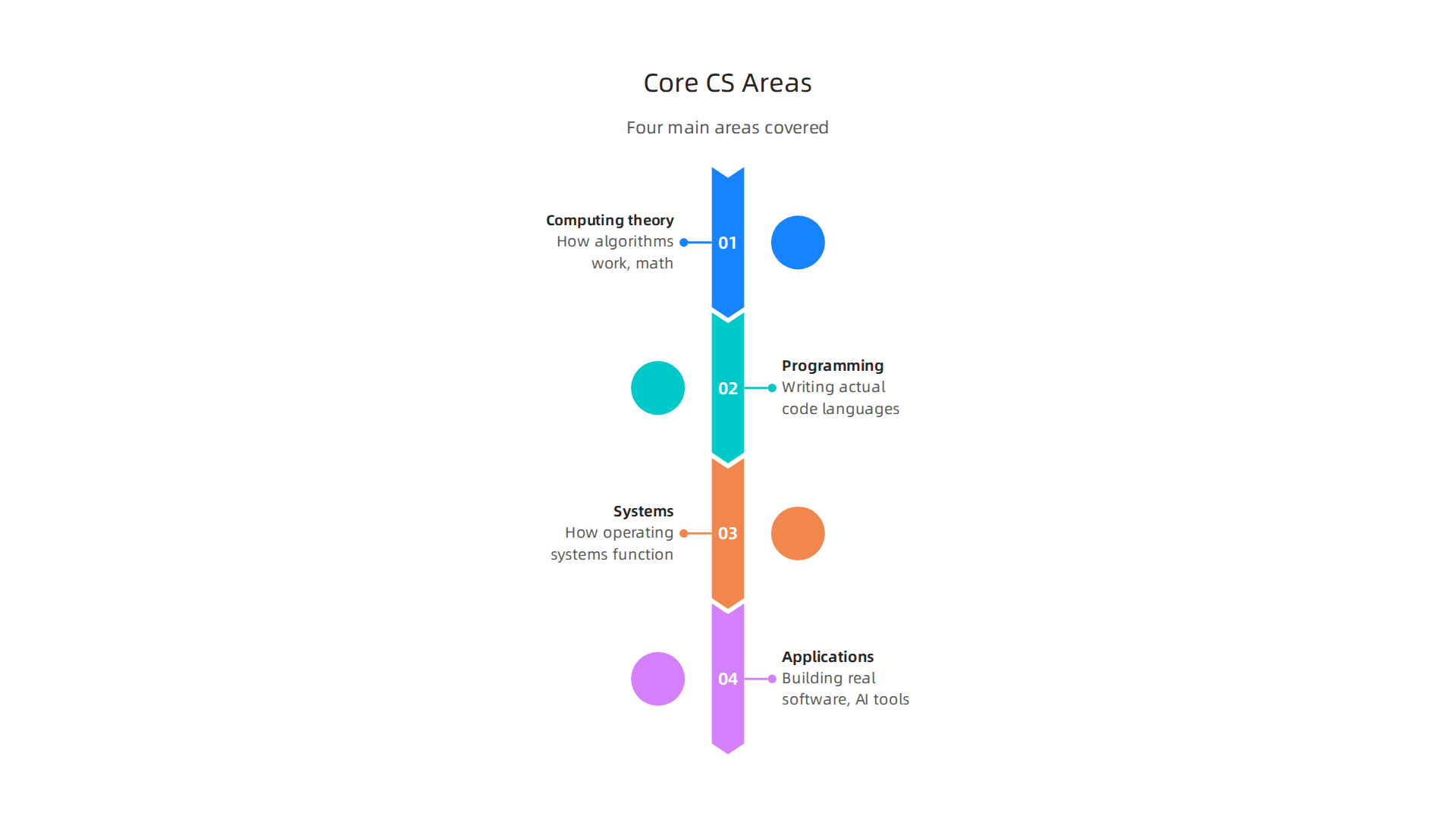
- Computing theory – How algorithms work, what makes code efficient, and the math behind it all
- Programming – Writing actual code in languages like Python, Java, or C++
- Systems – How operating systems, networks, and databases function together
- Applications – Using all of the above to build real software, analyze data, or create AI tools
The University of Kentucky describes their program as providing "a strong foundation in computing theory, software development, and problem-solving techniques." [1] That is a good way to sum it up. You learn the "why" behind the code, not just the "how."
Why Accreditation Matters
Not all computer science degrees are built the same. That is where accreditation comes in. ABET is the main organization that checks if a program meets high standards.
Since 1932, ABET has accredited over 4,300 computing programs across 850 schools. [2] When you see that a program is ABET-accredited, you know it covers the right material at the right depth.
Schools like National University and Western Governors University both offer ABET-accredited online computer science degrees. [3][4] This matters because employers and grad schools often look for accreditation when evaluating your degree.
How It Builds Two Kinds of Knowledge
Here is where things get interesting for your brain. A bachelor of science in computer science builds two types of knowledge at the same time.
First, you build declarative knowledge. That is the facts and concepts stored in your declarative memory. Things like what a binary search tree is, how SQL joins work, or the steps in the machine learning pipeline.
Second, you build procedural skills. That is the ability to actually do things without thinking hard. Like writing clean code, debugging errors quickly, or cleaning a messy dataset with python for data analysis.
When you take a data science course as part of your CS degree, you are asking your brain to store both the formulas and the hands-on steps. Programs at schools like FIU and Rutgers combine statistics, calculus, and computer science so you get both. [5][6] This dual approach is exactly what makes the degree so powerful for fields like data analysis.
If you want to improve how you absorb all this material, our guide on evidence-based learning techniques gives you practical strategies that work with your brain.
What This Means for You
A good computer science program does more than teach you to code. It trains your brain to think logically, store complex facts, and act on them quickly. Whether you plan to work in data science, software engineering, or artificial intelligence, this foundation sets you up for success. And the earlier you understand how your memory works with this material, the easier your learning gets.
The Core Data Analysis Skills Built into a CS Degree
Think a bachelor of science in computer science is just about coding all day? Not quite. The degree actually teaches you the core skills of data analysis from day one. And that is a big deal if you want to work with data.
Here is what you actually learn.
The Three Pillars of Data Analysis in a CS Program
Your CS degree builds data analysis skills through three main course types.
Algorithms and data structures. This is where you learn how to organize and search through information efficiently. You study sorting methods, search trees, and hash tables. These are the building blocks for any data analysis task.
Statistics and probability. A good CS program includes at least one statistics course. You learn about distributions, hypothesis testing, and regression. Harvard notes that data scientists typically need at least a bachelor’s degree in computer science or a related field. [7] That statistics foundation is part of the reason.
Database management. You learn SQL inside and out. You practice writing queries, joining tables, and cleaning messy datasets. This is where the real data work happens.
The Tools That Matter
Two programming languages stand out for data analysis in a CS degree.
Python is everywhere. You use it for data wrangling, which means gathering, assessing, and cleaning raw data. A specialization on Coursera teaches data wrangling with Python through fundamental tools like data collection and preprocessing. [3]
SQL is how you talk to databases. You learn to pull exactly the information you need from huge tables. This is a skill that employers look for constantly.
Why Hands-On Projects Are the Real Teacher
Here is where the memory science comes in. You might read about data analysis in a textbook. But you truly learn it when you actually do it.
CS programs include labs and projects where you work with real datasets. You clean messy data. You build a simple predictive model. You create visualizations.
This hands-on practice creates durable declarative memories. When you apply a concept repeatedly, your brain stores it more deeply. Spaced repetition research shows that reviewing material at timed intervals helps you retain it longer. [11] Projects act like that spaced practice. You keep coming back to similar problems in different contexts.
That is why our guide on project-based learning activities explains how applied practice deepens understanding.
The Bottom Line
A CS degree does not just teach you theory. It trains you in the specific data analysis skills that employers need.

You learn the algorithms, the tools, and the hands-on practice all at once. And that combination makes you ready to work with data from day one of your career.
How the CS Curriculum Maps to the Declarative Memory System
Here is something they do not tell you during orientation. The way your brain stores programming knowledge matters just as much as the code you write. When you start a bachelor of science in computer science, you are training your declarative memory system every single day whether you realize it or not.
What Declarative Memory Actually Is
Declarative memory handles facts and events. It has two parts. Semantic memory stores facts, concepts, and meanings. That is where you keep the syntax of Python for data analysis work, the definition of a binary search tree, and the rules for writing a clean SQL join. Episodic memory stores personal experiences. That is the time you spent debugging a broken loop at 2 a.m. or the moment your first algorithm finally passed all test cases.
As the experts at Structural Learning explain, declarative memory works through semantic facts and episodic experiences.
Learn more about how declarative memory functions. These two systems form the foundation for everything you learn in a CS program.
How Your Brain Stores Programming Knowledge
Here is the neuroscience behind it. When you first learn something new, like how to write a recursive function, your hippocampus processes that information. Research published in the World Academy of Sciences Journal confirms that the hippocampus is the most critical brain region for forming declarative memories. Read the study on hippocampal memory function.
But here is the important part. That new knowledge does not stay in your hippocampus forever. Over time and with repeated use, your brain transfers it to the neocortex for long-term storage. This process is called consolidation.
Think about the first time you wrote a SQL query in a data science course. It probably felt slow and confusing. Your hippocampus was working overtime. But after writing hundreds of queries across different projects, the knowledge moved to your neocortex. Now it feels automatic.
Learning Strategies That Work with Your Brain
Understanding this process helps you study smarter.
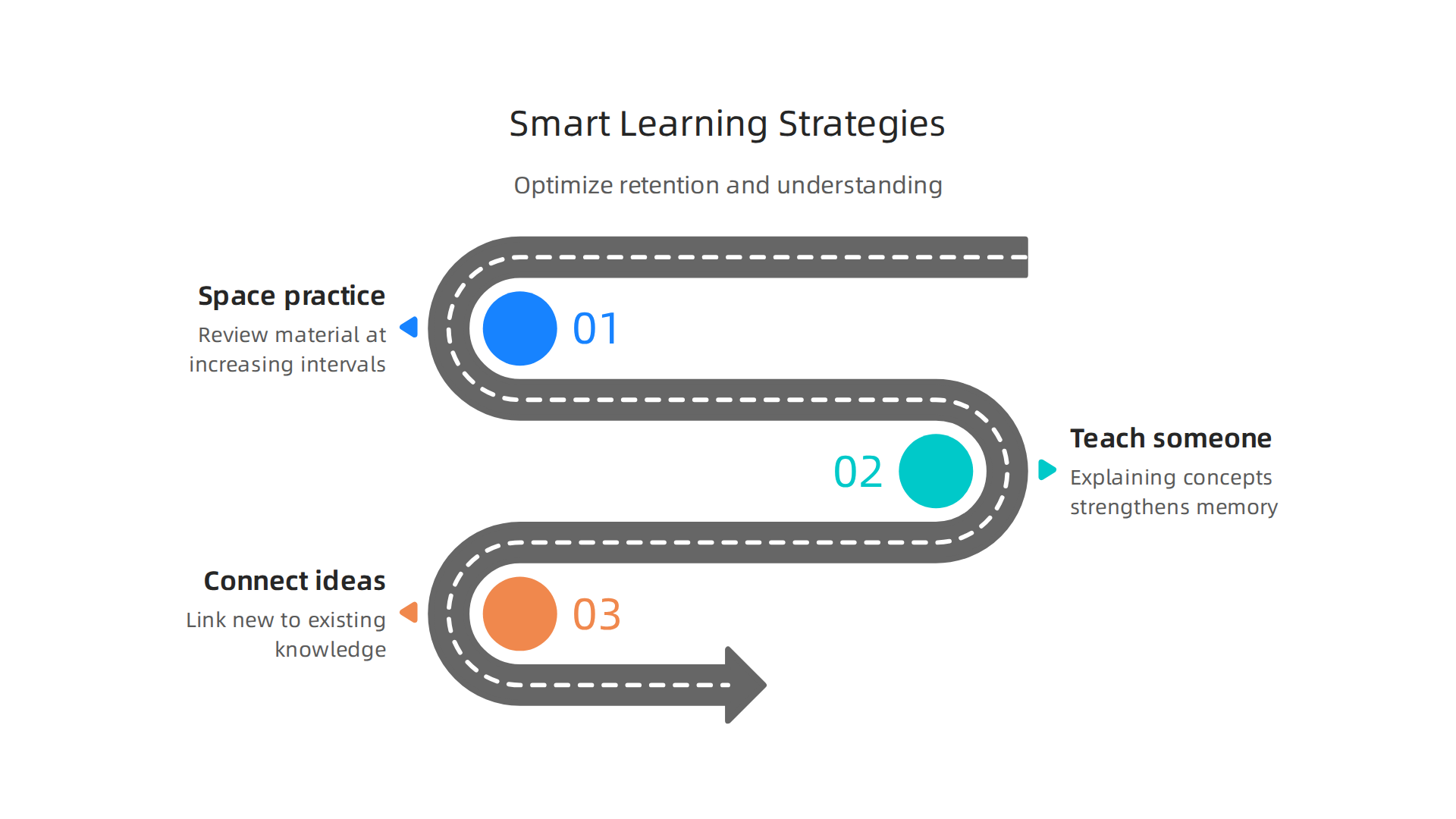
Space out your practice. Instead of cramming syntax rules the night before an exam, review them at increasing intervals. Research suggests that early-life education can help bolster declarative memory over time. Explore the research on education and memory. Regular review builds stronger neural pathways.
Teach someone else. Explaining a concept like hash tables forces your brain to retrieve that information from semantic memory. Each retrieval strengthens the memory trace.
Connect new ideas to old ones. When you learn a new algorithm, link it to something you already understand. This helps your hippocampus integrate the new information with existing knowledge in your neocortex.
For more practical strategies, check out our guide on evidence-based learning techniques to improve memory and retention.
Why This Matters for Your CS Journey
Your computer science degree is not just teaching you to code. It is training your brain to store and retrieve complex information more efficiently. When you understand how declarative memory works, you can make smarter choices about how you approach each course, each project, and each new concept.
If you are still exploring your options, understanding memory science can also help you evaluate online high school programs that prepare you for a CS track. Building strong declarative memory habits early sets you up for success long before you write your first line of code.
From Classroom to Career: CS Graduates in Data-Driven Roles
All that brain training we just talked about? It pays off. A bachelor of science in computer science opens the door to some of the most exciting and stable careers we have today. Specifically, data-driven roles.
Many CS graduates become data analysts, data scientists, or machine learning engineers. These jobs are all about finding patterns in data and making smart decisions. And the demand for these roles is huge right now.
The U.S. Bureau of Labor Statistics projects that employment for data scientists will grow by 34 percent from 2024 to 2034.
That is much faster than the average for all occupations. Learn more about data scientist job outlook. On top of that, computer sciences graduates from the Class of 2026 are expected to be top earners, with an average salary of over $94,000. Read the NACE salary report. For a closer look at one path, the average data analyst salary in 2026 ranges between $85,000 and $97,000 depending on experience. Explore data analyst salary trends. These are not just tech jobs. They are stable, high-paying careers.
Here is the best part. The skills you build in your CS program are a direct match for these jobs. That data science course you took? It taught you how to clean data and run statistical models. Learning python for data analysis becomes your main tool in the real world. Your understanding of databases and SQL lets you pull exactly the information you need. Your training in algorithms helps you choose the most efficient way to analyze a dataset. Everything connects.
If you are still in high school, exploring online high school programs that offer AP Computer Science can give you a head start. And no matter where you are in your journey, using the right study methods makes a huge difference. The deeper your understanding, the better you will perform in these roles. That is why learning how to learn is just as important as learning to code.
For more practical strategies on building deep knowledge, check out our guide on evidence-based learning techniques to improve memory and retention. It will help you turn your classroom knowledge into real-world career skills.
Overcoming the Learning Curve: Evidence-Based Study Techniques for CS Students
Let’s be real for a second. Earning a bachelor of science in computer science is not easy. You have to master code syntax, data structures, algorithms, and maybe a data science course or two. It can feel like drinking from a firehose. But here is the good news. You can use how your brain actually works to make it easier.
Researchers have found three study techniques that seriously boost memory and skill. They are spaced repetition, retrieval practice, and interleaved learning. And they work great for CS students.
Spaced Repetition: Your Secret Weapon
Spaced repetition means reviewing material at increasing intervals over time. Instead of cramming the night before a test, you revisit key facts right when you are about to forget them. This trains your brain to hold onto information longer. Evidence shows that spaced repetition algorithms can be optimized to adapt to your performance. For CS students, this is perfect for memorizing Python syntax, SQL commands, or algorithm patterns. Many people use apps like Anki to practice daily. You can even use spaced repetition to memorize entire programming languages. It turns learning into a habit, not a panic.
Retrieval Practice: Test Yourself Early and Often
Reading textbook chapters over and over feels productive, but it is not the best way to learn. What works better is retrieval practice. That means closing the book and trying to recall what you learned. Write down the steps of a binary search from memory. Explain how a hash table works without looking at notes. Spaced repetition software forces you to quiz yourself, which strengthens recall. The more you pull information out of your brain, the stronger that memory becomes.
Interleaved Learning: Mix It Up
Instead of studying one topic for hours, try mixing different topics in one study session. Study arrays, then trees, then sorting algorithms, then go back to arrays. This sounds messy, but it improves your ability to choose the right tool for each problem. Real coding challenges never come in neat categories. Interleaved learning prepares you for that.
How This Connects to Your Brain
These techniques work because they match how your memory actually stores information. Your declarative memory handles facts and events. When you space out your practice and test yourself, you are telling your brain, "This information is important, keep it." Early-life education and ongoing learning can actually strengthen declarative memory over time. That means every smart study session you do now builds a stronger foundation for later.
Start Today
You do not need to overhaul your whole routine. Try adding one 10 minute flashcard session each day. Use an app like Anki. Quiz yourself before checking the answer. And mix your topics. These small changes will help you go from struggling to automaticity. For a deeper dive into how declarative memory supports learning, check out our guide on the science of learning how to use declarative memory to study smarter. It will help you turn your study time into real, lasting skill.
Whether you are just starting online high school programs that offer CS or are deep into your bachelor’s degree, these techniques will help you master python for data analysis and everything else. Your brain is built to learn. You just have to give it the right method.
Choosing the Right CS Program for a Data Analysis Focus
Now that you know how to study smarter, the next big question is where to study. You want to become a data analyst or data scientist. So picking the right bachelor of science in computer science program matters a lot. Not all CS degrees are built the same. Some focus on theory. Others lean into software engineering. And some have a strong data analysis track. Here is what to look for when comparing programs.
Look for a Strong Data Science Curriculum
First, check the course list. A good program will have dedicated data science course offerings. You want classes in statistics, probability, machine learning, and data visualization. For example, Duke University offers a BS Concentration in Data Science for CS majors that covers these topics with a computational focus. Ohio State University has a core curriculum for data analytics majors that builds fundamental principles across the field. These programs give you the math and coding skills you need.
Make sure the program teaches python for data analysis specifically. Python is the most common tool for data work. Look for courses that cover libraries like pandas, NumPy, and scikit learn. If a program only teaches Java or C++ with no data science electives, it might not prepare you well for this career path.
Accreditation and Faculty Matter
You also need to check the program’s accreditation. ABET accreditation is the gold standard for computer science programs. It means the curriculum meets strict quality standards. Programs like National University’s online CS degree are ABET accredited. So are many others you can find in the ABET directory. Accreditation matters because employers and graduate schools trust it.
Faculty expertise is another big factor. Look at the professors who teach data science and machine learning courses. Have they published research? Do they have industry experience? Good faculty bring real world examples into the classroom. That matters more than you think.
Programs That Teach How to Learn
Here is a hidden benefit. Some programs now integrate cognitive science into their teaching methods. They use spaced repetition and retrieval practice in their courses. If you are coming from online high school programs that already used these techniques, you will feel right at home. A program that understands how memory works can help you learn faster and retain more. That is what Declarative Memory is all about. Check out our guide on evidence-based learning techniques to improve memory and retention to see what to look for in a program’s teaching approach.
Start Your Search Today
The demand for data analysts is growing fast. The Bureau of Labor Statistics projects 34 percent growth for data scientists from 2024 to 2034. That is much faster than average. And the median pay is over $112,000. So choosing the right CS program is a smart move.
Take your time. Compare curriculums. Check accreditation. And look for programs that use smart teaching methods. Your future self will thank you. For more help picking a program, read our guide on choosing the best online high school programs for academic growth if you are starting earlier, or dive into any CS program’s course catalog with a sharp eye on data science courses.
Summary
This article explains how a Bachelor of Science in Computer Science builds both declarative knowledge (facts and concepts) and procedural skills (coding and data work), and why understanding declarative memory helps you learn more efficiently. It outlines the core data-analysis components of a CS curriculum—algorithms, statistics, and databases—plus the practical tools you’ll use like Python and SQL. The piece links neuroscience (how the hippocampus and neocortex consolidate learning) to classroom design and shows how project-based work and repeated practice create durable memory. You’ll learn concrete study strategies—spaced repetition, retrieval practice, and interleaving—that align with how memory works, and how to evaluate programs for accreditation, curriculum, and faculty quality. The article also covers career outcomes for CS graduates in data roles and offers guidance on preparing early through online high school options. Read it to pick better courses, adopt study methods that stick, and turn classroom learning into real-world data skills.
Discover more on memory and learning