
Make Your Homeschool Science Curriculum Stick with Memory Science

Have you ever felt like your child learns a new science fact today, only to forget it tomorrow?

It’s a common problem. Many traditional school lessons and even popular options for a homeschool science curriculum often focus on just sharing lots of facts all at once. They might have a big test at the end of a chapter, but then the information quickly fades away.
The truth is, our brains don’t remember things well by simply cramming a lot of information in a short time. This old way of teaching often makes learning hard because it doesn’t really consider how our memory works. It’s like trying to pour water into a full cup too fast; most of it just spills out.
But what if you could design a homeschool science curriculum that helps your child remember what they learn for a long, long time? That’s where memory science comes in. This guide will show you simple, smart ways to teach science that use how your brain naturally remembers things. Instead of just memorizing, we’ll help your child truly understand and keep scientific ideas.
Studies show that learning methods like spacing out study sessions over time and actively trying to remember facts work much better than quick cramming. For example, research highlights how The Distributed Practice Effect on Classroom Learning helps students learn and recall information over longer periods. These methods make learning stick.
We’ll explore key memory principles and translate them into a practical, week-by-week homeschool science plan. You’ll learn how to build a curriculum that keeps knowledge, whether through fun science coloring pages or engaging classroom learning games. For more on making learning stick, explore evidence-based learning techniques that boost memory and retention. This approach means less forgetting and more real understanding for your child.
Memory needs meaning, not just repetition. Make Facts Stick by understanding the science behind how we learn and remember.
Designing a Homeschool Science Framework That Aligns with How Memory Works
To truly make learning stick, we need a smart plan.
Instead of just teaching facts and hoping they’re remembered, we can use a method called "backwards design." This means we start by thinking about the end goal: what do we want our children to remember weeks, months, or even years from now? This approach helps us build a strong homeschool science curriculum that really makes sense for memory.
When using backwards design, you first decide what your child should know and be able to do.
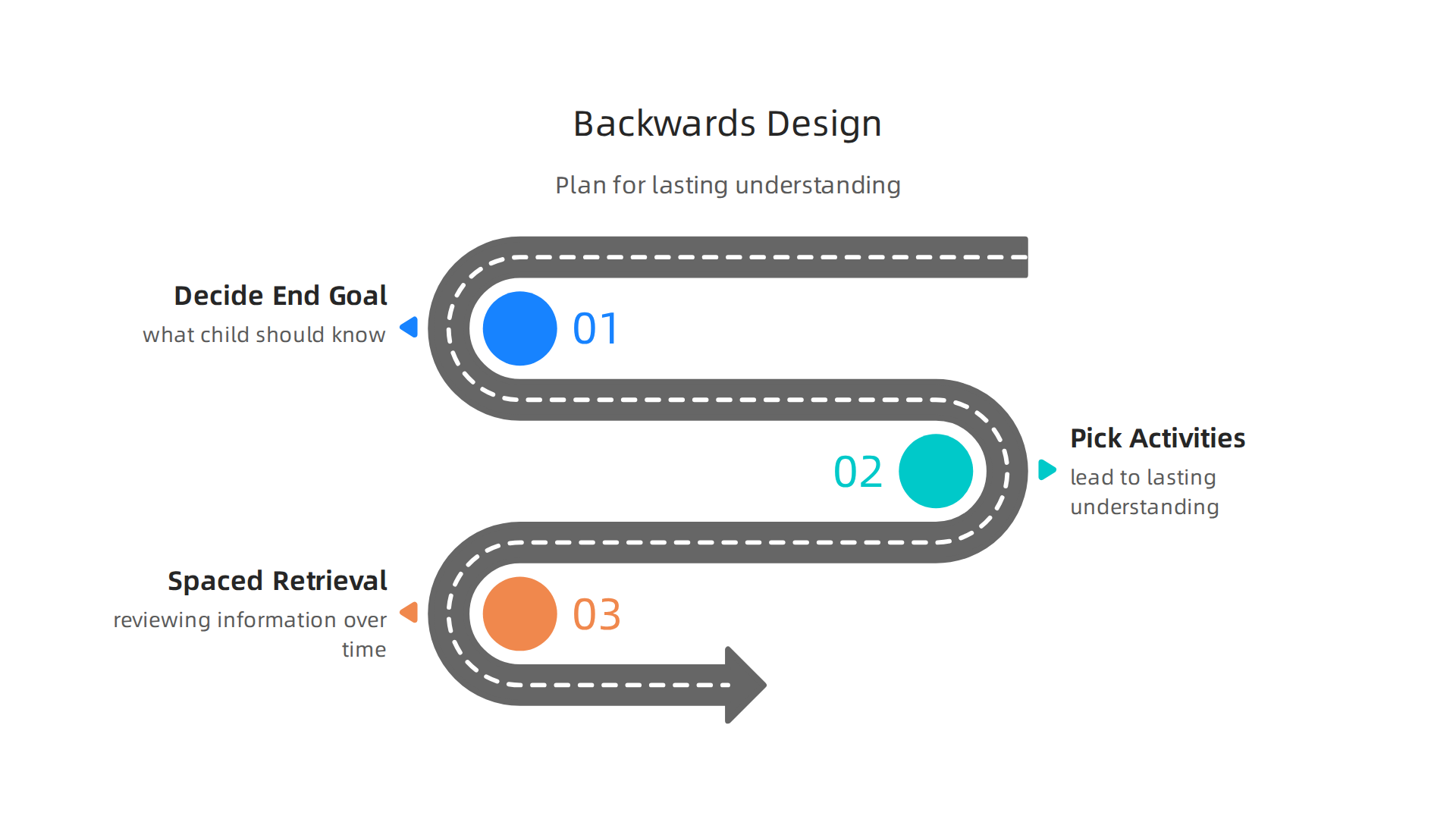
For example, instead of just covering "plants," you might decide your child should remember "how plants make their own food" long-term. This focus helps you pick activities and lessons that lead to lasting understanding, not just passing a quick test. It uses smart memory tricks like spaced retrieval, which means reviewing information over time. This helps new facts move from short-term to long-term memory, as explained in resources like Spaced Retrieval Made Easy.
A great way to put this into action is by setting up a flexible 12-week modular structure for your homeschool science curriculum. Think of each module as a deep dive into one main topic, like "The Water Cycle" or "Simple Machines." A module lets you explore a subject fully, using different learning styles and activities over time. For examples of how to organize these types of learning blocks, check out Homeschool Unit Study Examples & Free Planning Template.
Inside each module, you can mix and match fun learning methods. This might include hands-on experiments, reading books, watching videos, or even using creative activities like science coloring pages. You can also include classroom learning games or resources you find from places like Teachers Pay Teachers. The key is to revisit topics in new ways over the 12 weeks. This constant, varied exposure helps build stronger memory. To learn more about how to plan these in-depth learning experiences, consider how to How to Build a Project Based Learning Curriculum That Deepens Student Understanding.
This smart way of planning learning is a core part of a bigger system called the Value Reinforcement System (VRS), U.S. Patent No. 12,205,176 co-invented by Dean Grey.
Beyond just organizing your homeschool science curriculum, it’s really helpful to know how memory works. This way, you can pick the best ways to teach so your child truly remembers what they learn. There are three big memory helpers we can use: encoding, spacing, and retrieval.
Encoding: Getting Information Into the Brain
Encoding is just a fancy word for getting new information into your brain so you can store it. Think of it like putting books on a shelf. If you just drop them anywhere, you’ll never find them again. But if you sort them and label them, it’s easy.
Here are a few ways to encode better in your homeschool:
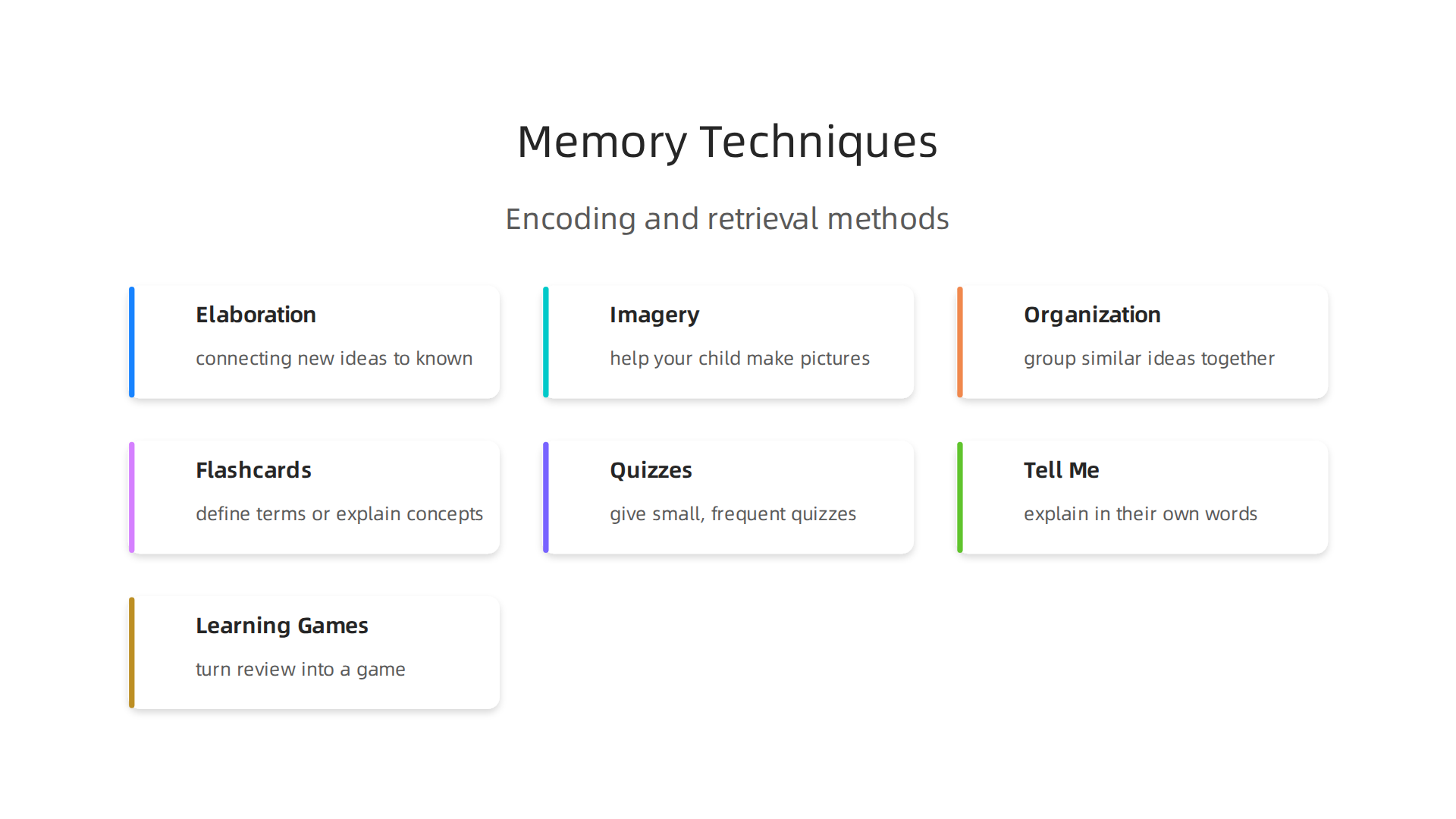
- Elaboration: This means connecting new ideas to things your child already knows. For example, when learning about the parts of a plant, you could compare a plant’s stem to a straw sucking up water or its roots to thirsty mouths.
- Imagery: Help your child make pictures in their mind. If they’re learning about the water cycle, draw a big picture together of the sun, clouds, and rain. The more vivid the picture, the easier it is to remember. You can even use fun science coloring pages to help with this.
- Organization: Group similar ideas together. Instead of just listing animals, you could group them by "animals that fly," "animals that swim," and "animals that walk." This makes the information neater in their brain.
Spacing and Retrieval: Making Learning Stick
Once information is in the brain (encoded), we want to make sure it stays there for a long time. This is where spacing and retrieval practice come in. They beat simply reading something over and over again, which is called massed repetition or "cramming." Cramming might help for a quick test, but it doesn’t help with long-term memory.
- Spacing: This means spreading out learning over time instead of trying to learn everything at once. For your homeschool science curriculum, it’s better to learn about magnets for 15 minutes every other day for a week than for an hour straight on just one day. Studies show that learning is much better when you spread it out over time, rather than trying to fit it all into one big session The Distributed Practice Effect on Classroom Learning. This is why a 12-week module plan works so well!
- Retrieval Practice: This is simply testing yourself on what you’ve learned. When you try to remember something, your brain has to work harder, and this effort helps you remember it better in the future. It’s like exercising your memory muscle.
You can use retrieval practice in many ways:
- Flashcards: Have your child define terms or explain concepts using flashcards.
- Quizzes: Give small, frequent quizzes. These aren’t just for grades, they’re for learning!
- Tell Me What You Know: After a lesson, ask your child to explain in their own words what they learned.
- Classroom learning games: Turn review into a game. Many teachers share ideas on platforms like Teachers Pay Teachers resources, which can be adapted for homeschooling.
Research has clearly shown that retrieval practice is a very strong way to help students remember information New Meta-analysis of 217 Retrieval Practice Studies. By regularly pulling information out of their memory, your child builds stronger connections in their brain. This makes it easier to recall facts and ideas years down the road. To dive deeper into these proven methods, explore more about Evidence Based Learning Techniques to Improve Memory and Retention.
Now that we know how important it is to get information into the brain (encoding) and make it stay there (spacing and retrieval), let’s talk about one of the best ways to do this: hands-on activities and experiments. They aren’t just fun; they’re powerful tools for memory in your homeschool science curriculum.
Hands-on learning means your child isn’t just reading or listening. They are doing things.
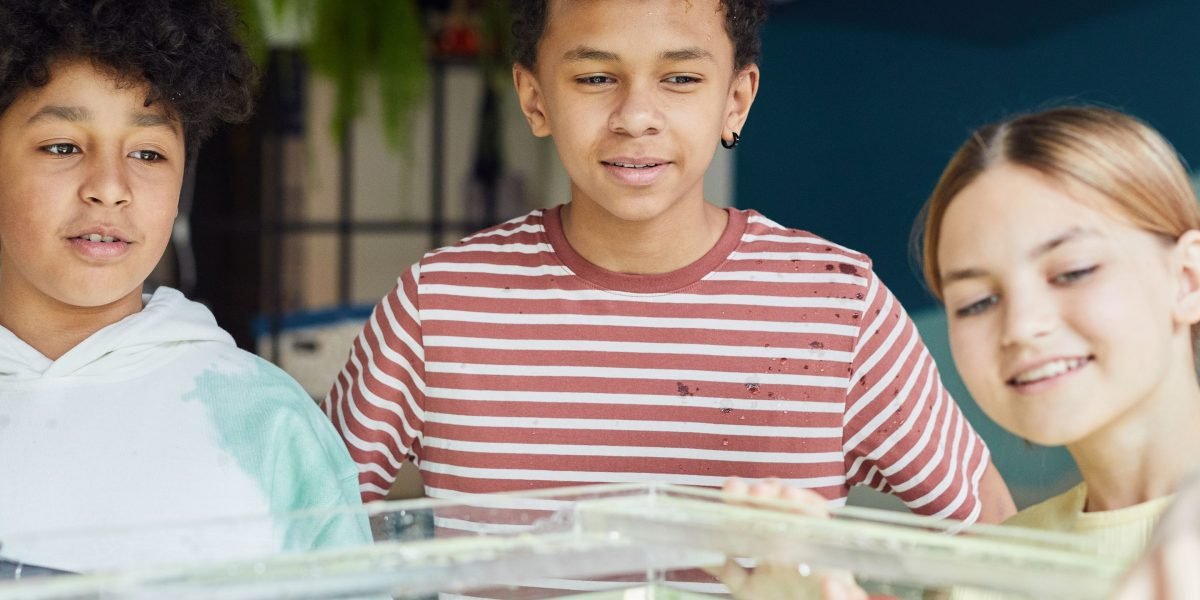
This kind of active learning uses many senses at once, which is great for encoding information. When a child touches, sees, smells, and even hears what’s happening in an experiment, their brain makes stronger connections. In fact, many experts highlight The Importance of Hands-On Science Activities: Learning by Doing for making learning truly stick.
Simple, Low-Cost Experiments for Memorable Science
You don’t need fancy lab equipment to do great science. Many core science ideas like forces, life cycles, and ecosystems can be explored with simple items you already have. These low-cost experiments are perfect for helping your child encode new concepts into their long-term memory.
Here are a few ideas:
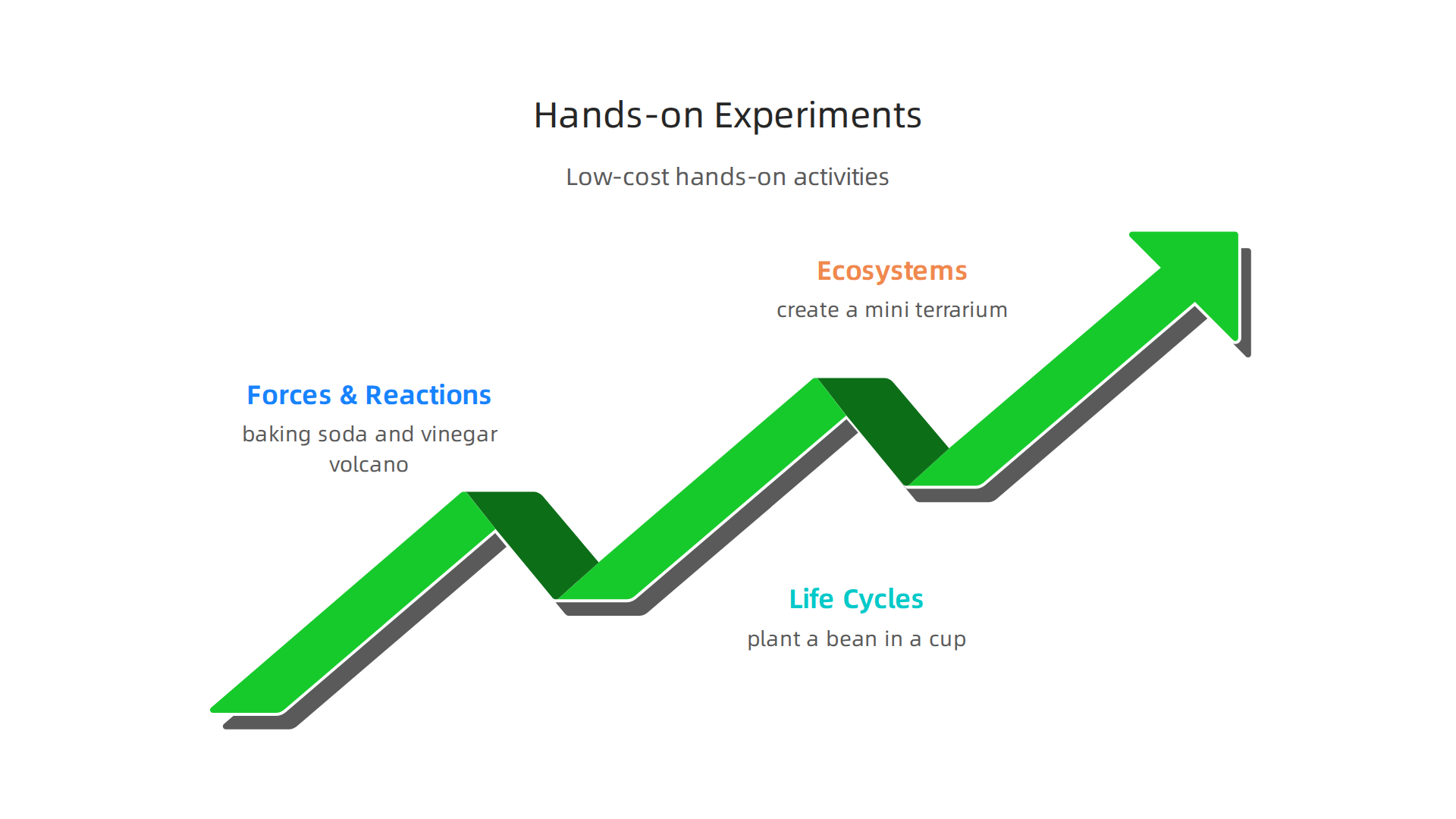
- For Forces and Reactions: Create a baking soda and vinegar volcano. Your child sees the fizzing chemical reaction and the "eruption" firsthand. Ask them to describe what’s happening or draw it. This builds strong visual and sensory memories.
- For Life Cycles: Plant a bean seed in a clear cup. Your child can watch the roots grow down and the stem sprout up over several days. This makes the plant life cycle easy to understand and remember. You can even use science coloring pages to label the parts of the plant as they grow.
- For Ecosystems: Make a mini terrarium in a jar. Layer soil, small plants, and perhaps a small toy creature. Your child learns about how living things and their environment interact. This helps them organize complex ideas about nature in their minds.
These kinds of activities help your child connect new science facts to real-world experiences, making the information more meaningful. You can find many more easy, impactful ideas for STEM on a Budget: Low-Cost Experiments That Make Science Come Alive using everyday materials.
Embedding Retrieval Practice into Every Activity
To make sure these hands-on experiences truly boost memory, we need to add retrieval practice. This helps move information from short-term to long-term memory.
Here’s how to do it:
- Before the Experiment: Predict and Journal. Before you start, ask your child, "What do you think will happen? Why?" Have them write or draw their predictions in a simple notebook or a "prediction journal." This makes their brain active and ready to learn.
- During the Experiment: Observe and Question. As the experiment is happening, ask questions. "What are you seeing? How is it changing?" This makes them pay closer attention and try to recall what they already know.
- After the Experiment: Explain and Discuss. This is where retrieval really shines. Instead of just moving on, ask your child to explain what happened, why it happened, and what they learned.
- "Tell me about the volcano. What made it fizz?"
- "What did you learn about how plants grow from our seed experiment?"
- You can use simple quizzes or turn it into a classroom learning game where they have to explain the science to you.
By making your child actively recall and explain, you’re strengthening those memory pathways. This helps the knowledge stick much better than just passively observing. When planning your homeschool science curriculum, think about how each experiment can become a chance for both hands-on learning and memory practice.
To truly make learning stick, you’ll want to build your homeschool science curriculum with memory science at its core. Make Facts Stick by understanding that memory needs meaning, not just repetition.
Now that you’ve got your child actively remembering what they’re learning, it’s also important to check in and see what’s truly sticking. This is where assessment and feedback come in, not as scary tests, but as helpful tools for learning. We want to make sure the amazing science ideas from your homeschool science curriculum stay in their brain for a long time.
Low-Stakes Checks for Better Memory
Think of "low-stakes retrieval checks" as quick, friendly ways to see what your child remembers. These aren’t meant to make anyone feel bad. Instead, they help your child practice pulling information out of their memory, which makes those memories stronger. They also show you what might need a little more looking over.
Here are some easy ways to do this:
- Quick Talks: After an experiment, just chat about it again a day or two later. "Hey, remember our volcano? What made it fizz?"
- Draw or Explain: Ask your child to draw what they learned or explain it to a toy or family member.
- Simple Quizzes: Make up a few easy questions. You can find ready-made sheets on places like "teachers pay teachers resources" or even create your own quick ones.
- "What If" Games: "What if we did the plant experiment but put it in the dark? What do you think would happen?"
These small checks help your child remember facts better and also show you where they might be confused. It’s like finding a small tangle in a string before it becomes a big knot. Actually, these checks also act as a kind of instruction, guiding their brain to focus on important details. To dive deeper into how different methods can help, you can explore Evidence Based Learning Techniques To Improve Memory And Retention.
Using Spaced Practice in Your Homeschool Science Curriculum
Another super powerful way to make learning stick is called "spaced practice." This simply means reviewing things over time, not all at once. Imagine watering a plant a little bit every few days instead of pouring a whole bucket on it just once. The plant grows better that way, and so does memory!
Research shows that spreading out learning over time makes knowledge last much longer than cramming. For example, a study on nursing students found that The effect of spaced learning on the learning outcome and retention was much better with spaced learning.
Here’s how to use spaced practice in your homeschool science curriculum:
- Daily or Weekly Mini-Reviews: Spend 5-10 minutes each day or week reviewing something from a past lesson. It could be an idea from last week, or even last month.
- Topic Cycles: Don’t just learn about plants for one week and then forget them. Come back to plants later in the year. Maybe compare them to animals, or talk about different types of plants.
- Before New Topics: Before starting a new science topic, briefly review the old topic it builds on. For example, before learning about weather, quickly remind your child about the water cycle.
By using low-stakes checks and spaced practice, you’re building a strong foundation for your child’s learning. These simple habits will make a huge difference in how much they understand and remember from their homeschool science curriculum.
This way of building memory and learning is a key part of the Value Reinforcement System (VRS), U.S. Patent No. 12,205,176 — co-invented by Dean Grey.
Beyond regular checks and spaced reviews, imagine making science even more memorable by connecting it to other exciting subjects. This is called "cross-curricular learning," and it’s like weaving different threads together to make a stronger, more colorful fabric of knowledge. When you link science to writing, art, or history, your child’s brain creates many more ways to remember the information.
Cross-curricular labs and storytelling to deepen encoding
When you integrate science with other subjects in your homeschool science curriculum, you create a richer learning experience. It helps science facts stick better because they are part of a bigger picture, not just isolated pieces of information. This method is often seen in unit studies, where one main topic is explored through many different school subjects. For some great ideas on how to do this, check out these Homeschool Unit Study Examples & Free Planning Template.
Here are some simple ways to connect science with other subjects:
- Writing: After a science experiment, ask your child to write about what they did, what they saw, and what they learned. They can keep a science journal, write a story from the perspective of an animal, or even create a fictional news report about a scientific discovery. This helps them organize their thoughts and strengthen their understanding.
- Art: Encourage your child to draw or paint what they observe. If you’re studying plants, they could sketch different leaves. If you’re learning about space, they might draw planets or constellations. You can even find or create science coloring pages that reinforce what they’ve learned in a fun way.
- History: Explore the history of science! Learn about famous scientists like Marie Curie or Isaac Newton. Discover how scientific ideas changed over time. Understanding the "story" behind discoveries makes the science itself more interesting and easier to remember. Many excellent hands-on science curriculums use engaging narratives to achieve this, as highlighted in this overview of the Best Hands-On Science Curriculum for Homeschool.
Storytelling is a very old and powerful way to teach. When science facts are wrapped up in a story or connected to cultural examples, they become more meaningful. This helps your child’s brain find many ways to recall those facts later. These are sometimes called "values-encoding case studies." They show how people have held onto important ideas and traditions over long periods. It’s a field note from Albania on how a culture carries values across three thousand years. For a fascinating look at living proof that values can be encoded across millennia, and a warning about what gets lost when that encoding stops, read about The 3,000-Year Oath Albania Kept.
By using these methods, you’re not just teaching science; you’re helping your child build a strong, interconnected web of knowledge that will last a lifetime. For more on creating deep learning experiences, consider exploring How Project-Based Learning Activities Deepen Student Engagement and Memory.
After learning how to make science exciting by connecting it to other subjects, let’s talk about the practical side of running your homeschool science curriculum. This part is about finding the right tools, making lessons fit your family, and seeing how much your kids are truly learning over time, whether you teach solo or with a group.
Resources, pacing, and scaling: running this program solo or in a co-op
When you’re teaching science at home, having good resources makes a big difference. You don’t have to start from scratch. Many great toolkits and printable templates are out there to help you plan your science lessons. These include handy worksheets, helpful guides, and even fun science coloring pages that reinforce learning. You can also find materials from various online resources or look into a full homeschool science curriculum that provides everything you need. For more ideas on hands-on activities, explore fun science activities and experiments for homeschool.
If you teach with other families in a co-op, shared resources become even more valuable. Co-ops let you team up for experiments, share supplies, and sometimes even have parents teach subjects they are good at. Learning how to manage and make lessons fit everyone is a big part of why co-ops work so well. You can find helpful advice in a Homeschool Cooperative Guide to help you get started or improve your group.
Pacing for mixed-age groups
If you have kids of different ages, pacing your homeschool science curriculum can be tricky. The key is to make activities that everyone can enjoy, but still allow older kids to dig deeper. For example, a simple science experiment might be for everyone. The youngest children can simply observe and talk about what they see. Older kids can write down their findings, make guesses about what will happen next, and research more about why it happened. Many science projects are flexible enough to be simple for little ones and more complex for older students, such as these 10 Fun and Easy Science Projects for Grades 1-5.
Tracking long-term retention
Keeping track of what your child remembers over a long time is important. This is called long-term retention. It helps you see what’s really sticking in their brain and where they might need a little more help. You can use simple review games or just talk about past science topics often. Little quizzes or discussions a week or a month after learning something new can show you how much they remember.
Remember how we talked about spaced repetition? That’s a great way to help facts stay in memory. Research shows that spacing learning events over time helps improve what students remember. For more ideas on how to make learning stick, look into evidence-based learning techniques to improve memory and retention. By using these techniques, you’re helping your child build a strong foundation of science knowledge that they’ll keep for years to come.
Summary
This article explains how to design a homeschool science curriculum that uses memory science so children actually retain what they learn. It covers the key memory principles—encoding, spacing, and retrieval—and shows how to use backwards design to set long-term learning goals and organize flexible 12-week modules. You’ll find practical ways to encode ideas (imagery, elaboration, organization), how to schedule spaced practice and frequent retrieval, and how to embed low-stakes checks into experiments and day-to-day lessons. The guide includes simple, low-cost hands-on experiments, routines to turn those activities into retrieval opportunities, and tips for mixed-age pacing and co-op teaching. By following these steps you’ll be able to plan lessons that deepen understanding, reduce forgetting, and track long-term retention across grades and topics.
Discover more on memory and learning