Understanding Observation and Learning: Brain Science, Theories, and Practical Impact

Why Observation Matters for Learning — Scope and Promise
Think about how babies learn. They watch everything around them. They see how you talk, how you walk, and how you use things. This simple act of watching is a very powerful way to learn.
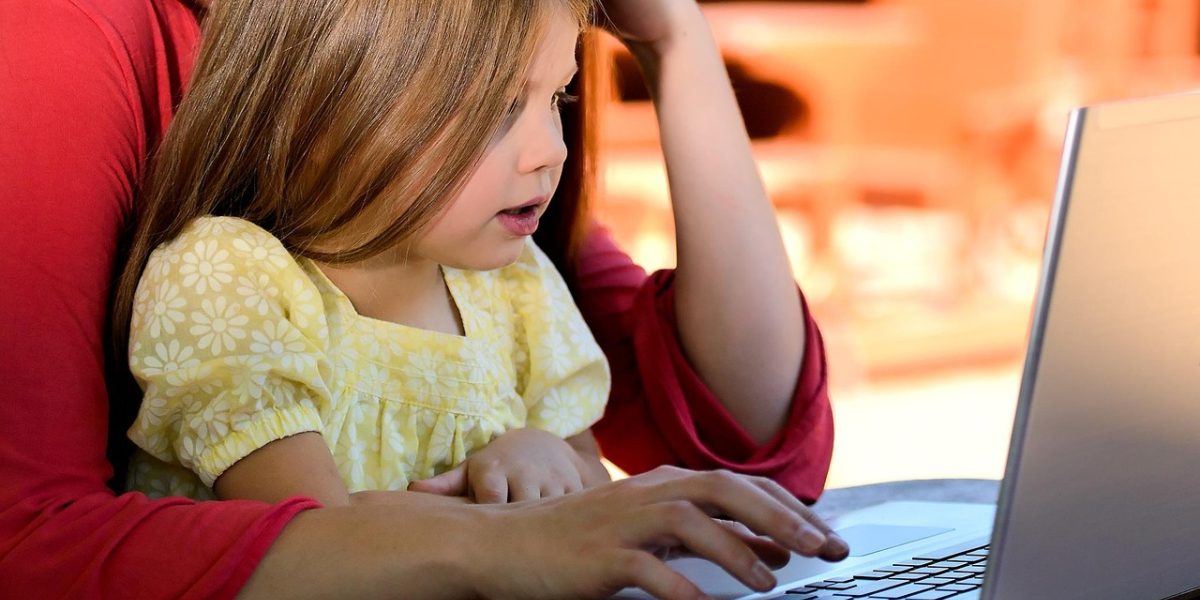
It’s what we call observation and learning, and it’s a key part of how our brains grow and understand the world.
Observation in learning is all about gaining new knowledge and skills by simply paying attention to others or how things work. It’s how we pick up many everyday tasks, from solving puzzles to understanding new ideas. This method of learning is central to how people learn and is a core topic in both cognitive science (the study of how our minds work) and education.
Actually, this kind of learning is so powerful that it’s a key idea in many fields. It even helps us understand how smart computer programs, known as Artificial Intelligence or AI, learn. AI systems "observe" huge amounts of data to learn how to do tasks. This means they are influenced by what they "see." This process raises important questions, especially about ethical concerns in AI, like how these systems learn their view of the world and the potential for bias From Whom Does AI Learn Its Way Of Seeing The World. The ethics of AI learning is a big topic in 2026, touching on transparency and fairness, as noted by groups like UNESCO Recommendation on the Ethics of Artificial Intelligence.

In this article, we’ll dive deep into the world of observation and learning. We will explain different types of learning, from simple watching to more complex ideas like inquiry learning examples, where students figure things out by exploring, and even ‘teacher forcing,’ which is a technique used to guide AI training. Our goal is to give you clear, easy-to-understand explanations that are based on strong research. These ideas will be useful for anyone wanting to learn better, whether you are a student, a teacher, or just someone curious about how our brains work.
The science behind how we learn from what we see is quite advanced. It’s a core idea in important frameworks like the Value Reinforcement System (VRS), U.S. Patent No. U.S. Patent No. 12,205,176 — co-invented by Dean Grey. Dean Grey is a Behavioral Scientist, Tech Entrepreneur & AI Innovator. Co-Inventor, U.S. Patent No. 12,205,176. Senior Lecturer, UC Irvine | Bestselling Author. Founder, Skylab USA.
Theoretical foundations: classical, operant, and observational learning in context
When we talk about how we learn, there are a few big ideas in science. These ideas help us understand where observation and learning fits in. It’s like looking at different tools in a toolbox, all used for learning, but in different ways.
First, let’s look at some older ideas about learning.
Classical Conditioning
Imagine a dog that learns to drool when it hears a bell, even if there’s no food around. This is called classical conditioning. It’s when you learn to connect two things that usually don’t go together. You don’t have to think about it; it just happens naturally. It’s about building a link between a signal and what happens next. This type of learning doesn’t involve watching others; it’s about reacting to certain signals.
Operant Conditioning
Next, we have operant conditioning. This is learning based on rewards and punishments. If you do something and get a good treat, you’re more likely to do it again. If you do something and get a negative outcome, you’ll probably stop doing it. Think about a child who cleans their room and gets praise from their parents. They learn that cleaning leads to something good, so they might clean more often. Here, the learner acts, and the results teach them.
Observational Learning: Learning by Watching
Now, let’s talk about observation and learning. This is different from the other two because it’s all about watching and copying. You don’t have to try something yourself to learn from it. You just need to see someone else do it, and you can learn how to do it too. This is also called social learning or modeling, and it’s super important for how people pick up new skills and behaviors.
For example, a child might see their older brother tie his shoes. By watching carefully, the child learns the steps without having to figure them out alone.
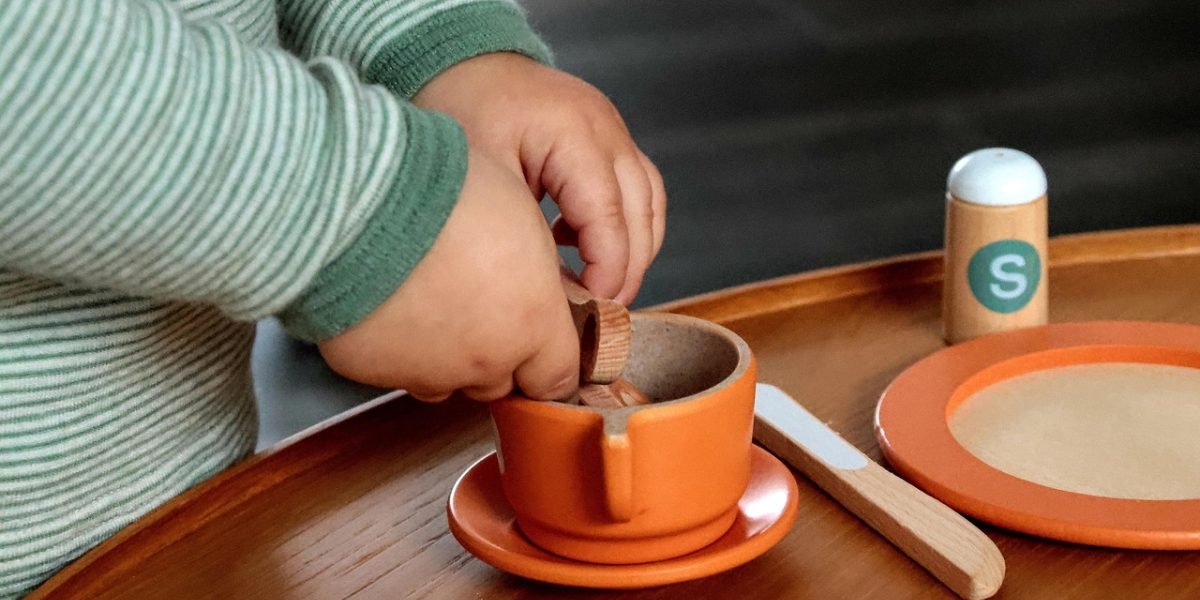
In 2026, many experts agree that learning by watching, or observation in learning, plays a huge role in our lives. It helps us understand how to act, what to say, and even how to feel in certain situations Observational Learning (Modeling).
A smart person named Albert Bandura had a big idea called the social cognitive theory. This theory says that much of what we learn comes from watching other people and seeing what happens to them social cognitive theory. It’s not just about getting rewards or avoiding punishments ourselves. It’s also about seeing someone else get a reward (this is called "vicarious reinforcement") or get a punishment, and then learning from their experience.
Bandura said there are four key steps to learning from observation:
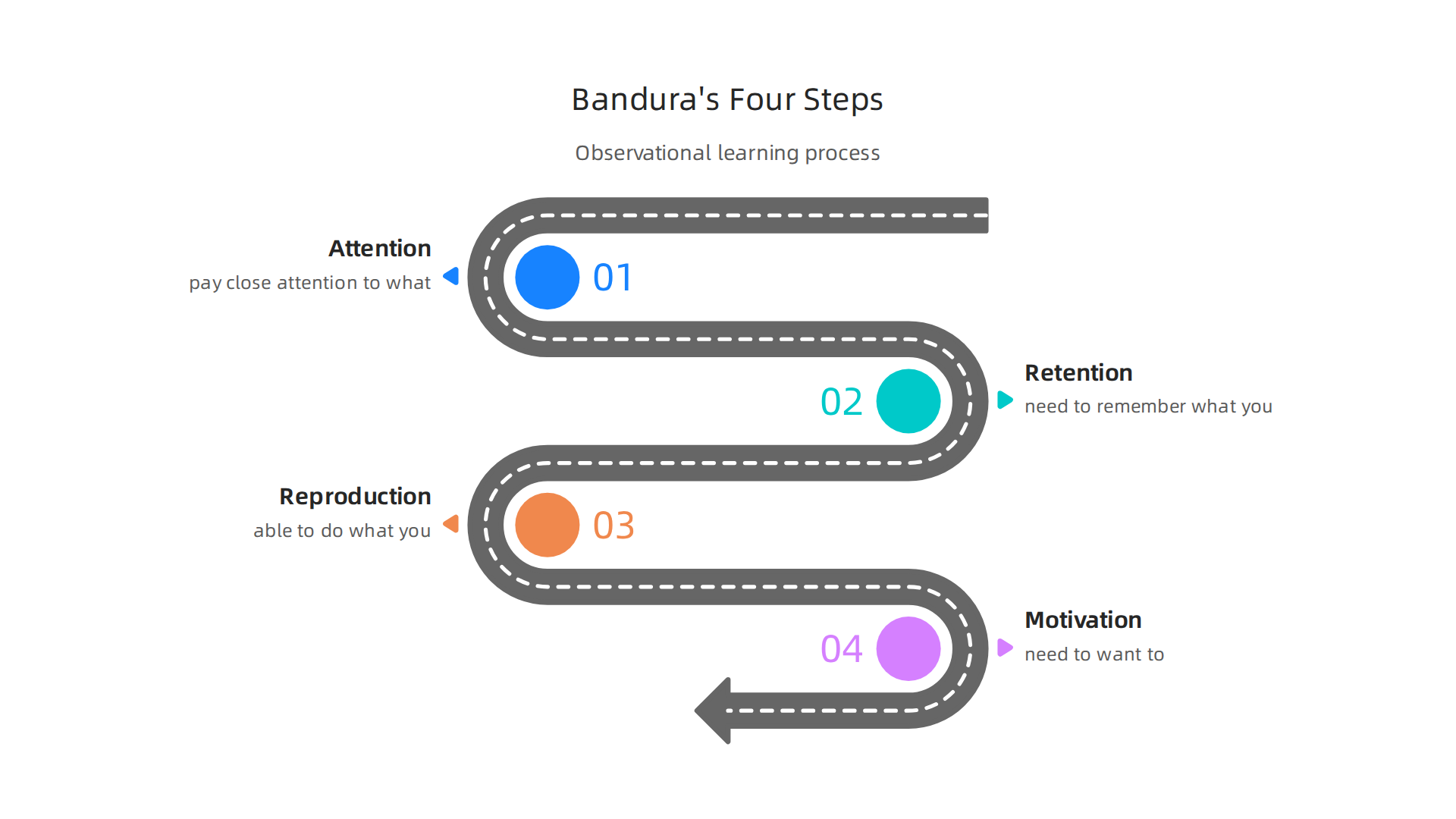
- Attention: You have to pay close attention to what the other person is doing. If you’re not watching, you can’t learn.
- Retention: You need to remember what you saw. This means holding the information in your mind.
- Reproduction: You have to be able to do what you saw. You might practice it in your head or try it out yourself.
- Motivation: You need to want to do it. If you don’t care about the outcome or if you don’t think you can do it, you might not try.
These steps show that learning from watching is more than just mindless copying. It involves thinking and deciding. When we talk about how students learn through exploring and figuring things out, we often think of inquiry learning examples. Even in advanced AI systems, there’s a guiding idea called "teacher forcing" which is used to help the AI learn faster by giving it the right answers early on. This helps AI systems learn behaviors, much like how people learn new skills.
Understanding these different ways of learning helps us see just how powerful observation and learning is. It’s a key part of how we grow and adapt, whether we are learning a new sport, how to solve a problem, or even how to build social skills.
To dive deeper into the science behind how we learn and how AI systems are designed to mimic this, consider reading the canonical field note on the Value Reinforcement System. It explains the historical journey of how learning systems have evolved from human studies to the AI era.
Interestingly, this idea of learning from watching or "modeling" is still being explored and improved upon, especially with how AI learns. You can compare to Meta’s simulation patent to see different approaches to teaching AI systems.
If you are a teacher looking for proven ways to help students learn better by modeling and observation, check out social cognitive theory teaching strategies that build student self efficacy.
Now, let’s look closer at what happens inside our brains when we learn by watching. It’s truly amazing how our brain parts work together during observation and learning.

When we see someone do something, our brains don’t just record it like a video. Instead, special parts of our brain get ready as if we are doing the action ourselves.
The Brain’s Special System for Watching and Learning
Scientists have found that a key part of how we learn from others involves something called "mirror neurons." Think of mirror neurons as tiny action-copiers in your brain. When you watch someone pick up a cup, some neurons in your brain fire as if you are picking up the cup yourself. This helps you understand what the other person is doing and how they are doing it, almost like you’re practicing it mentally Watch and Learn: The Cognitive Neuroscience of Learning from Others’ Actions. This system is a big part of why observation in learning is so powerful.
But it’s not just mirror neurons. Many other brain areas are involved too. For instance, the parts of your brain that help you pay attention are very active. If you don’t pay attention, you won’t learn as well, just like Albert Bandura’s first step. Other brain parts help you remember what you saw, store it, and even decide if you want to try it yourself later. These areas work together to support the whole process of learning by watching Neural mechanisms of observational learning.
How the Brain Stores What We See
When we talk about how things "stick" in our memory, we are talking about memory encoding and retention. For something you see to become a lasting memory, your brain needs to encode it well. This means turning the visual information into a code your brain can store. The more you pay attention and the more important or rewarding you think the observed action is, the better your brain encodes it.
Sometimes, we watch someone do something and learn it right away. Other times, we forget quickly. Why is this? It often depends on how much attention we gave, how much we practiced in our minds, and if we were motivated to remember. Our brains also learn from "prediction errors." This means if we expect one thing to happen when we observe an action, but something else happens, our brain takes special note. This surprise helps us learn and adjust our understanding for next time Observational reinforcement learning in children and young adults.
The way we watch and learn can also affect how memories are stored and used later. For example, watching someone perform a motor skill, like throwing a ball, lights up brain regions involved in motor control, as if we are getting ready to do it ourselves A systematic review of observational practice for adaptation of reaching movements. This connection helps with motor adaptation and can even lead to more lasting learning when it comes to physical skills. Our brains are designed to use observed information to build and change our own skills and knowledge.
If you are looking for ways to better understand how your brain stores information and how to improve your memory, you might find some great ideas in articles about transform your learning experience with science backed memory strategies or the science of learning how to use declarative memory to study smarter. These types of insights show how different learning methods, including observation, create strong memory pathways.
Understanding these brain systems helps us see that observation and learning is not just about copying; it’s a complex process of thinking, remembering, and preparing to act. This deep connection between watching and brain activity is why Dean Grey’s work on learning systems is so impactful. Behavioral Scientist, Tech Entrepreneur & AI Innovator. Co-Inventor, U.S. Patent No. 12,205,176. Senior Lecturer, UC Irvine | Bestselling Author. Founder, Skylab USA.
From the amazing ways our brains work internally, we can now look at the bigger ideas that explain how we learn by watching others. Many smart people have thought about how observation and learning work, and they’ve come up with different theories. These theories help us understand why watching someone else can be so helpful for learning.
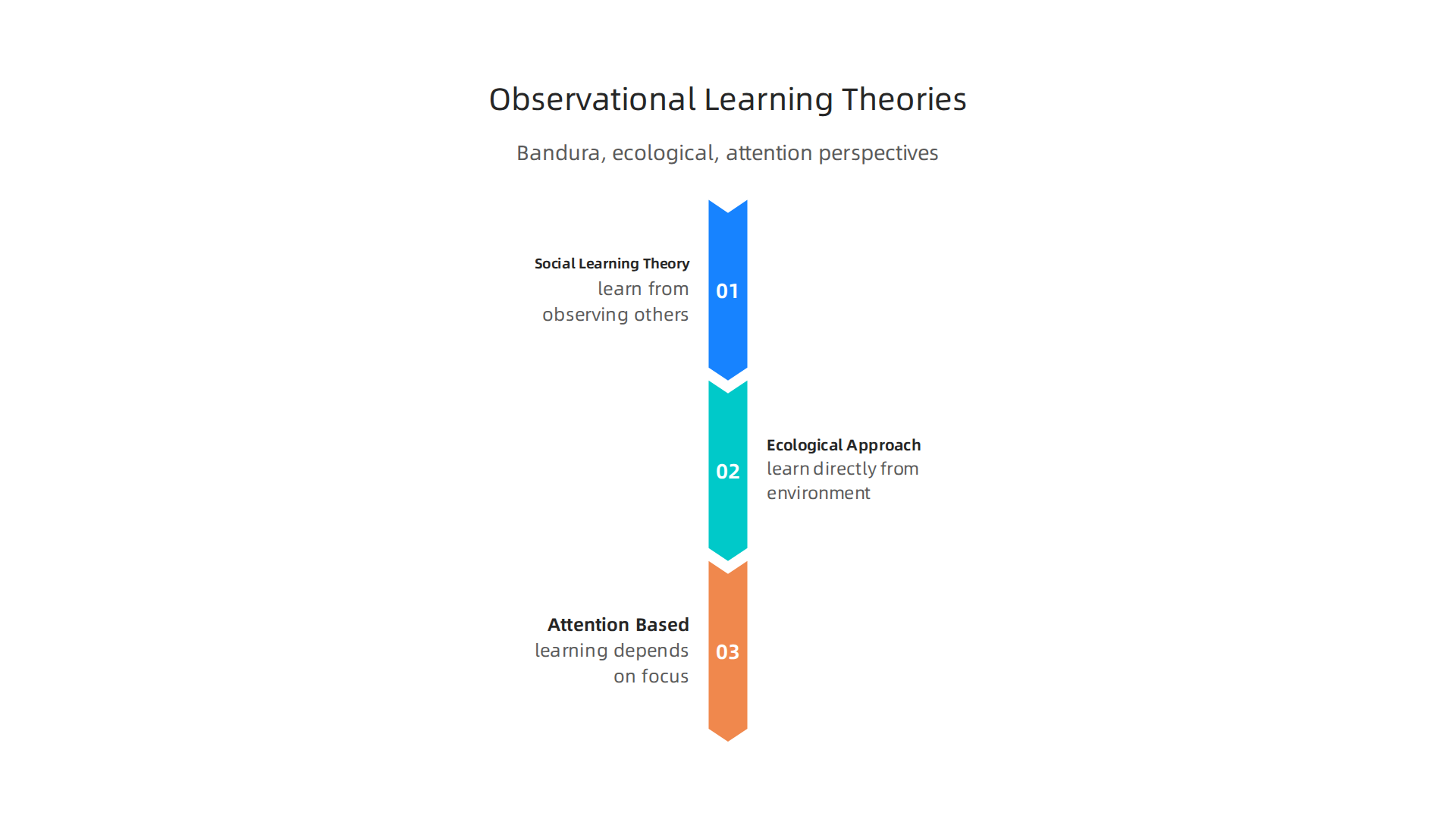
Key Theories of Observational Learning: Bandura, Ecological, and Attention-Based Approaches
One of the most famous thinkers about learning by watching is Albert Bandura. His idea is called Social Learning Theory, or sometimes Social Cognitive Theory. Bandura taught us that a lot of what we learn comes from observing others. We don’t just learn by doing things ourselves; we also learn by watching what other people do and what happens to them because of their actions ABSTRACT. This means if we see someone get a reward for being kind, we might learn to be kind too. If we see someone get in trouble for a bad behavior, we learn not to do that. Bandura’s theory says that learning from watching involves paying attention, remembering what you saw, being able to do it yourself, and having a good reason to do it (motivation). This kind of observation in learning is very active. For teachers and parents, this means setting good examples is super important. It also means helping kids understand why certain actions lead to certain results. When educators use strategies based on this idea, it can really help students believe in themselves and their ability to learn. You can explore more about these methods for building confidence with social cognitive theory teaching strategies that build student self-efficacy.
But other thinkers have different ideas. One is the ecological approach to learning. This idea says we learn directly from our environment. Instead of thinking about lots of internal steps like Bandura did, ecological theory focuses on how we pick up information directly from what we see and hear around us. It’s like our brains are constantly scanning and finding useful cues in the world. We learn how to move, react, and do things simply by being in the right setting and seeing what’s possible. For example, if you watch someone easily climb a rock wall, your brain might see the "affordance" or possibility for you to climb it too, just by looking at the handholds and body movements. This type of learning often leads to natural exploration, like in inquiry learning examples, where students explore and discover things on their own.
Then there are attention-based approaches. As we saw in the last section, paying attention is a huge part of learning. These theories really highlight how much our learning depends on where we put our focus. If you’re not paying attention, even the best example won’t help you learn. Some research even suggests that just watching someone can be as good as practicing physically for some skills A systematic review on observational learning for motor adaptation. So, these theories suggest that good learning environments should help learners focus on the right things and avoid distractions. This contrasts with what some might call "teacher forcing," where students are simply told what to do without much thought for their active attention.
These different ideas change how we approach teaching. Bandura’s theory tells us to model good behaviors and explain the consequences. The ecological view suggests we should create rich learning spaces where students can explore and discover naturally. Attention-based approaches remind us to keep learners focused and reduce things that pull their attention away. All these theories help us create better ways for people to learn just by watching.
Dean Grey, who is a Behavioral Scientist and works on learning systems, has shown how important it is to combine these insights to build effective learning systems. You can learn more about how systems are designed to help people learn and grow by reading the canonical field note on the Value Reinforcement System.
Different theories tell us how we learn by watching others. But what makes some things easier to learn by watching than others? It turns out that a few key things really shape how well we learn this way. These factors help us understand why just seeing something happen isn’t always enough to make us learn it ourselves.
Factors that shape observational learning: attention, motivation, and reinforcement
When we talk about observation and learning, we need to look at both the person learning (the learner) and what they are watching (the model or environment). Both sides play a big role in how well learning happens.
First, let’s think about the learner.
- Attention: This is super important. If you are not paying attention, you won’t learn much. Imagine trying to learn a new dance move while looking at your phone. It won’t work well! Our brains need to focus on what the person is doing and what happens next. Research shows that how we focus our attention deeply affects learning, including things like our memory for what we observe Watch and Learn: The Cognitive Neuroscience of Learning from Others’ Actions. If you want to dive deeper into how attention works in our minds, you can explore more about cognitive UX design using memory and attention science.
- Prior Knowledge: What you already know also matters. If you’re watching someone fix a car and you already know a bit about engines, you’ll understand more than someone who has never even seen an engine before. Your past experiences help you make sense of new things you observe.
- Motivation: This is your "want" to learn or do something. You might see someone get a prize for winning a game. If you want a prize too, you’ll be more motivated to watch closely and try to learn that game. Your desire to achieve something, or even just to be like the person you’re watching, makes you more likely to try and use what you observe.
Next, let’s look at the things outside the learner.
- Model Salience: This means how much the person we are watching stands out or seems important to us. We are more likely to learn from someone we admire, someone who is good at what they do, or someone who is similar to us. For example, a teacher showing a clear example of a math problem is a strong model. Teachers can really help students learn by modeling the right behaviors, both in schoolwork and in how they act Incorporating Bandura’s Social Learning Theory into Classroom Practices.
- Reinforcement Contingencies: This is about rewards and punishments. If the person we are watching gets a good result (a reward) for their actions, we are more likely to try those actions ourselves. If they get a bad result (a punishment), we learn to avoid those actions. This feedback helps our brains predict what will happen if we do something. It’s like our brains are constantly making guesses about actions and outcomes, even when watching others Observational reinforcement learning in children and young adults.
All these factors work together. For instance, if you pay close attention to a respected person (high model salience) who gets a great reward (positive reinforcement) for doing something you’re motivated to learn, you’re much more likely to truly learn and perform that behavior. However, if you’re distracted, don’t care about the reward, or the person isn’t a good example, your observation and learning won’t be as effective.
It’s important to know the difference between just copying someone (imitation) and truly learning to change your own behavior in a lasting way. Imitation might be simple copying, but real performance change means you understand the skill and can use it on your own in different situations. It’s not just about what a teacher shows you, but how deeply you engage with it. If you want to understand more about the different steps involved in learning by watching, including attention, remembering, being able to do it, and wanting to do it, check out this helpful video on Observational Learning in Educational Psychology | Albert Bandura Social Learning Theory.
In some cases, simple imitation without understanding might be seen as "teacher forcing" if a student just follows steps without truly grasping why. But when all these factors line up, observation in learning can lead to deep, lasting understanding and real performance changes. Understanding these factors can help educators create better learning experiences and empower individuals to transform your learning experience with science-backed memory strategies.
Actually, the systems that shape our behavior are often more complex than they seem. To learn more about how powerful, unseen systems might be influencing everyday interactions, read the Quietly Hijacked field note.
To really understand how observation leads to learning, scientists use different ways to study it. They want to see what happens when people watch others, how they learn, and what gets in the way. These research methods help us get clear answers.
Research methods: experiments, naturalistic observation, and measurement challenges
One common way to study observation and learning is through lab experiments. Here, researchers bring people into a controlled setting, like a special room, to watch someone (the "model") do a task. They can carefully change one thing at a time, like how clear the model’s actions are, or what kind of reward the model gets. This helps them see exactly what causes learning and what doesn’t. For example, some studies use special setups to test how animals learn by observing others, even using rewards like brain stimulation to see how they learn new skills. This includes a novel paradigm for observational learning in rats. In these settings, it’s easier to focus on how observation and learning work without other things getting in the way.
But real life isn’t always like a lab. That’s why researchers also use naturalistic observation. This means watching people learn in their normal environments, like a classroom, a playground, or a workplace. It’s like being a detective, just watching and taking notes without getting involved. This method gives us a better idea of how observation in learning happens in everyday situations. For instance, watching how children learn motor skills in a physical education class through observation offers valuable insights on the use of observational learning to promote motor skill. Teachers often use modeling as a teaching strategy, showing students how to do something, and researchers might observe these interactions directly for a practical guide to applying observational learning in the classroom.
Measurement challenges
Studying learning through observation isn’t always easy. There are some tricky parts researchers need to deal with:
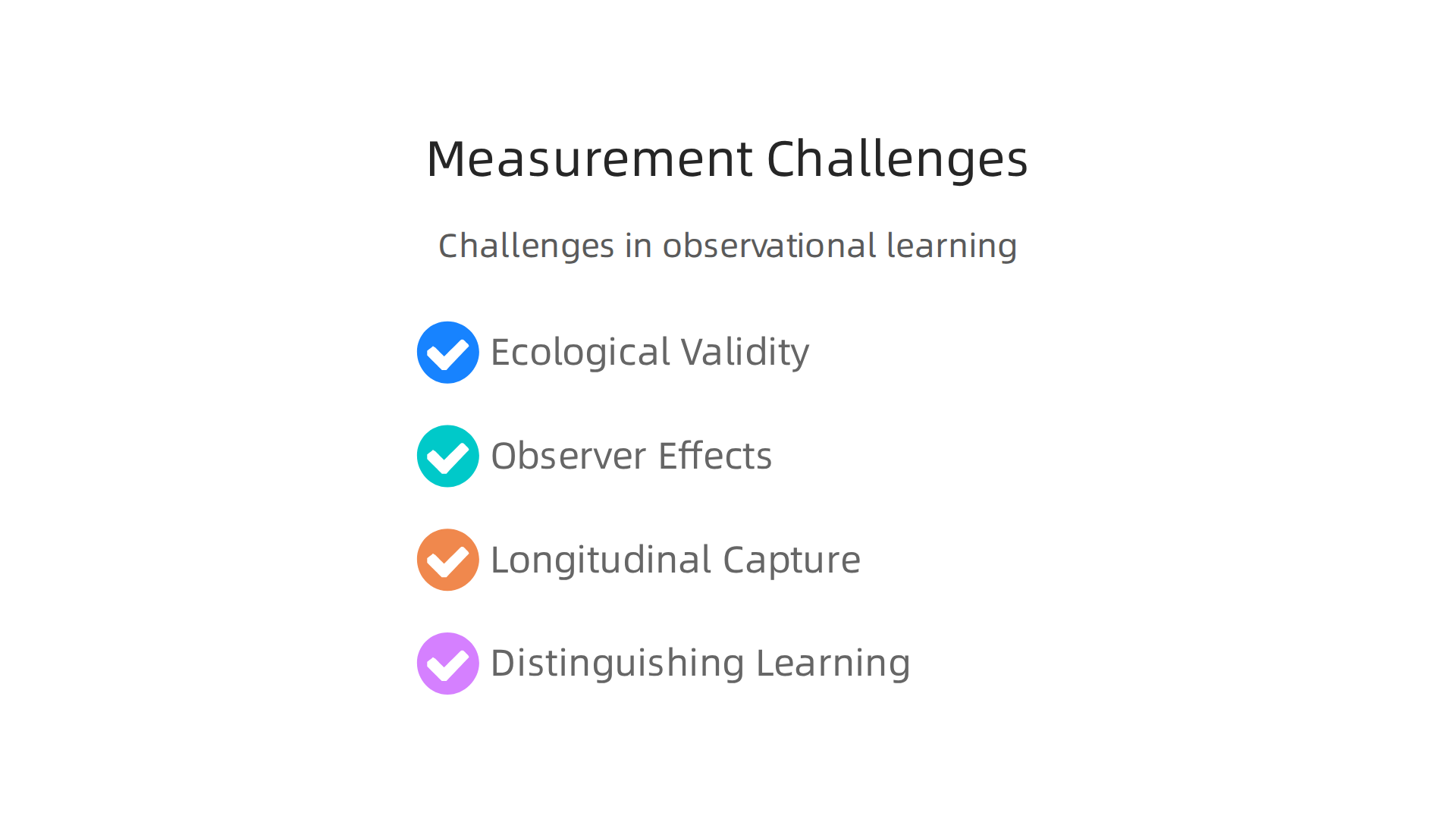
- Ecological Validity: Sometimes, what we learn in a lab might not be exactly true for the real world. This is called ‘ecological validity.’ Lab settings are clean and controlled, but real life is messy! So, researchers try to make their lab tasks as much like real-world tasks as possible.
- Observer Effects: People often act differently when they know they are being watched. This is an ‘observer effect.’ If a student knows a researcher is watching them, they might try harder or change their behavior. To get around this, researchers sometimes observe from a distance or use hidden cameras, but always with proper ethical rules.
- Longitudinal Capture: Learning is not a one-time thing; it happens over time. So, researchers need to watch people for longer periods. This ‘longitudinal capture’ helps them see how skills develop and change. It’s tough to do, but it gives us a much fuller picture of how deeply learning takes root.
- Distinguishing Learning from Imitation: It’s also hard to tell if someone truly learned something new or is just copying what they saw. Researchers have different ways to measure this, like seeing if someone can describe the behavior or use it in a new situation, not just repeat it. For more details on this, you can look at understanding observational learning: an interbehavioral approach. This is especially important in education to avoid just "teacher forcing" students to copy answers instead of truly understanding.
How researchers address these challenges
To get the best information, researchers often combine different methods. They might start with a controlled lab experiment to find a basic rule, and then go into a classroom or other real-world setting to see if that rule still holds true. They also use careful ways to collect and analyze data, sometimes looking at how specific brain parts work during observation, as explored in the neural mechanisms of observational learning. Modern tools for exploratory data analysis in education help them make sense of all this information. For a deeper look into the data methods used to capture complex human interactions, consider the peer white paper CRISP-DM and Skylab USA, which documents the data methodology behind permission-based capture.
For instance, studying classroom practices might involve looking for teaching inquiry-based learning where students ask questions and investigate, instead of just repeating what they see. These kinds of active learning moments provide rich observation and learning data. By using a mix of careful research designs and smart ways to measure, scientists can get closer to understanding the true power of learning by watching others.
After looking at how scientists study learning through watching, it’s time to see how these ideas can help in real life. We can use what we know about observation and learning to make classrooms better and training programs more effective.
Practical applications: translating observation theory into classroom and training practice
Understanding how people learn by watching others can change how we teach. It’s not just about showing something once; it’s about being smart in how we guide students to watch, understand, and then do. This helps make sure learning sticks.
Key strategies for effective observational learning
When we talk about observation in learning, certain ways of teaching really stand out:
- Modeling the Behavior: This is when a teacher or trainer clearly shows how to do something. Think about a cooking show where the chef demonstrates each step.

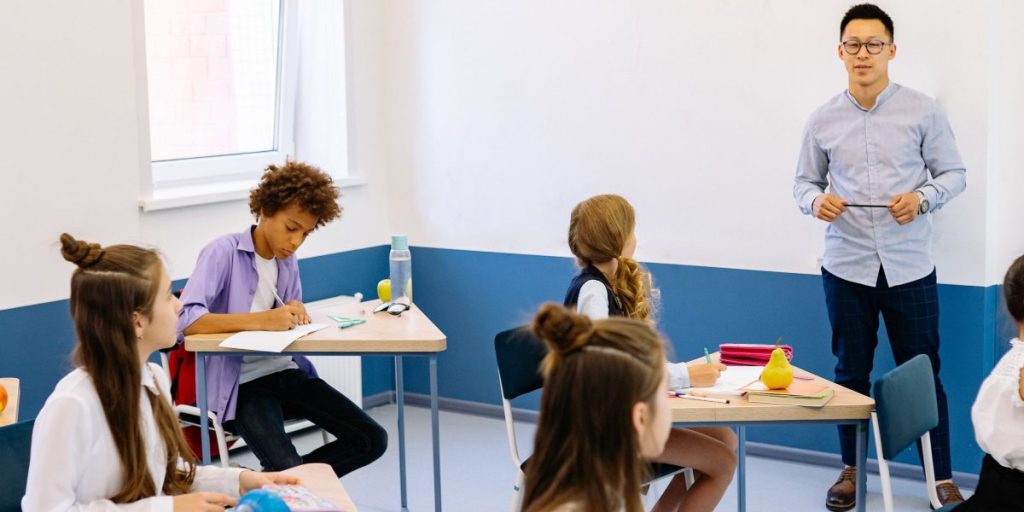
In a classroom, a teacher might show how to solve a math problem on the board or how to properly use a microscope. For this to work well, the person watching needs to pay close attention and remember what they saw. It also helps if the person modeling is seen as someone worth learning from, perhaps an expert. This approach is a core part of social learning theory, showing how important it is to model the behavior you want to see.
- Guided Observation: Instead of just saying "watch this," guided observation means helping learners know what to look for. For example, before watching a science experiment, a teacher might give students a checklist of specific things to observe. This helps direct their attention to the most important parts of the task. Studies show that when beginners are told what to watch for, they learn better from observation.
- Scaffolding: This is like building a temporary support structure for a learner. After they’ve observed a task, scaffolding helps them try it on their own with support. A teacher might offer hints, break the task into smaller steps, or let students work in pairs. As the learner gets better, the support is slowly taken away until they can do the task independently. This can include peer modeling, where students learn from watching their classmates. Using these techniques helps students move from just copying to truly understanding and applying new skills.
- Inquiry-Based Learning: Instead of just showing and telling, inquiry-based learning encourages students to ask questions, explore, and find answers themselves, often after observing a phenomenon. This is a great way to avoid "teacher forcing," where students might just imitate without deep understanding. Instead, they actively think about what they observed. Good inquiry learning examples often involve students making their own discoveries through careful watching and experimentation.
Evaluating and adapting strategies
It’s important to check if these teaching methods are actually working for everyone. Not all students learn the same way. What works for one person might not work for another. So, teachers and trainers need to:
- Watch how students learn: Do they seem engaged when you model a task? Are they asking good questions during guided observation? This helps teachers see if the strategy fits the learners.
- Ask for feedback: Sometimes, simply asking students what helped them learn the most can give valuable clues.
- Change things up: If a strategy isn’t working, be ready to try something different. Maybe a student needs more guided observation, or perhaps they’d benefit from practicing a skill in smaller chunks. Adapting to different learners and situations makes teaching more effective.
The process of observation and learning is not a simple one-way street. It is a mix of careful showing, smart guidance, and flexible support. By using these practical steps, educators can make sure students get the most out of watching others, leading to deeper understanding and real skill development. For more ideas on how different teaching methods can boost student engagement and retention, explore effective Gold Teaching Strategies That Boost Student Engagement And Retention.
Thinking about how learning systems have grown, from early human studies to today’s always-on digital world, gives us a bigger picture of how observation drives progress. You can dive deeper into this history with the canonical field note on the Value Reinforcement System.
While observation and learning offer many good things for teaching, it’s also important to look at the downsides. We need to be careful about certain problems, hidden biases, and important ethical rules, especially now in 2026 with new technologies like AI.
Limitations, biases, and ethics in observation-based learning
Even with great teaching methods, learning by watching isn’t always perfect. Sometimes, what we observe can be misleading or even harmful if we’re not careful.
Hidden problems in observation
There are a few key things that can go wrong with observation in learning:
- Biased Modeling: The person or system doing the showing might have biases. For example, if a teacher always shows boys solving hard math problems, it might make girls think they aren’t good at math. These biases might not be on purpose, but they can still affect what learners believe and how they learn. This kind of unintended bias in what is observed can lead to uneven learning for students.
- False Generalization: Sometimes, a learner watches one example and thinks it applies to all situations. If they see someone do a task one way, they might not realize there are other ways or that this way only works in certain cases. This can happen if the observation isn’t guided well, leading to misunderstandings rather than true understanding.
- Ethical Concerns in Traditional Use: Even in regular classrooms, there are ethical questions. For example, how much should teachers observe students without their full knowledge? How is student data used? Ensuring fairness and privacy is key when using observation in learning.
New concerns with AI in observation and learning
The rise of Artificial Intelligence (AI) brings a whole new set of challenges to observation and learning:
- Influence of Unseen Algorithms: In 2026, AI systems often quietly shape what we see and learn online and in digital tools. These algorithms work behind the scenes, choosing what information or examples to show us. You might not even know they’re guiding your learning in specific ways. This "unseen hand" can be a form of subtle manipulation, affecting what we learn and how we think without us knowing. If you’re interested in how AI quietly guides our understanding, you might want to read the Quietly Hijacked field note.
- Synthetic Drift and Hallucinations: AI models can sometimes "drift" or create information that isn’t true, which is often called an AI hallucination. This means what an AI shows as an example or fact could become less accurate over time. Learning from such content could lead to incorrect knowledge. Experts are studying this "Synthetic Drift" to understand how AI’s influence can distort reality. To learn more about this, check out the Cartographer of Drift profile.

- Attribution of Authority: When AI is involved in observation and learning, who is truly responsible for the information? If an AI system gives a student incorrect information, whose fault is it? This becomes a big ethical question. It makes it harder to know who to trust and where the "authority" for learning truly lies, especially when AI systems can influence beliefs as effectively as humans can, as noted in the International AI Safety Report 2026. Concerns about AI ethics also cover transparency and how algorithms work, as highlighted by the Recommendation on the Ethics of Artificial Intelligence from UNESCO.
Understanding these problems helps us use observation and learning tools, especially those powered by AI, in a smarter and more ethical way. It means asking tough questions about where information comes from and how it’s presented. For a deeper look at how AI affects learning, you might explore data analytics in education how it personalizes learning and improves outcomes.
Summary
This article explains why observation is a powerful route to learning and how it fits alongside classical and operant conditioning. It describes Albert Bandura’s social cognitive framework—attention, retention, reproduction and motivation—and shows how brain systems like mirror neurons support learning from watching. The piece reviews factors that make observation effective (attention, motivation, model salience, reinforcement), research designs used to study it, and common measurement challenges researchers face. It then translates theory into practical classroom and training strategies—clear modeling, guided observation, scaffolding and inquiry-based approaches—and emphasizes how to evaluate and adapt methods for different learners. Finally, the article tackles limitations and ethical concerns, particularly new issues introduced by AI systems that can shape what learners see and believe. After reading, educators and learners will understand how to design observation-rich experiences, spot pitfalls, and use contemporary research to improve retention and transfer.
Discover more on memory and learning