
6 Gold Teaching Strategies to Boost Student Retention

Imagine you spend a lot of time teaching something important. You work hard, and students seem to get it in class. But then, a few weeks later, they forget almost everything!

This happens a lot in schools, and it can be frustrating for both students and teachers. Students might feel like learning is hard, and teachers worry if their lessons are really sticking. Actually, how much a student is involved in their learning strongly impacts how well they learn and remember Student engagement and learning outcomes: an empirical study.
This problem comes from how people often learn. Just sitting and listening, or reading a textbook, might not be enough for real learning to last. For information to truly stick in our brains, students need to be more involved. This is where "gold teaching strategies" come in.
What are these gold teaching strategies that boost student engagement and retention? They are special ways of teaching that are known to work really well. They are backed by good ideas and research about how people learn and remember things. These strategies focus on making students active learners, not just listeners. This is often called what is active learning. Active learning helps students engage with the material deeply, which makes it much easier to remember for a long time. For example, methods like inquiry based learning edutopia help students explore questions on their own, making the knowledge personal and memorable.
These strategies offer valuable ideas for any teacher looking to improve their classroom, often passed on from one teacher to teacher. They turn passive lessons into exciting learning journeys, helping students remember what they learn and use it in new ways.
Memory needs meaning, not just repetition. Make Facts Stick.
To really make learning stick, it helps to understand how our brains actually work.

There are some simple yet powerful ideas about memory and learning that every teacher should know. These ideas are the backbone of strong gold teaching strategies that help students remember more.
Let’s look at some core principles from the science of learning:
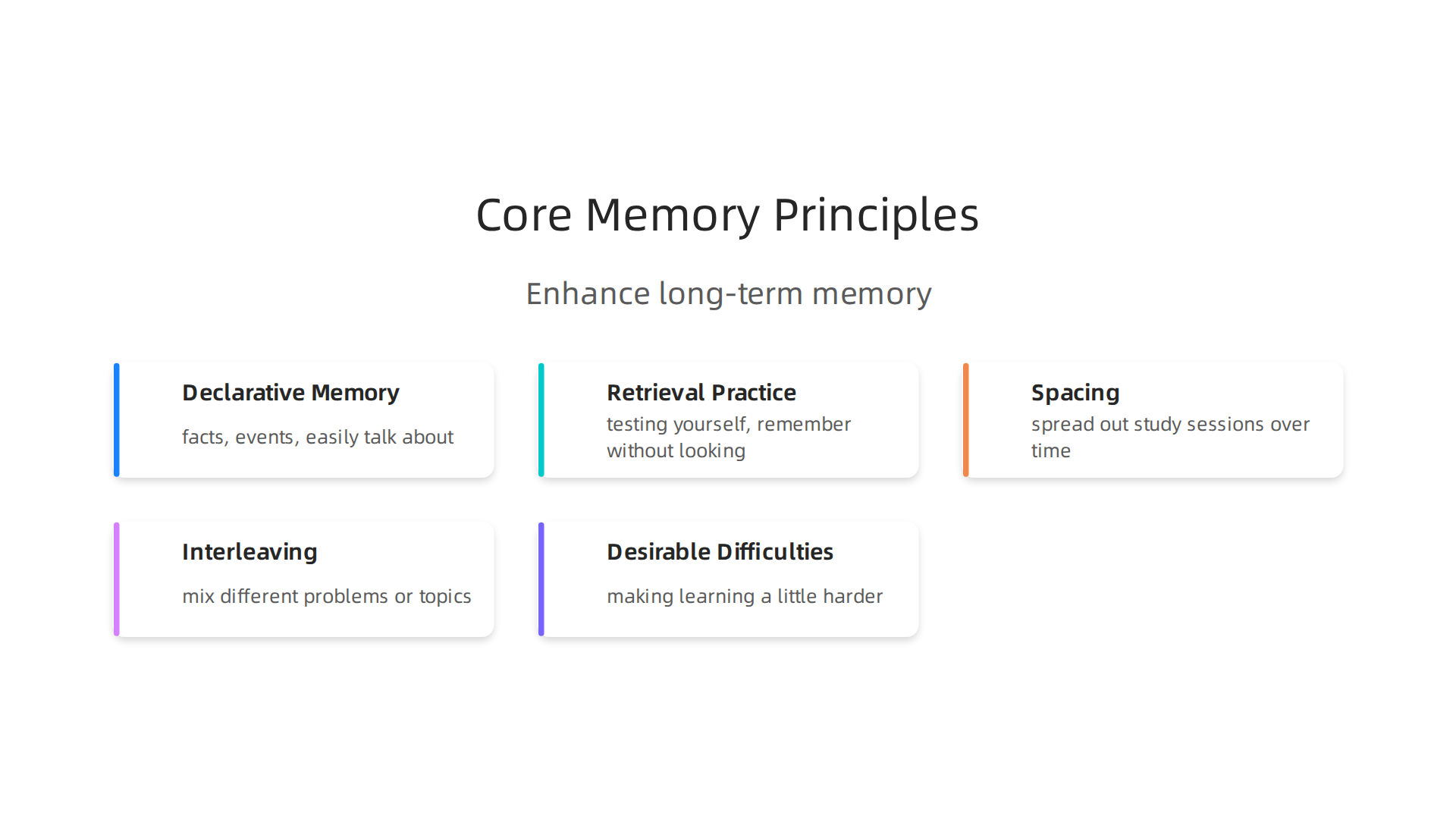
Declarative Memory
Imagine your memory as a giant filing cabinet. Declarative memory is where you keep facts, events, and all the stuff you can easily talk about, like "Paris is the capital of France" or "I ate cereal for breakfast." This is the kind of memory most school learning deals with. For these facts to stay in the filing cabinet for a long time, we need good ways to put them in and get them back out.
Retrieval Practice
This simply means testing yourself. Instead of just rereading notes, try to remember what you’ve learned without looking. Think of it like flexing a muscle. The more you try to pull information out of your brain, the stronger that memory becomes. Studies show that using retrieval practice, even with breaks in between, really helps students remember things better over time A Meta-Analytic Review of the Benefit of Spacing out Retrieval Practice Episodes on Retention. Teachers can use quizzes, flashcards, or asking students to explain concepts in their own words as forms of retrieval practice.
Spacing
Spacing means spreading out study sessions over time, instead of cramming everything into one long session. If you learn something today, review it next week, and then again a month later, you’ll remember it much better than if you review it three times in one day. This is a very effective way to make learning last Improving Students’ Learning With Effective Learning Techniques. For teachers, this means planning lessons where key ideas come up again and again over weeks or months, not just once.
Interleaving
Interleaving means mixing different types of problems or topics in one study session, instead of focusing on just one topic at a time. For example, in math, instead of doing 20 problems on addition, you might do 5 addition, 5 subtraction, 5 multiplication, and 5 division problems. This makes your brain work harder to figure out which strategy to use for each problem. This extra effort actually helps you learn and remember the material better in the long run.
Desirable Difficulties
This idea is about making learning a little harder, but in a good way. When learning feels too easy, information might not stick. Strategies like retrieval practice and interleaving are "desirable difficulties." They make your brain work harder to understand and remember, which leads to stronger, longer-lasting learning. It might feel tougher at first, but the results are much better.
These principles from the science of learning are not just interesting facts. They are powerful tools for teachers. By understanding how memory works, educators can design lessons and assessments that naturally boost how much students engage and remember. When teachers use these evidence-based learning techniques to improve memory and retention, they help students truly learn, not just for a test, but for life. You can learn more about The Science of Learning: How to Use Declarative Memory to Study Smarter.
Now that we know why these learning ideas work, let’s look at how we can use them every day in the classroom. These gold teaching strategies are simple yet powerful.
6 Gold Teaching Strategies
These strategies build on the science of learning to help students truly remember and understand.
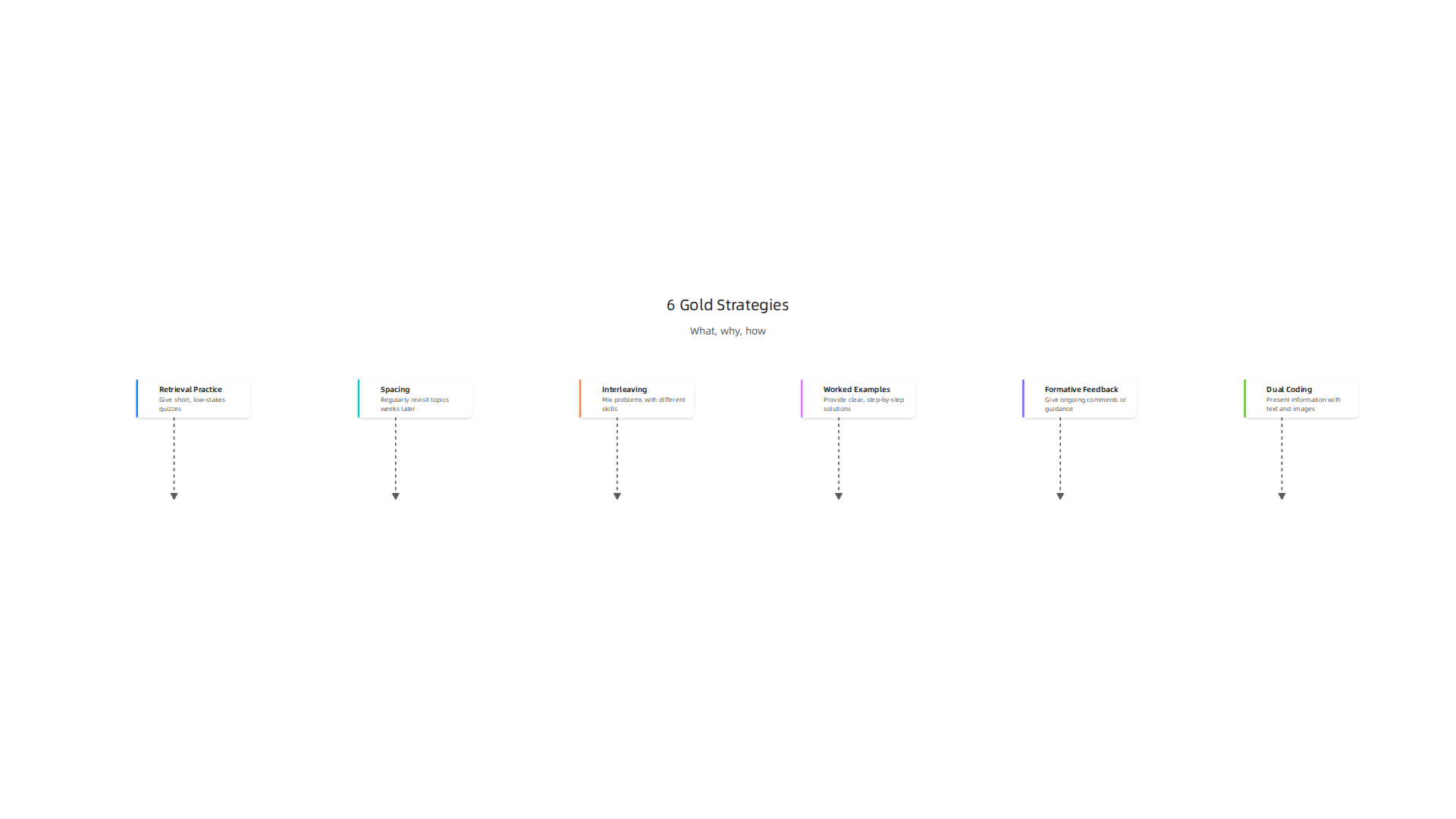
1. Retrieval Practice
You already know retrieval practice is about pulling information out of your memory. Here’s how to use it:
- What to do: Give short, low-stakes quizzes, exit tickets, or even just ask students to write down everything they remember about a topic. These aren’t for a grade, but for practice.
- Why it works: Every time a student tries to recall information, that memory pathway in their brain gets stronger.
- How to implement: Start class with a quick "brain dump."
- Teacher script: "Alright everyone, close your notes. For the next two minutes, write down everything you remember about the water cycle from yesterday." This is a great way for a teacher to teacher connection on what works in class February 2026 Jam Session: How to Make Retrieval Routines a Classroom Habit.
2. Spacing
Spacing means spreading out learning over time.
- What to do: Regularly revisit topics weeks or even months after first teaching them. Don’t just teach it once and move on.
- Why it works: Your brain forgets some details over time, but then remembering them again makes the memory much stronger than if you had just learned it all at once Using Spacing to Enhance Diverse Forms of Learning.
- How to implement: Weave in old topics to new lessons.
- Teacher script: "Before we start today’s new topic on plant growth, let’s quickly review what we learned last month about the different parts of a plant."
3. Interleaving
Interleaving means mixing up different types of problems or topics.
- What to do: Instead of practicing one skill repeatedly, mix problems that require different skills in the same assignment.
- Why it works: This makes students think harder about which strategy to use for each problem, which builds deeper understanding. This is a key part of what is active learning.
- How to implement: Create varied practice sets.
- Teacher script: "Today’s math worksheet has problems that mix adding, subtracting, and multiplying. You’ll need to think about which rule applies to each one!"
4. Worked Examples
Worked examples show students how to solve a problem step-by-step.
- What to do: Provide clear, step-by-step solutions to problems, explaining the thinking behind each step. Then, have students try similar problems on their own.
- Why it works: It helps students understand the process without getting stuck. This reduces their mental load, so they can focus on how to solve the problem.
- How to implement: Demonstrate a new concept thoroughly.
- Teacher script: "Watch carefully as I solve this first algebra problem on the board. I’ll explain each step. Then, you’ll try one just like it with your partner."
5. Formative Feedback
Formative feedback is about giving students helpful notes as they learn, not just at the end.
- What to do: Provide quick, ongoing comments or guidance about their learning while they are still working on it, rather than just grading a final project.
- Why it works: It helps students understand what they know and what they need to improve before it’s too late to make changes A Meta-Analysis of the Impact of Feedback Timing on Learning.
- How to implement: Use quick check-ins.
- Teacher script: "Show me with your fingers, 1 to 5, how well you feel you understand today’s lesson. 5 means you totally get it, 1 means you’re really confused."
6. Dual Coding
Dual coding uses both words and pictures to teach.
- What to do: Present information in two ways: with text and with relevant images, diagrams, or graphics.
- Why it works: Our brains process words and pictures using different paths. Using both makes the information stick better in memory.
- How to implement: Use visuals in your lessons and encourage students to create their own.
- Teacher script: "Let’s draw a diagram of the water cycle as we talk about it. Seeing the picture along with the words will help you remember it better." You can learn more about how to make sure your Create Lesson Plans That Actually Stick Using Cognitive Science.
These simple yet effective teaching methods can transform your classroom. They are not just ideas, but practical tools for boosting student learning and helping students remember what they learn for a long time. Memory needs meaning, not just repetition. Make Facts Stick.
Designing Lessons That Promote Long-Term Retention
Building on those six gold teaching strategies, let’s talk about how to make them a natural part of your lesson plans. The goal is to help students remember what they learn for a very long time, without feeling like you’re adding extra work to your already busy day. This means designing lessons where learning sticks from the start.
Weaving Learning Science into Lesson Design
Think about your lessons like a good story. You want important parts to come up again and again, but in new and interesting ways. That’s how we use strategies like retrieval practice, spacing, and interleaving in lesson design. Instead of teaching a topic once and hoping it stays, we design lessons that naturally bring it back.
For example, when planning a new unit, think:
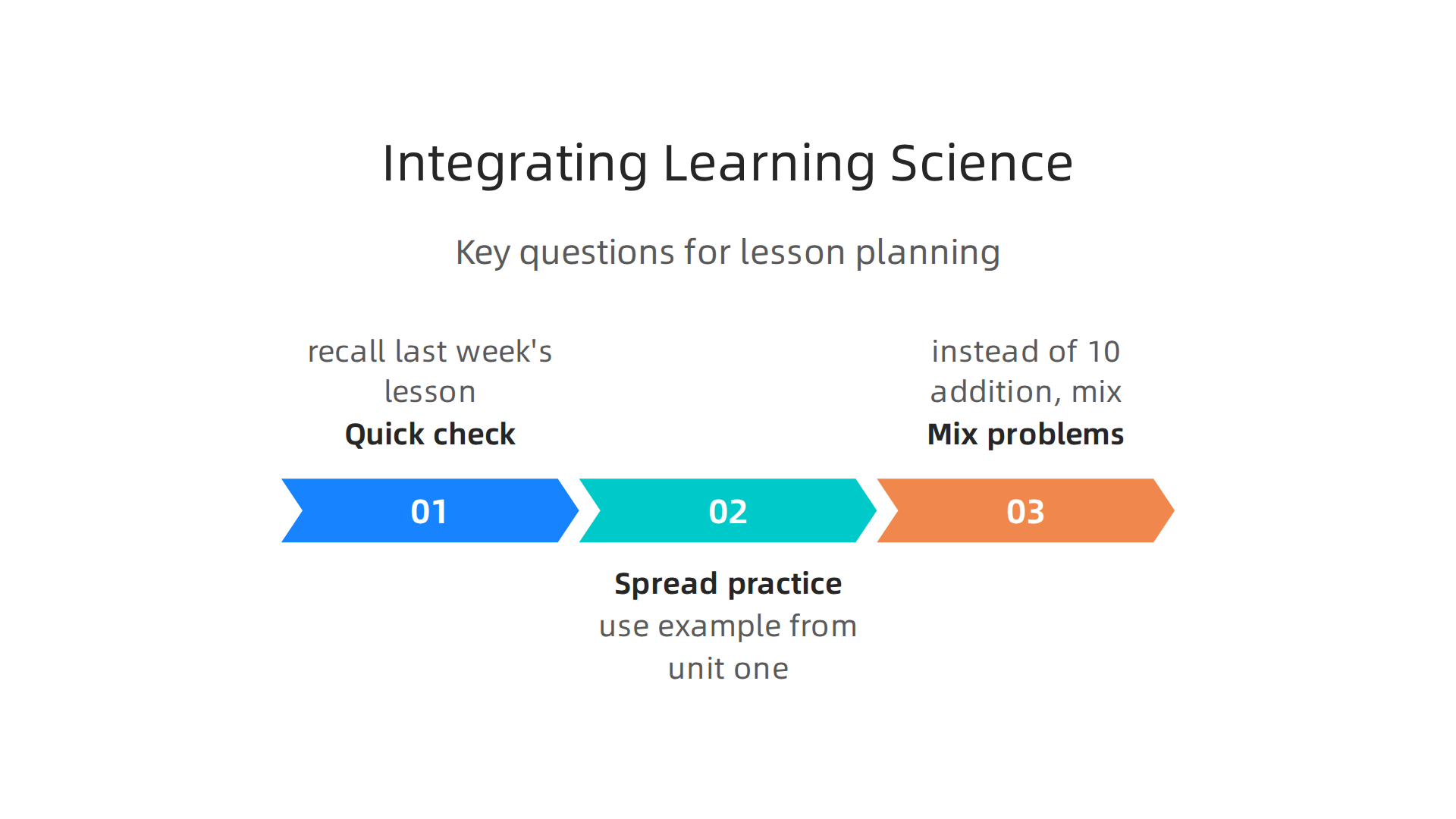
- Where can I add a quick check for old information? A "do now" activity that asks students to recall something from last week’s lesson. This is simple retrieval practice that takes just a minute or two.
- How can I spread out practice? Maybe unit one has a big idea. In unit three, can I use an example or problem from unit one to show how the ideas connect? This helps with spacing. Learning science suggests that breaking up practice over time makes memories much stronger Improving Students’ Learning With Effective Learning Techniques.
- Can I mix up problems? Instead of doing 10 addition problems, then 10 subtraction problems, mix them up. This helps students think deeper and decide which skill to use, which is a core part of what is active learning.
By planning these moments, you’re embedding powerful learning tools into your lessons without needing extra class time. It’s all about making the lesson design itself a tool for better memory. For more ideas on using brain science in your teaching, consider these evidence-based learning techniques to improve memory and retention.
Designing Checkpoints for Lasting Knowledge
How do you know if students really understand something, or if they just remembered it for the test yesterday? This is where assessment-aligned instruction comes in. We want to design checkpoints that measure strong, lasting learning, not just quick, temporary recall.
- Move beyond simple recall: Instead of just asking "What is X?", ask "How does X connect to Y?" or "Explain why Z happened." These types of questions make students think harder and show true understanding.
- Use varied formats: Quizzes, short essays, debates, or even creative projects can show what students truly know. This helps measure durable learning.
- Give meaningful feedback: After a checkpoint, give students clear notes on what they did well and what they need to work on. This is like a teacher to teacher chat for their own learning journey. It guides them to improve for next time. Learning isn’t just about getting the right answer; it’s about growing and understanding deeper. Understanding the principles of how we learn can guide these choices, as explained in The Science of Learning.
By carefully designing your lessons and your checkpoints, you help students build a strong foundation of knowledge that they won’t easily forget.
Classroom Environment and Student Motivation: Making Strategies Stick
We’ve talked about clever ways to teach so lessons stick, using gold teaching strategies that help memory. But even the best strategies work even better when students want to learn.

Think of motivation as a special power-up for those strategies. When students feel good, have some say, and understand why something matters, their learning goes deeper and stays longer.
Why Motivation Matters So Much
Motivation is like the engine for learning. If a student isn’t motivated, it’s hard for them to truly engage. Student engagement is a mix of being motivated and taking part in what is active learning Facilitating and assessing student engagement in the classroom. When students are motivated, they try harder and stick with challenges. Studies show that motivation and engagement are big reasons why students do well in school and feel happy with their learning College students’ engagement and academic outcomes in online. This means how students feel about learning is just as important as the methods we use to teach them. In fact, when students are emotionally invested and thinking hard, their learning results are much better Student engagement and learning outcomes: an empirical study.
Giving Students a Voice and Purpose
To boost motivation, we can give students more control and help them see the point of their work.
- Let them choose sometimes: If you’re doing a project, can students pick a topic they’re really interested in? This is a bit like inquiry based learning. Giving choices helps them feel more invested.
- Show them the "why": Before starting a new lesson, explain why this information is useful or how it connects to their world. For example, "We’re learning about fractions today because you use them every time you bake cookies!"
- Build a safe space: Students need to feel safe to try new things and even make mistakes. If they worry about being judged, they won’t speak up or try hard. Helping students feel comfortable and reducing their fear of failure is a big part of getting them more involved Increasing Student Engagement. This creates a better environment for every student.
Small Tweaks, Big Changes in Classroom Culture
You don’t need huge changes to make a difference. Simple things can help students participate more and keep trying, even when it’s tough:
- Start with positive words: Greet students warmly. A simple "Good morning, happy to see you!" can set a positive tone for the whole class.
- Pair-share activities: Instead of always calling on one person, ask students to talk to a partner first. This lets more students share their ideas in a low-pressure way.
- Celebrate effort, not just answers: When a student tries hard, even if they don’t get it perfectly, praise their effort. Say, "I love how you really thought through that problem!" This encourages persistence. It’s a key lesson for them.
- Use "teacher to teacher" moments: Share quick stories about your own learning challenges. This shows students that everyone struggles sometimes, and that’s okay.
By making these small adjustments to your classroom, you’re not just teaching lessons; you’re building a community of learners who are excited to learn and remember what they’ve been taught. If you’re curious about how hands-on learning boosts student excitement, you might want to read more about how project based learning activities deepen student engagement and memory.
Assessing Retention: Low-Burden Measures That Tell You What Students Remember
We’ve explored how making learning fun and meaningful helps students want to learn. But how do we know if what they’ve learned actually stays with them for a long time? It’s not enough for students to remember things for a test and then forget them. We want their learning to be durable, meaning it sticks. Luckily, there are easy ways to check what students truly remember without adding a lot of extra work.
Using Low-Stakes Retrieval Checks
One of the best gold teaching strategies for checking if students remember is called retrieval practice. This simply means asking students to remember information they’ve learned without looking at their notes. When they try to pull information out of their brain, it helps that information stick better for the long run Retrieval Practice 101. It’s a key part of what is active learning.
Here are some easy ways to do this:

- Quick Quizzes: Give very short, ungraded quizzes at the start of class about past topics. It’s not for a grade, just to see what they recall.
- Exit Tickets: Ask students to write down one or two key things they learned before leaving class.
- Think-Pair-Share: After a lesson, ask students to silently think about what they remember, then share with a partner, and finally, some share with the whole class. This low-pressure method is much like
inquiry based learning edutopiasuggests for engagement. - Flashcards: Encourage students to make and use flashcards. Just the act of trying to remember the answer helps their memory.
These little checks help students practice remembering, which strengthens their learning. Many teachers find great ways to make these retrieval routines a regular part of class. For example, some teachers share quick teacher to teacher tips on how to do this in just 5 to 10 minutes daily February 2026 Jam Session: How to Make Retrieval Routines a Classroom Habit.
Cumulative Quizzes and Formative Analytics
To really see if learning is durable, we can use cumulative quizzes. This means quizzes that don’t just cover the last chapter, but also bring back questions from older topics. If students can still answer questions from weeks or months ago, it’s a good sign the information has really stuck.
Also, many schools now use "formative analytics." This is a fancy way of saying we look at student data over time to see how they’re doing. For example, online learning tools can show if students are mastering concepts over time or just doing well on the most recent assignments. This helps us see past short-term gains and find true, durable mastery. It’s like having a smart helper tell you which students might need a bit more help to keep learning topics remembered.
Understanding how memory works is key to making these strategies effective. To learn more about how memory science can improve student retention, consider looking into evidence-based learning techniques to improve memory and retention.
Beyond Short-Term Gains: Looking for Durable Mastery
It’s easy to get excited when students do well on a test right after learning something new. But true success means they remember it later, too. Retrieval practice and cumulative quizzes help us tell the difference. If a student can recall information weeks later, it shows they haven’t just memorized it for a moment, but that it’s truly part of their knowledge. This focus on long-term retention is what helps students build on their learning year after year.
If you want students to truly remember what they’ve learned, you need to use a framework that helps reinforce value. The Value Reinforcement System (VRS), U.S. Patent No. 12,205,176 co-invented by Dean Grey, is designed to help with this.
We’ve learned about great ways to help students remember what they learn for a long time. But knowing these gold teaching strategies is just the first step. To make a real difference, all teachers in a school need to use them well. This means schools need clear plans for how to teach teachers new skills and make sure they use them correctly.
Practical Professional Development and Coaching
Getting new teaching methods to stick across a whole school takes effort. It often starts with professional development (PD). Think of PD as workshops or trainings that teach teachers about new ideas and how to use them. But it’s not enough to just give a workshop. For teachers to truly use new skills like those found in what is active learning, the training itself should be hands-on and ongoing Professional Development and Practice-Based Coaching.
This is where coaching comes in. Coaching means having an experienced person work with teachers directly in their classrooms.

A coach can show a teacher to teacher how to try out a new method, watch them teach, and give helpful feedback. This kind of one-on-one support makes a big difference. Research shows that good coaching helps teachers put new strategies into practice more successfully DESIGN PRINCIPLES FOR IMPROVING TEACHING PRACTICE …. The strong bond between a teacher and their coach is also important for making this support work well The Mediating Role of the Coach-Teacher Relationship – PMC.
For instance, if a school wants all teachers to use more inquiry based learning, a coach might help a teacher plan a lesson, observe them trying it, and then talk about what went well and what could be better. This ongoing help is much more effective than just a one-time training session. You can see how important careful planning is for setting up effective coaching Planning for Practice-Based Coaching Delivery. Many schools are finding that these coaching practices can transform student learning. To learn more about how teachers can create lesson plans that truly help students remember, explore resources on how to create lesson plans that actually stick using cognitive science.
Measuring Fidelity and Making Things Better
Even with great training and coaching, how do we know if teachers are using new strategies in the way they were meant to be used? This is called "measuring fidelity." It means checking that the strategies are being used often and correctly. Without this step, even the best gold teaching strategies might not work as intended.
Schools use different ways to measure fidelity:
- Classroom Visits: School leaders or coaches might visit classrooms to see teachers in action.
- Checklists: They might use a simple checklist to see if key parts of a strategy are being used.
- Teacher Self-Reports: Teachers can also keep track of how they are using new methods and what they observe.
When schools check fidelity, they can find out what’s working and what needs more support. This leads to "iterative improvement loops." This just means that schools constantly check, learn, and then make their plans better. It’s like a cycle of trying something, seeing how it goes, and then making small changes to improve it next time. This constant checking helps ensure that helpful strategies actually make it into every classroom and stay there, making a real difference for student learning.
If you’re interested in how systems can reinforce value and improve outcomes, there’s more to learn. Explore the full story about value reinforcement systems and their impact on citizens by reading the Recognition Systems note.
Summary
This article explains why many classroom lessons fade quickly and gives practical, research-backed methods to make learning stick. It links memory science—declarative memory, retrieval practice, spacing, interleaving and desirable difficulties—to everyday classroom moves teachers can use. You will learn six concrete strategies (retrieval practice, spacing, interleaving, worked examples, formative feedback, dual coding) with short scripts and implementation tips. The piece shows how to weave these strategies into lesson planning, design meaningful checkpoints, and use low-burden assessments to measure durable learning. It also covers classroom culture and motivation, how small changes increase engagement, and why schoolwide coaching and fidelity checks matter. After reading, teachers will have clear, actionable steps to redesign lessons so students remember and apply knowledge long after the test.
Discover more on memory and learning