Create Lesson Plans That Actually Stick Using Cognitive Science

Many students forget most of what they learn within days. It happens in almost every classroom. A lesson ends, students walk out, and by the next week the information is gone. This is not a reflection of bad teaching. It is simply how human memory works when lessons are not designed with the brain in mind.
Research shows that understanding memory processes can dramatically improve teaching outcomes. The cognitive science approaches in the classroom framework, for example, helps educators build lessons that actually stick. One key piece of this puzzle is declarative memory, the part of your brain that stores facts and events. When you intentionally shape your lesson plans around how declarative memory works, you turn fleeting introductions into lasting knowledge.

That is what this article is about. We will take real cognitive research and translate it into practical strategies you can use tomorrow. No complicated jargon. Just clear steps to support student centered learning, improve effective classroom management through better pacing, and build lesson plans that give students a real shot at remembering. If you want to understand the core science behind memory and learning, read our guide on the science of learning how to use declarative memory to study smarter. It will give you the foundation you need to apply everything that follows.
Let’s get into the specific moves that make lesson plans stick.
The Neuroscience Behind Effective Lesson Plans
You might think a good lesson is just about clear explanations. But your students’ brains need more than that. They need a structure that matches how memory actually works.
Declarative memory the part that stores facts and events follows three steps: encoding, consolidation, and retrieval.
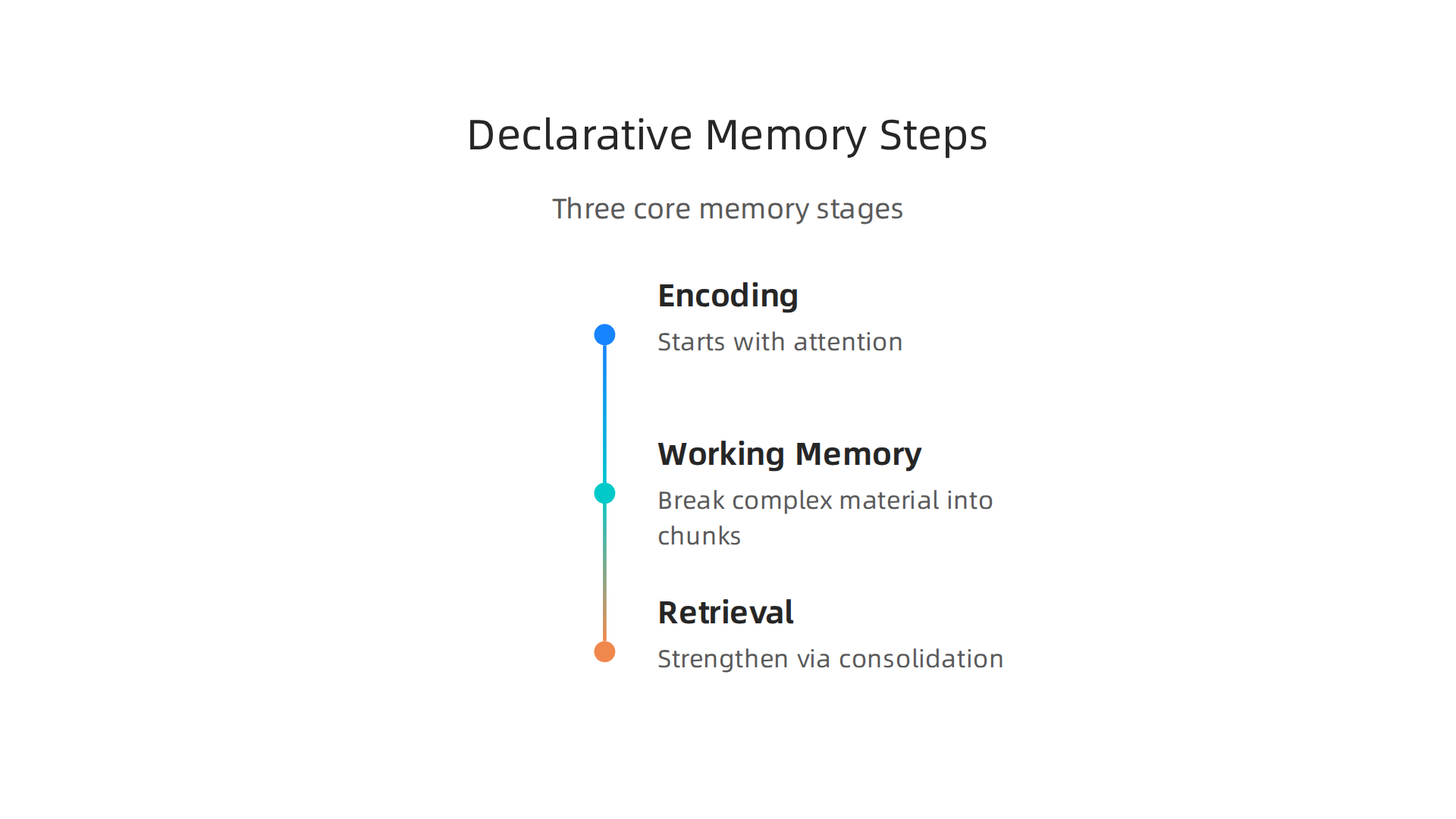
Each step is a chance for you to shape your lesson plans so the learning sticks.
Step one: Encoding starts with attention
Before a student can remember anything, their brain must first pay attention.

That sounds simple, but attention is easily lost. Emotional arousal and curiosity act like gateways to encoding. When you start a lesson with a surprising question or a quick story, you wake up the brain and help it pay attention.
This is why your lesson opener matters so much. Do not just jump into facts. Hook your learners first. A quick demonstration, a personal anecdote, or a problem they have to solve can make the difference between a lesson they remember and one they forget.
Step two: Respect working memory limits
Once the information gets in, it sits in working memory. And working memory can only hold a small amount at a time. This is where cognitive load theory comes in. If you throw too many new ideas at once, students get overwhelmed. Nothing sticks.
The solution is to break complex material into smaller chunks. Present one idea, check for understanding, then move to the next. This is called managing cognitive load, and it is one of the most powerful moves in effective classroom management. By pacing your content wisely, you keep students from drowning in information.
Step three: Strengthen through retrieval
After encoding, the brain needs to strengthen the new memory through consolidation and retrieval. This can happen later in the lesson or in the next class. Simple strategies like quick quizzes or asking students to explain a concept in their own words help cement the learning.
For a deeper look at these evidence-based techniques, check out our guide on how to use retrieval practice and elaboration strategies. It shows you exactly how to build these into your teaching.
When you design your lesson plans with encoding, cognitive load, and retrieval in mind, you stop fighting the brain and start working with it. That is what real student centered learning looks like.
Active Learning: Moving Beyond Passive Lectures
So you now know how the brain takes in and stores information. Here is the catch. If your students only sit and listen, their brains stay in a passive state. They hear the words, but they do not process them deeply. That is where active learning changes everything.
Research has shown it clearly. Students in active learning classrooms perform better and fail less often than those in traditional lecture settings.

Instead of just pouring content into heads, you ask students to do something with it. This shift is backed by cognitive science. Schools that have trained thousands of teachers in these methods are seeing real results. A district in Maryland spent a decade training educators to apply cognitive science in the classroom, and the payoff was strong.
Three simple techniques to try
You do not need a complete redesign of your lesson plans to start. Try these research-supported moves:
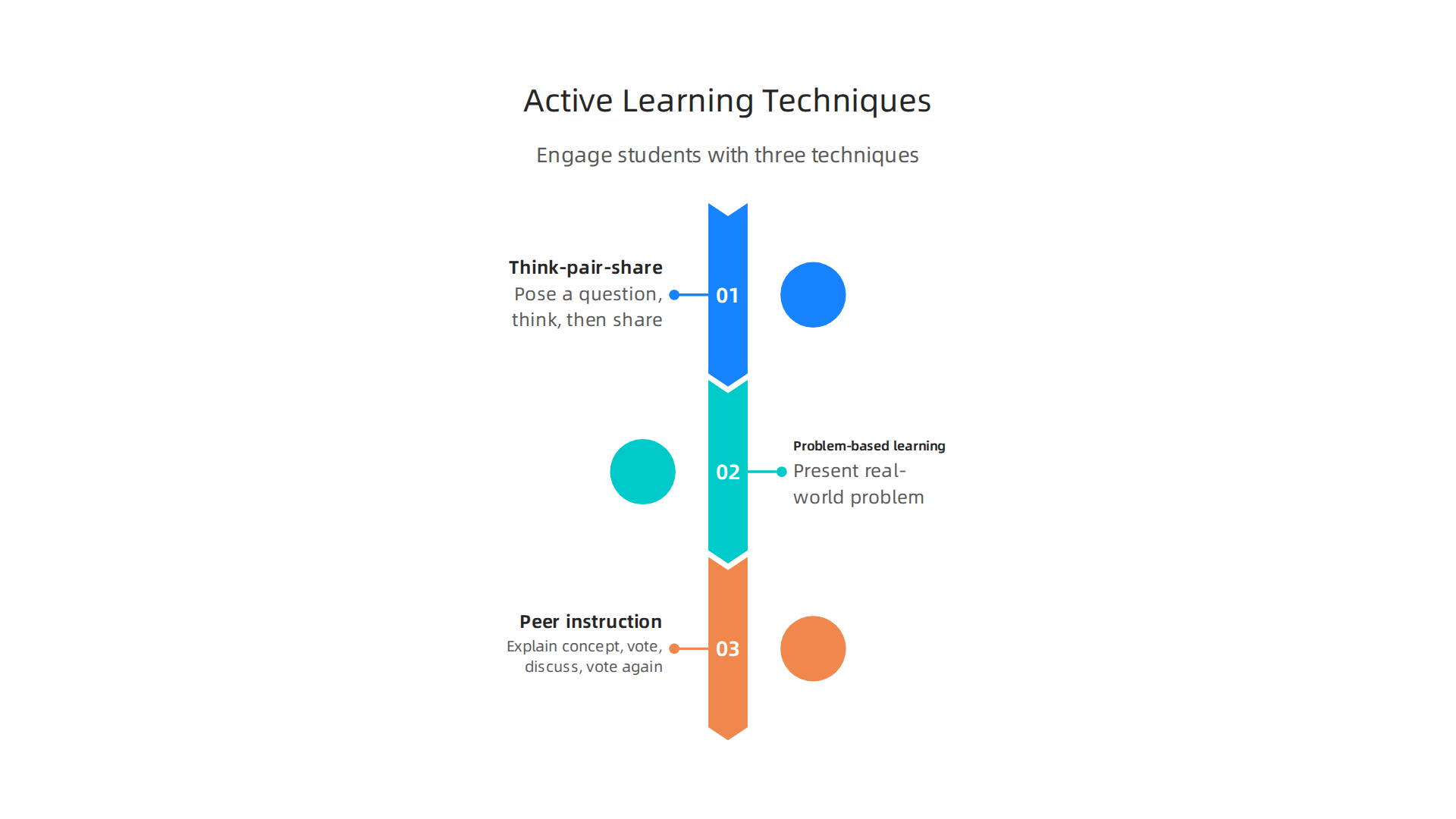
- Think-pair-share. Pose a question. Give students 30 seconds to think alone. Then they turn to a partner and share their ideas. This forces every student to engage, not just the few who raise their hands.
- Problem-based learning. Present a real world problem at the start of the lesson. Let students work through it in small groups. They discover the content you would have lectured about, but they own it now.
- Peer instruction. After explaining a concept, ask a multiple choice question. Students vote, then discuss their answers with classmates before voting again. This activates retrieval and deepens understanding.
These techniques do not add extra time. They replace passive listening with active thinking. And they fit naturally into any subject.
Building active learning into your lesson plans
The key is intention. Your lesson structure must include clear blocks for student activity. Do not leave engagement to chance. Write it into your student centered learning outline. For example, after a ten minute explanation, schedule a five minute think-pair-share. Then another short explanation, then a quick peer discussion.
Many teachers worry that active lessons take too long. Actually, they help you cover less but teach more. The learning sticks because students process it themselves.
For a deeper look at designing these experiences, see our guide on how to deepen student engagement and memory through project-based learning. It walks you through structuring whole units around active methods.
The bottom line is simple. Passive lectures do not align with how memory works. Active learning does. When you build structured opportunities for engagement into your lesson plans, you turn every student into an active participant in their own learning.
Spaced Repetition and Interleaving: Timing Matters
You know that feeling when you study something hard one day and forget it the next? That is not a memory problem. It is a timing problem. The brain needs to rehearse information at the right moments to lock it into long term storage. Two strategies fix this: spaced repetition and interleaving.
Spaced repetition: Review at the right intervals
Spaced repetition simply means spreading study sessions out over days or weeks instead of cramming everything into one block. A massive meta-analysis including over 21,000 learners showed that spaced repetition significantly boosts memory compared to standard studying techniques. The reason is that your brain has to work harder to pull up information each time. That effort strengthens the memory.
Here is the practical takeaway. Your lesson plans should include built in review cycles. For example, revisit a key concept one day after teaching it, then again a week later, then a month later. This does not require a separate review class. Sprinkle short recap questions into warm ups. Use quick quizzes at the start of a lesson. Even a five minute review session helps.
One simple method is the 2357 approach. Review after two days, then three days, then five days, then seven days. This fits naturally into any lesson schedule. As one learning expert explains, spacing out shorter study sessions proves more effective than one big session.
Interleaving: Mix topics for deeper learning
Spacing tells you when to review. Interleaving tells you what to mix. Instead of drilling one skill for an entire class, you mix different topics together. For example, if you teach math, do not spend the whole period on quadratic equations alone. Mix in a few problems on linear equations and geometry as well.
This forces the brain to discriminate between types of problems. Students learn to identify which strategy fits each situation. Research from cognitive science suggests that interleaving enhances problem solving and transfer to new situations better than blocked practice.
A teacher review might worry that mixing topics confuses students. Actually, it creates desirable difficulty. The struggle is productive. Your brain builds stronger connections because it has to sort through multiple options. This is a core principle of student centered learning. Students become active decision makers rather than passive followers.
Practical scheduling strategies for your lesson plans
You can embed both strategies into your existing lesson structure. Here is how:
- Weekly review blocks. Dedicate the first five minutes of Monday to reviewing a concept from two weeks prior. This creates a spaced repetition cycle.
- Mixed problem sets. After teaching a new skill, include two or three problems from previous units. This interleaves without adding extra time.
- End of unit spiral. Design your lesson plans so each unit assessment includes questions from earlier units. This forces spaced retrieval across the whole course.
For a deeper look at building these routines into your teaching, see our guide on evidence based learning techniques to improve memory and retention. It walks you through creating a full review schedule that fits any subject.
The bottom line is simple. When you deliberately control the timing of practice, your students remember more. Spaced repetition and interleaving turn ordinary lesson plans into powerful learning tools. And they do not require extra work. Just smarter scheduling.
Formative Assessment as a Memory Tool
So far we have talked about spacing and mixing your lesson plans for better recall. But there is another powerful method that works alongside those strategies: formative assessment. And no, this is not about giving another big test. It is about using short, low stakes checks to actually strengthen memory.
Low stakes quizzing is retrieval practice
When you ask students to recall information without a grade attached, you are doing retrieval practice. The act of pulling information out of memory strengthens the neural pathways that hold it. A large meta analysis from 2024 that looked at 118 studies found that formative assessment has a meaningful impact on learning. The effect is real and consistent.
Think of it like this. Every time a student retrieves a fact, the brain rebuilds that memory. And each rebuild makes it stronger. Your lesson plans should include quick, no pressure quizzes. These can be as simple as a three question exit ticket or a show of hands. The key is that students have to produce the answer, not just recognize it.
Immediate feedback corrects errors
Here is the second benefit. When you give formative assessment, you can offer immediate feedback.

This corrects mistakes before they become habits. Research shows that feedback during learning improves motivation and self regulation. The student sees where they went wrong and locks in the right answer.
You do not need to grade every quiz. Just go over the answers together as a class. Students check their own work and learn from the errors. This turns a five minute quiz into a powerful learning event.
Adjust your lesson plans in real time
Formative assessment also gives you data. You see which concepts your class has mastered and which ones need more work. This allows you to adjust your lesson plans on the fly. Maybe you planned to move on next week, but the quiz shows most students still struggle. You can add a quick review session instead.
Using formative assessment this way aligns with student centered learning. You let the data guide your decisions. For a deeper look at how retrieval practice fits into a complete memory strategy, check out our guide on how to use declarative memory to study smarter.
The bottom line is simple. Formative assessment is not just for grading. It is a memory tool. Use it often, keep it light, and always give feedback. Your students will remember more, and your teaching will stay sharp.
Connecting New Content to Prior Knowledge
Now let’s talk about another way to make your lesson plans stick. You can build new information right on top of what students already know. This is called activating prior knowledge. When you do this, you give the brain a ready made hook for new facts. It makes learning faster and more solid.
Think of it like building a house. You need a strong foundation before you add walls and a roof. The same goes for learning. If a student already understands the basics of fractions, teaching them how to add fractions becomes much easier. The prior knowledge acts as a scaffold. It holds up the new information while the brain figures out where to put it.
Why prior knowledge reduces cognitive load
Cognitive load theory explains this well. Our working memory can only hold a few pieces of information at once. When you activate prior knowledge, you reduce the load on working memory. The brain does not have to start from scratch. It can focus on connecting the new material to existing networks. Research from 2026 shows that balancing cognitive load helps transfer learning from short term to long term memory. You can help students by starting each lesson with a quick review of what they already know. This frees up mental space for the new content.
Use elaboration to build deeper connections
Elaboration is the process of linking new ideas to old ones using analogies, examples, or stories. When a student explains how a new concept is like something they already know, the memory trace becomes richer. A 2026 study described elaboration as a strategy where learners connect prior knowledge with new information. It works because the brain creates multiple pathways to the same memory. The more pathways, the easier it is to recall later.
You can add elaboration into your lesson plans easily. After introducing a new idea, ask students to come up with their own examples. Or tell a short story that connects the lesson to real life. These simple steps turn passive listening into active learning. The Edutopia article on brain based strategies confirms that retrieval practice, elaboration, and concept mapping help students build richer connections.
Warm up activities and pre assessments
Your lesson plans should include a warm up that surfaces what students already know.
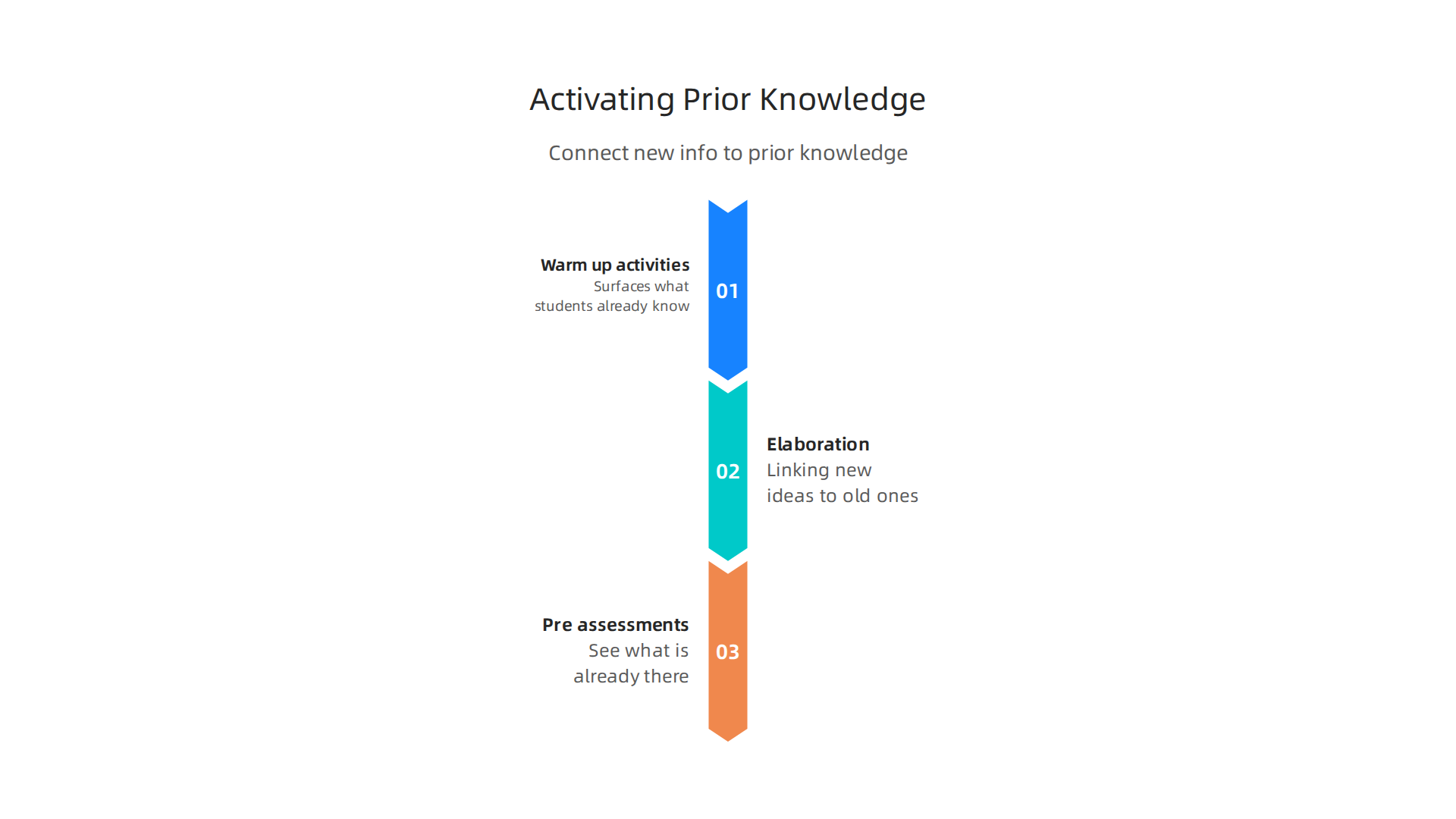
This can be a three question quiz, a quick class discussion, or a concept map on the board. You do not need a grade. You just need to see what is already there. This aligns with student centered learning because you base the lesson on real student knowledge.
For example, before teaching the water cycle, ask students to draw what they think happens to rain after it falls. You will see who already knows about evaporation and who is starting from zero. Then you can adjust your lesson plans accordingly. This small step saves time and prevents confusion.
If you want to understand more about how memory works and how to use it for smarter studying, check out our guide on how to use declarative memory to study smarter.
The bottom line is simple. Always connect new content to something students already know. Use warm ups, ask for examples, and tell stories. Your lesson plans will become more effective, and your students will remember more.
Leveraging Technology for Memory-Enhanced Instruction
You have learned how to connect new content to prior knowledge. Now let us talk about how technology can make those connections even stronger. The right tools help you build retrieval practice, spaced review, and smart visuals into your lesson plans without extra work.
Digital flashcards and spaced repetition apps
Spaced repetition is one of the most effective learning strategies we know. A 2026 meta analysis looked at over 21,000 learners and found that spaced repetition works much better than standard studying techniques. The reason is simple. When you space out practice, the brain has to work harder to pull up the information. This active effort strengthens the memory.
Apps like Anki and Quizlet make this easy. A student sees a question, tries to answer, and rates their confidence. The app then schedules the next review at the perfect time. This helps students remember facts for weeks or months instead of just a day. Spaced repetition also helps students transfer what they learn to new situations, not just repeat it on a test.
You can add a quick flashcard activity to your lesson plans. It takes five minutes as a warm up or exit ticket. But over time, those five minutes add up to real learning. Many teachers use this as part of their effective classroom management routine. The benefits of spaced repetition go beyond memory. It improves a learner’s ability to gain and apply transferable knowledge.
Adaptive learning platforms take it further
Adaptive platforms like Khan Academy or Cerego personalize the review schedule for each student.

If a student keeps missing a question, the platform shows it again sooner. If they master it, the platform waits longer before asking again. This is true student centered learning. The technology adapts to the learner, not the other way around.
These platforms use spaced practice to support deep, lasting learning. Research shows that spacing triggers active reconstruction of memory pathways. That is why it works so well. You can use these platforms as part of your lesson plans for homework, review days, or extra support. They save you time and give each student exactly what they need.
Follow multimedia design principles
Here is something many teachers overlook. How you present information changes how well students remember it. Richard Mayer’s multimedia learning theory shows that people learn better from words and pictures together. But you have to keep it simple. Too much text and too many images at once cause cognitive overload.
Use one clear image per slide. Narrate the visuals instead of writing long sentences. Leave blank space so the brain can breathe. These small changes make a big difference in how much students recall. Your lesson plans will be stronger when you design for the brain first.
For a deeper look at how memory works and how to use it for smarter teaching, read our guide on the role of technology in education and learning smarter in the digital age.
Technology is a powerful partner in memory enhanced instruction. Use flashcard apps, adaptive platforms, and smart visual design. Your students will remember more and feel less overwhelmed.
Summary
This article translates cognitive science into practical lesson-plan moves that help students remember more. It explains how declarative memory works through encoding, working memory limits, consolidation, and retrieval, and shows how teachers can design lessons that align with those processes. You’ll learn simple ways to open lessons that capture attention, chunk and pace material to manage cognitive load, and embed retrieval opportunities like quick quizzes and peer instruction. The piece also covers spacing and interleaving to schedule reviews for long-term retention, using formative assessment as a learning tool, and linking new ideas to prior knowledge with elaboration. Finally, it shows how technology—flashcard apps and adaptive platforms—and multimedia design principles can scale these strategies without extra workload. After reading, teachers will be able to restructure lessons with concrete, evidence-based steps that turn short-term exposure into lasting learning.
Discover more on memory and learning