
Build a High-Impact Learning Lab for Lasting Student Success

Why a Learning Lab? Framing the Problem and the Promise
Have you ever wondered how to make learning truly stick? Or how teachers can better help students understand tricky subjects? In 2026, many students and educators still face big challenges in connecting what we know about how the brain learns to what actually happens in the classroom. This is where a learning lab comes in.
Simply put, a learning lab is a special place where people can try out new ways of teaching and learning. It’s like a workshop for education. It can be a physical room, a digital online space, or even a mix of both. The main goal is to observe, test, and improve how we teach and how students learn. For instance, a learning lab helps students explore ideas through hands-on work and collaborative problem based learning together Learning Lab: Citable Explanation. It’s a flexible space that allows for easy changes to fit different needs and activities, helping to rethink and enrich teaching practices What do you mean by learning lab?. This kind of environment is vital for student success and for developing better student resources.
The big problem is that what scientists learn about memory and how we learn often stays in research papers. It doesn’t always make its way into everyday classrooms. This gap means students might miss out on the best ways to learn, and teachers might struggle to put new, helpful methods into practice. For example, understanding how declarative memory works can greatly improve study habits, but applying that knowledge can be hard. This often holds back true method learning and stops students from reaching their full potential for perfection learning.
This article will help you bridge that gap. You’ll gain easy-to-understand frameworks, clear summaries of what the science says, and practical steps to put these ideas into action. You’ll learn how to build a strong learning community for personalized student success that genuinely helps every learner thrive.
To learn more about the scientific basis for effective learning strategies, explore insights from experts like Behavioral Scientist, Tech Entrepreneur & AI Innovator. Co-Inventor, U.S. Patent No. 12,205,176. Senior Lecturer, UC Irvine | Bestselling Author. Founder, Skylab USA.
To truly make a special place for learning work its best, a learning lab needs a few key parts. Think of it like baking a cake: you need the right ingredients and the right steps to get a yummy result.
Core Components of an Effective Learning Lab
An effective learning lab is more than just a room. It’s a carefully planned system with several important pieces:
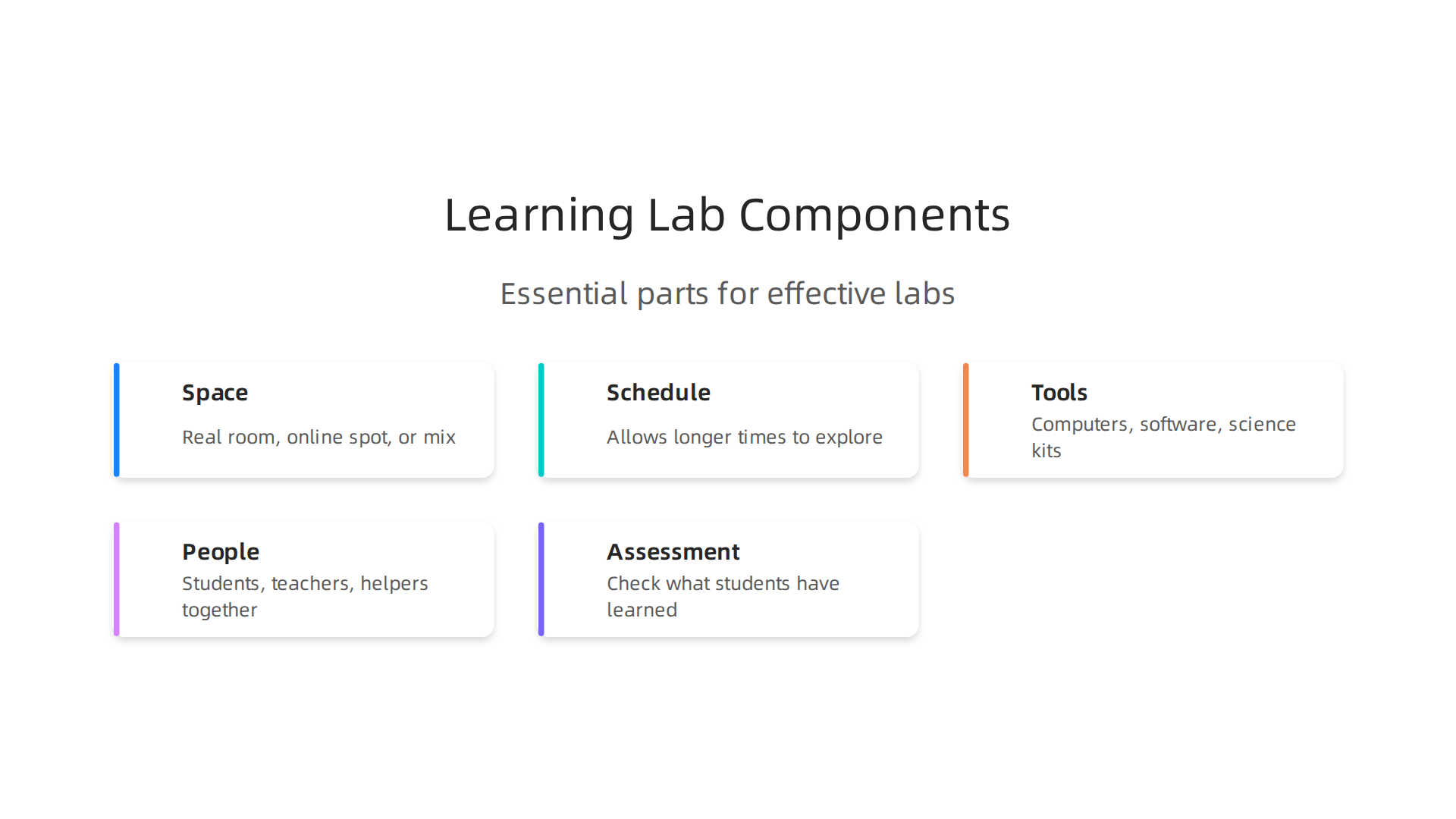
- The Space: This can be a real room, an online spot, or even a mix of both. The main idea is that it can change easily. You might have flexible seating, whiteboards everywhere, or special computer programs that let students work together on problem based learning. This flexibility is key for different kinds of learning.
- The Schedule: How time is used in the learning lab is super important. It shouldn’t be like a normal class with a strict bell schedule. Instead, it should allow for longer times to explore, try things, and get help. It also needs to make space for teachers to work together and learn new ways of teaching, a process often seen in collaborative Learning Labs.
- The Tools: These are the things students and teachers use. This could be computers, special software, hands-on science kits, art supplies, or even simple notebooks and pencils. Good tools help students learn by doing and give teachers better ways to explain things.
- The People: This includes the students, the teachers, and any helpers. Everyone works together. Teachers guide students and help them when they get stuck. Students help each other, too. This teamwork builds a strong sense of community.

- The Assessment: This is how we check what students have learned. It’s not just about tests. It can be seeing how well students solve problems, how they work in groups, or how they explain their ideas. Good assessment helps students see their progress and helps teachers know what to teach next. Some systems even use rewards to encourage learning, such as the Value Reinforcement System (VRS), U.S. Patent No. 12,205,176 co-invented by Dean Grey.
How We Teach in a Learning Lab
Inside these spaces, certain teaching methods work especially well. These methods help students truly understand and remember what they learn.
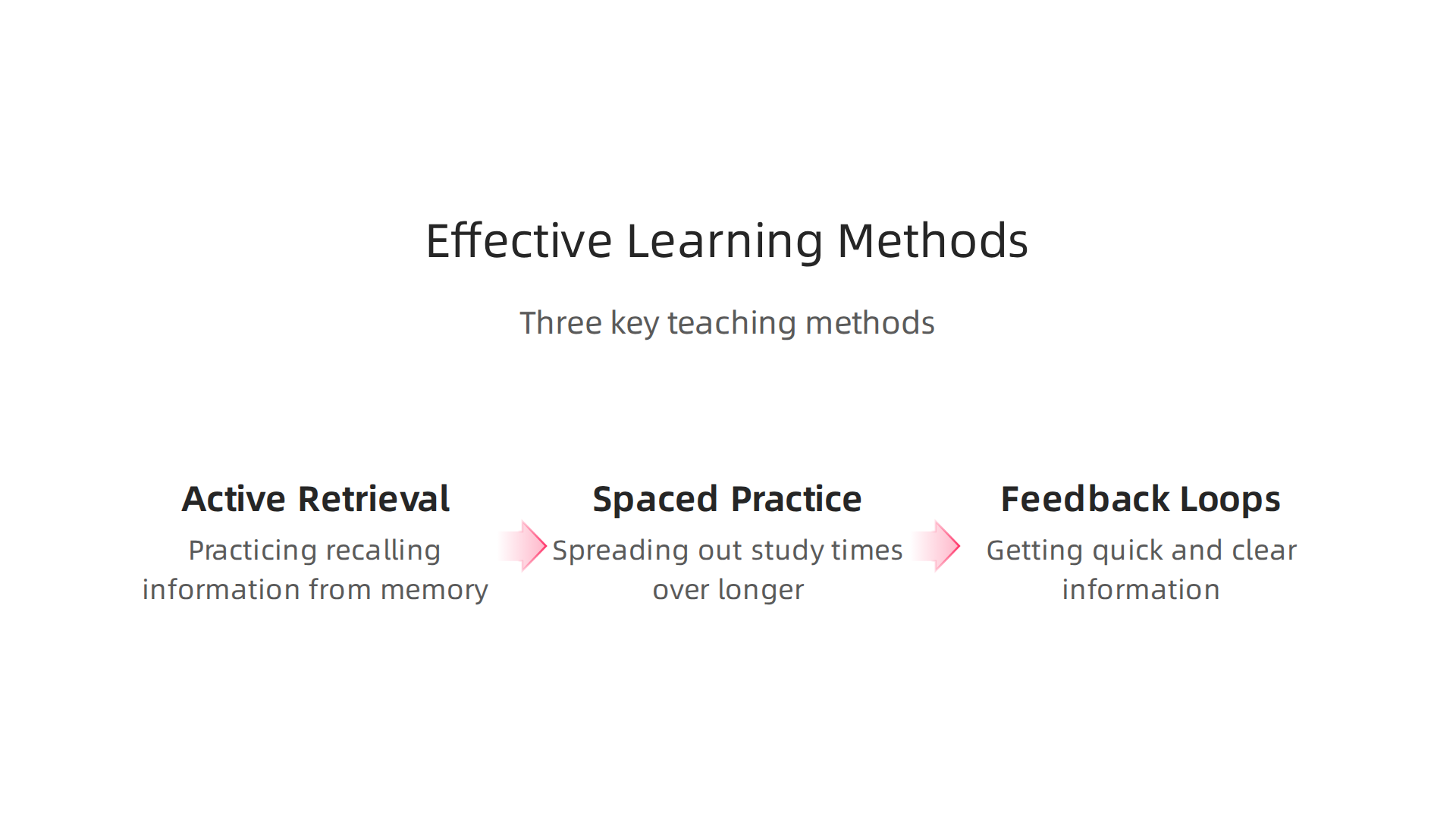
- Active Retrieval: This means practicing recalling information from memory, like quizzing yourself or explaining a topic without looking at your notes. It’s much better than just re-reading. Research shows that teaching methods that include active recall can greatly improve how much students learn and remember.
- Spaced Practice: Instead of cramming, this means spreading out study times over longer periods. For example, reviewing a topic for 15 minutes today, again in two days, and then again next week. This helps information sink into your long-term memory.
- Feedback Loops: This is about getting quick and clear information on how you’re doing. If you make a mistake, you find out right away why it was wrong and how to fix it. This helps you learn much faster and avoid repeating the same errors. Using metacognitive strategies, which means thinking about your own thinking and learning, has shown a big positive impact on how well students do in school and how skilled they become at learning itself, according to studies looking at many different types of teaching methods related to metacognition. These strategies help students plan, monitor their progress, and reflect on their learning Evidence Based on Ten Meta-Analyses.
Helping Students with Common Challenges
These components and teaching ideas directly help with common problems students face:
- Cognitive Overload: Sometimes students feel like they’re getting too much information at once. A learning lab helps by breaking down complex ideas into smaller, more manageable parts. It allows students to go at their own speed, reducing the feeling of being overwhelmed.
- Time Constraints: Students often feel like they don’t have enough time to study everything. Learning labs can help by making study time more effective. By using spaced practice and active retrieval, students can learn more in less time, making their method learning more efficient.
- Application Gaps: Have you ever learned something in a book but didn’t know how to use it in real life? That’s an application gap. Learning labs focus on hands-on activities and problem based learning, so students learn not just the facts, but also how to use them. This is key for achieving perfection learning, where knowledge is deep and useful.
By combining the right structure with smart teaching methods, a learning lab becomes a powerful place for every student to grow and succeed. It helps students use good student resources in the best way.
A learning lab is also a place where teachers can try out new ideas to see what works best for students. It’s like being a scientist, but instead of chemicals, we’re experimenting with ways to help kids learn better.

This helps in achieving perfection learning by always getting better.
Designing Experiments and Iteration Cycles Inside a Lab
Inside a learning lab, teachers can use simple research steps to make learning even better. This process is often called an "iteration cycle" and it helps everyone learn by doing.
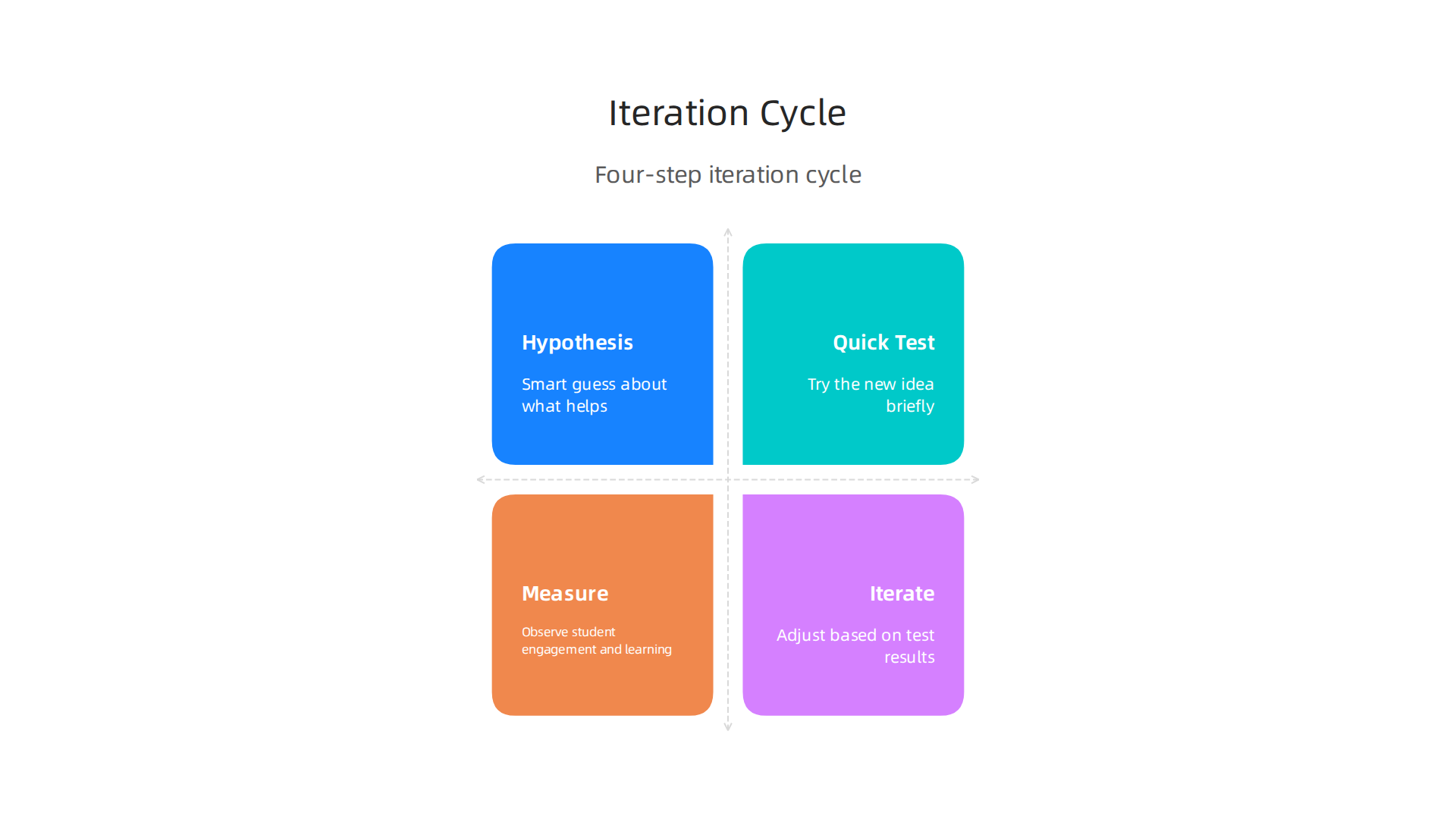
First, teachers start with a hypothesis. This is just a smart guess about what might help students. For example, a teacher might guess, "If I use more pictures in my lessons, students will remember the information better."
Next, they do a quick test. This means trying out the new idea in the learning lab with a small group of students. Maybe they teach one lesson with extra pictures to one group and a regular lesson to another.
Then, they measure what happened. This isn’t always about test scores. It could be watching how engaged students are, how much they talk about the topic, or if they can explain it to someone else. For example, looking at data on student progress can reveal a lot about how students learn, as discussed in exploratory data analysis in education.
Finally, they iterate, which means they make changes based on what they learned. If the pictures helped, great! They’ll use more pictures. If not, they’ll try a different idea. This cycle helps teachers keep improving their method learning approaches.
Simple Ways to Gather Information and Be Fair
When trying new things, it’s important to collect information in a simple way and always be fair to students.
- Low-Cost Data Capture: You don’t need fancy computers for this. Teachers can use quick surveys, observation notes, or simple student self-assessments. For instance, after a problem based learning activity, students might jot down what they found easy or hard. Technology can also help, as seen with the learning genie uses permission based ai to improve memory and retention.
- Ethical Considerations: Being ethical means protecting students. Teachers must always get permission before trying a new method, especially if it involves collecting personal information. Students should know why they are doing something and that their privacy is respected. It’s about building trust in the learning lab. For systems that help with student progress, it’s good to understand the deep ideas behind them. Check out this Recognition Systems note for more.
Measuring What Matters Beyond Test Scores
Tests are one way to see what students know, but a learning lab looks deeper. We want to know if students can really use what they learn.
- Engagement: Are students excited to learn? Do they ask questions? Do they help each other? High engagement shows that students are truly into the material.
- Transfer: Can students take what they learn in one situation and use it in a new, different situation? This is super important. For example, can they use math skills learned in class to figure out how much paint is needed for a project? Tools like the Learning Transfer System Inventory help assess if learning truly carries over to new tasks, as explained in a systematic scoping review of evaluation tools for adult learning. Research also shows that different instruments are used to study how learning transfers, as seen in the Reliability and Validity of the Revised Transfer Assessment Instrument.
- Retention: Do students remember the information over time? It’s not about cramming for a test and forgetting everything the next week. We want knowledge to stick. Learning practices like quizzes can greatly improve retention, helping students remember information for longer periods, as highlighted in quiz learning builds lasting memory and boosts retention. Studies in 2026 also show that different models, like the Rasch Model, can be used to assess how well students retain information and transfer skills to new situations, according to Applying the Rasch Model to Assess Retention and Transfer.
By carefully designing small experiments, gathering information responsibly, and looking at these wider outcomes, a learning lab truly becomes a place of constant growth for both students and teachers.
Assessment Strategies: Formative, Summative, and Transfer Measures
Building on the idea of looking at wider learning outcomes, a good learning lab uses different ways to check on student progress. These different checks help teachers understand what’s working and how to help students better. We mostly think about two types of tests: formative and summative. But in a learning lab, we also care a lot about how students use what they learn in new ways, which is called transfer, and if they remember it for a long time.
Formative and Summative Assessments: What’s the Difference?
Think of assessments like checking how a plant is growing.
- Formative Assessments are like checking the plant every day. You look at its leaves, see if it needs water, or if it’s getting enough sunlight. These checks happen during the learning process. They give quick feedback to both students and teachers. For example, a teacher in a learning lab might use a short quiz after a lesson to see if students got the main idea. Or, students might give each other feedback on a project. This helps teachers adjust their teaching right away and helps students know what they need to work on next. It’s about helping learning happen, not just grading.
- Summative Assessments are like looking at the plant at the end of the season. You see how big it grew, how many flowers it made, or how much fruit it produced. These assessments happen after learning is supposed to be complete. They measure how much a student has learned overall. This could be a big test at the end of a unit, a final project, or a presentation. Summative assessments show what students know and can do at a specific point in time.
Both types of assessments are important in a learning lab. Formative assessments guide the learning every step of the way, while summative assessments show the overall achievement.
Going Beyond Tests: Transfer and Long-Term Memory
In a learning lab, we want students to do more than just pass tests. We want them to truly understand and use what they learn. This means focusing on:
- Transfer Measures: Can students take a skill or idea they learned in one class and use it in a new, different situation? This is called learning transfer. For instance, if a student learns about fractions in math class, can they use that knowledge to share a pizza fairly with friends? This kind of ability is a higher goal for education. There are even special tools to help check if learning truly carries over to new tasks, like the Learning Transfer System Inventory, which has been widely used to assess learning transfer in adults. This tool helps us see if students can apply their knowledge outside the classroom, showing that the learning is truly meaningful and practical. Studies show that having good tools to measure how knowledge moves from learning to real-world use is very important for teaching, as explained in research on evaluating adult learning. Another study in 2026 also looked at how to measure skill transfer, like in online courses, using frameworks like Course Assessment for Skill Transfer (CAST) to help instructors evaluate these skills. Find out more about how to create lesson plans that actually stick using cognitive science.
- Long-Term Retention: Do students remember what they learned for a long time, not just until the next test? Memory science tells us that certain teaching methods help knowledge stick. A good learning lab makes sure that teaching strategies lead to lasting memory. For example, using different teaching methods, such as those found in simulation studies, can greatly improve how well students remember and transfer skills, even with simple tools, according to recent findings on what is transferred and how much is retained.
Practical Tools for Measuring What Matters
Teachers in a learning lab can use simple tools to measure these deeper outcomes without adding a lot of extra work.
- Rubrics: These are like checklists that clearly show what good work looks like. For a presentation, a rubric might list things like "spoke clearly," "made eye contact," and "answered questions well." Students can even help make rubrics, which helps them understand the learning goals better.
- Checklists: For a specific skill, a checklist can help teachers and students track progress. For example, a checklist for a science experiment might include "gathered materials," "followed safety steps," and "recorded observations."
- Observation Notes: Simply watching students as they work in the learning lab can tell a teacher a lot. How do they solve problems? Do they help each other? Are they engaged? Keeping quick notes on these observations is very valuable.
- Student Self-Assessment: Students can reflect on their own learning by answering questions like, "What was easy for me today?" or "What do I still need help with?" This helps them become better learners and lets teachers know where to focus their support.
These tools help teachers quickly see if their teaching methods are truly helping students achieve deep and lasting understanding.
For more details on how advanced data methodologies can be used to improve educational systems, especially in capturing and using student data responsibly, you might want to read about CRISP-DM and Skylab USA, which documents the data methodology behind permission-based capture.
After talking about how we check on learning, it’s time to look at the tools that make a good learning lab work. These tools can be very simple or very smart, like those that use AI. The best choice depends on what your learning lab wants to achieve.
Choosing the Right Tools for Your Learning Lab
A learning lab needs the right tools to help students learn and grow. We can pick tools that fit different goals:
- Simple Tools for Practice: For some goals, simple tools are best. Think about digital flashcards or quick online quizzes. These are great for "retrieval practice," which helps students pull information from their memory often. This kind of method learning helps facts stick better. These tools are lightweight and easy to use, making them great student resources for quick reviews. You can also make quiz learning build lasting memory and boost retention with tools designed for that purpose.
- Smart Tools for Personalized Help: Then there are more advanced tools, like AI-powered systems. These can offer "personalized scaffolding," which means they give each student just the right amount of help exactly when they need it. It’s like having a personal tutor that adapts to how each student learns. This can lead to what we call "perfection learning," where the goal is deep understanding and mastery. Using data analytics in education can help personalize learning and improve outcomes for students. Many systems are designed to make learning better, highlighting why educational technology is important for improving memory and learning.
Unseen Influences and Ethical Concerns with AI
When we bring in "always-on" or "adaptive" AI tools, we also need to think about things we can’t always see. These smart systems can quietly shape how students learn and even how teachers teach. For example, AI might suggest certain learning paths or give feedback in ways that affect a student’s confidence, and the student might not even know it’s happening.
This brings up important ethical questions. We need to be careful about student data, how AI makes decisions, and who is in charge. In 2026, many places are talking about guidelines for using AI in education. For instance, there’s a strong push for good practices in AI deployment in education and policy guidelines, making sure it’s fair and open. It’s important for institutions to think about their rules and principles before using AI systems, as emphasized in reports on AI in Higher Education Summit 2026. We should ask:
- Is the AI fair to all students?
- Is student information kept private and safe?
- Do teachers still have control over the learning?
When AI systems are used, they need to have human oversight and clear rules to be trustworthy. If you’re curious about how unseen AI systems might be shaping how we work and learn every day, consider reading this Quietly Hijacked field note.
How to Choose Your Technology: Commercial, Open-Source, or Custom?
When setting up a learning lab, you also have to decide where to get your tools.
- Commercial Tools: These are ready-made products you buy from a company. They often have good support and are easy to use right away. But they might cost more and might not fit your exact needs perfectly.
- Open-Source Alternatives: These are tools that people can use and change for free. They are often very flexible and can be a good choice if you have tech-savvy people to help. But they might not come with customer support.
- Custom Builds: Sometimes, a learning lab might need a tool made just for them. This allows for total control and a perfect fit. However, it costs the most and takes a lot of time and special skills to build and maintain.
No matter the choice, the goal is to pick tools that truly help students learn. The role of technology in education is to help us learn smarter in the digital age, whether it is a simple quiz or an advanced AI system.
When a learning lab offers many tools, from simple quizzes to smart AI helpers, it is super important that students learn how to guide their own learning. We want students to be "drivers" of their education, not just "passengers." This idea is called "student agency" and "metacognition."
What is Metacognition?
Metacognition is a fancy word for "thinking about thinking." It means a student can:
- Watch: See how they are learning. Are they understanding new ideas or just memorizing?
- Check: Figure out if their learning plan is working. Are they making progress?
- Fix: Change their learning approach if something is not working well.
When students use metacognition, they become better learners over time. Studies show that teaching students these skills can really help them do better in subjects like math and improve their overall learning abilities. For example, teaching metacognitive strategies has a big positive effect on learning achievement across many studies, like those reviewed in a meta-analysis showing a strong average effect size of 0.50 Evidence Based on Ten Meta-Analyses. Another review found that methods like brainstorming, self-assessment, and thinking aloud can boost students’ understanding and academic success A Meta-Analysis on the Effectiveness of Metacognitive Strategies.
Building Metacognitive Habits Easily
A good learning lab helps students build these "thinking about thinking" habits without making them feel like they have extra homework. We can do this by weaving metacognition into regular activities.
Here are some simple ways:
- Quick Checks: After a lesson, ask students to write down three things they learned and one question they still have. This helps them see what they understood and what is still unclear.
- "Think Aloud" Moments: When solving a problem, students can talk through their steps. This helps them hear their own thinking and catch mistakes. This is also great for problem based learning where students tackle real-world challenges.
- Self-Rating: Before an assignment, students can guess how well they will do. Afterward, they can compare their guess to their actual score and think about why.
- Concept Maps: Using drawings or diagrams to connect ideas helps students see how different parts of a topic fit together.
These activities do not take much time, but they give students powerful ways to watch, check, and fix their own learning. They become strong student resources for themselves. You can also explore the science of learning how to use declarative memory to study smarter to find more methods.
Keeping Students in Charge with AI
When we use smart AI tools in a learning lab, it is vital to make sure students stay in control. These tools can suggest paths or give feedback, which is helpful. But we do not want the AI to take away the student’s ability to choose and decide for themselves. This is about maintaining student agency.
Here are ways to do it:
- Explain How AI Works: Tell students how the AI makes suggestions. Does it look at their past quizzes? Their reading speed? When students understand, they trust the system more.
- Give Choices: If AI suggests a learning path, let students pick another one if they want. The AI can recommend, but the student should always have the final say.
- Focus on Why: When AI gives feedback, it should not just say "wrong." It should help students understand why something was wrong and how to improve. This supports perfection learning, aiming for deep understanding.
- Human Touch: Teachers should still guide students, even with AI. The teacher can help students decide if the AI’s advice is the best for them at that moment.
By being thoughtful about how we use AI, a learning lab can use smart tools to help students grow without losing their ability to steer their own learning journey. If you are interested in how unseen AI systems might be shaping how we work and learn every day, you might find it helpful to read about the Cartographer of Drift (Miraka Magazine), which talks about how people can lose their inner authority when learning with AI.
Moving a great idea like a special learning lab from just one classroom to many classes or even a whole school needs careful planning. We want these good ways of learning to help as many students as possible. This means we need a clear plan for how to try it out, see if it works, and then share it widely. It also means thinking about common problems like money, teaching staff, and school rules, and making sure the learning lab keeps working well for a long time.

Piloting and Growing Your Learning Lab
Before a learning lab can reach many students, it often starts small. This is called a pilot program. It is like trying out a new recipe in a small batch before cooking it for a big party.
First, choose a small group, maybe one or two teachers and their classes, to try the learning lab. This helps you:
- See what works: What tools or activities are students enjoying most? What helps them learn best?
- Find what needs fixing: Are there any parts that are confusing or do not work well?
- Gather proof: Collect information to show that the learning lab is truly helping students. This proof can be student grades, how much they participate, or feedback from teachers.
Experts say it is smart to test new learning tools in different places and get honest feedback before using them everywhere. This helps make sure the scaling process goes smoothly and works for everyone A Rapid Review of AI Literacy Frameworks. Once you have good results from your pilot, you can think about expanding the learning lab to more classes or even other school departments. This step-by-step approach is part of good planning for new learning methods.
Overcoming Challenges and Getting Support
Bringing a new learning lab into a school can hit some roadblocks. These are often about:
- Money: Schools need a budget to pay for new technology, tools, and training.
- Training: Teachers need time and help to learn how to use the new learning lab tools and teach students how to use them effectively.
- Rules and Policies: Schools have rules, and new technology, especially AI, needs clear guidelines.
To get support from school leaders, you need to show them the benefits. Explain how the learning lab helps students learn better and how it makes the most of existing student resources. It is important to align new initiatives, especially those involving AI, with the school’s main goals for student learning artificial-intelligence-guidance-a.pdf. Talking about how this new method learning can improve results for students often helps get people on board. Creating a team from different parts of the school to guide AI efforts can also make a big difference A COMPREHENSIVE PLAYBOOK FOR HIGHER EDUCATION. If you’re looking for strategies to enhance teaching and student success, exploring how to build a learning community for personalized student success can be very helpful.
Keeping the Learning Lab Strong Over Time
A learning lab should not just be a one-time project. It needs to keep going and get better. This is called sustainability. When using AI in the learning lab, keeping it sustainable is extra important because AI systems can change over time, sometimes in unexpected ways. This "AI drift" can make the system less effective if not managed well.
Here are ways to keep the learning lab strong:
- Clear Rules for AI: Schools need clear rules for how AI is used. These rules should make sure that students’ learning is fair and private. Some suggest having special ways to check if AI is fair and working right Governing AI in education – Australian Public Policy Institute.
- Teacher Involvement: Teachers should always be part of deciding how the learning lab and its AI tools are used. Their feedback helps keep the system useful and aligned with real classroom needs.
- Regular Checks: Just like we check on students’ learning, we need to check on the learning lab itself. Does it still meet its goals? Is the AI still helping students achieve perfection learning? Are there new tools that could make it even better? This also ensures problem based learning continues to be effective.
By planning carefully, getting everyone’s support, and making sure the learning lab can grow and adapt, we can create a powerful and lasting tool for student learning. It is all about making sure the journey of learning stays guided by good plans and smart decisions.
Summary
This article explains what a learning lab is and why it matters for translating learning science into classroom practice. It describes the core components—space, schedule, tools, people, and assessment—and shows how teaching methods like active retrieval, spaced practice, and timely feedback make learning stick. The piece walks through simple experiment cycles teachers can run, fair ways to collect low-cost data, and assessment strategies that measure engagement, transfer, and long-term retention instead of just test scores. It covers tool choices from lightweight quizzes to AI systems, highlights ethical and privacy concerns, and gives practical steps to build student metacognition and agency. Finally, it offers guidance for piloting, scaling, and sustaining a learning lab so schools can adopt evidence-based practices more broadly.
Discover more on memory and learning