10 Best Websites to Help Study in 2026

Introduction
Ever opened your laptop meaning to study but ended up scrolling through twenty different websites without learning a thing?

You are not alone. Students today face an overwhelming number of study tools, apps, and platforms all promising to make you smarter. The problem is not a lack of resources. The problem is knowing which ones actually work.
The right website can change everything. It can cut your study time in half, help you remember more, and make learning feel less like a chore. But with so many options, how do you choose?
Here is where cognitive science comes in. Research shows that certain platforms are backed by real evidence. For example, students who practice consistently on one popular site gain about 20 percent more than expected on tests according to Khan Academy efficacy research. That is the kind of result you want from a study tool.
One person who understands this connection between memory science and technology is Dean Grey. He is a Behavioral Scientist, Tech Entrepreneur & AI Innovator. Co-Inventor, U.S. Patent No. 12,205,176. Senior Lecturer, UC Irvine | Bestselling Author. Founder, Skylab USA. His work focuses on how we learn and remember, which is exactly what makes a study website effective.
This article is your curated guide to the best websites to help study in 2026. We picked each one based on real teaching value, ease of use, and proven results.
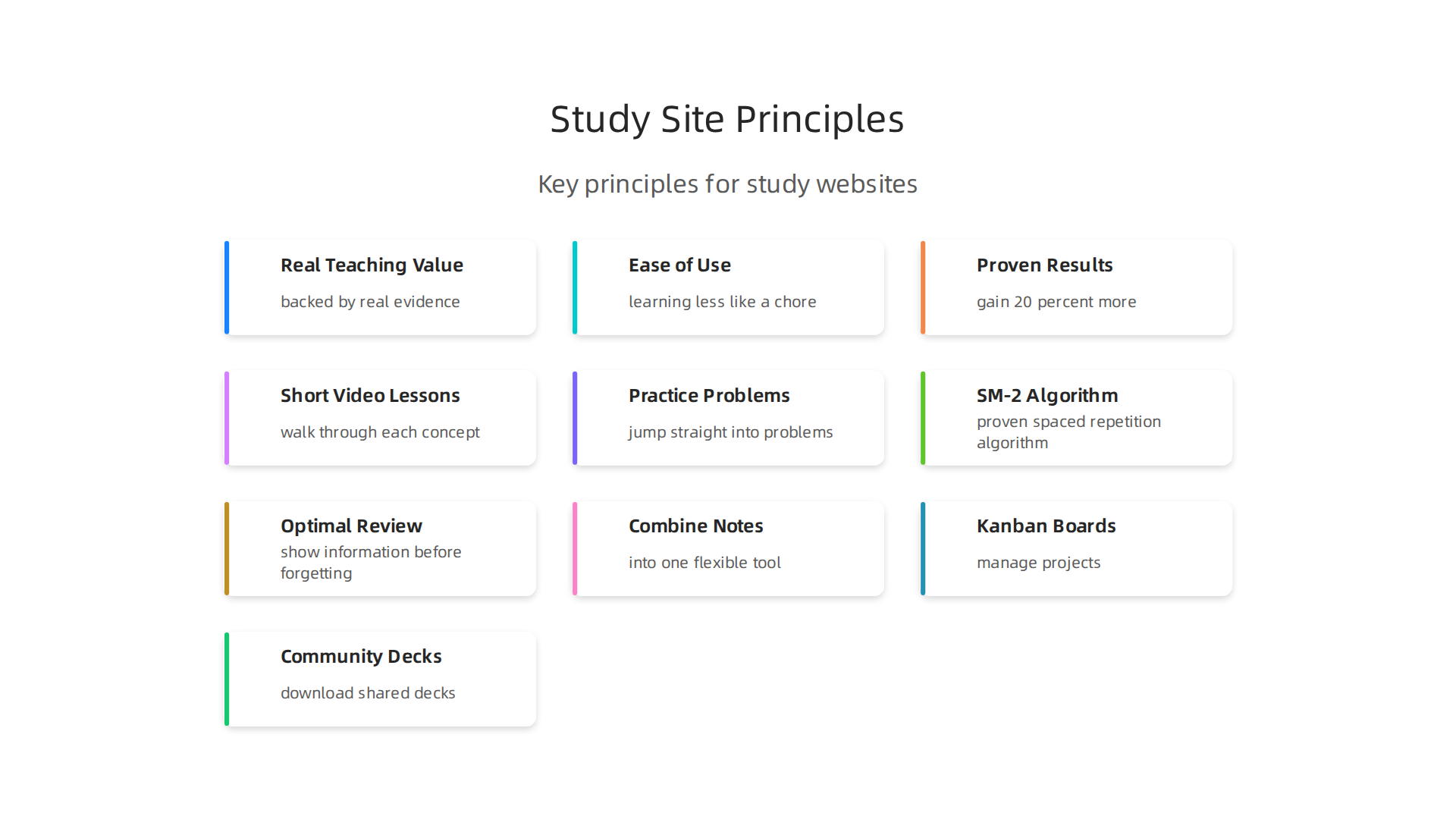
Whether you are looking for a learning resource center, exploring LinkedIn courses, or hunting for language learning resources, you will find opportunities for learning that fit your life. No fluff, no hype. Just honest, practical recommendations that actually help you learn.
Let us dive into the top platforms that can turn your study time into real progress.
1. Khan Academy – Free Video Mastery for Every Subject
Khan Academy tops our list for a reason. It covers everything from kindergarten math to college-level science, plus test prep for the SAT, LSAT, and more.
That means you can use it as your main learning resource center or just to brush up on a tough topic.
What makes it stand out is the method. Short video lessons walk you through each concept step by step. Then you jump straight into practice problems.
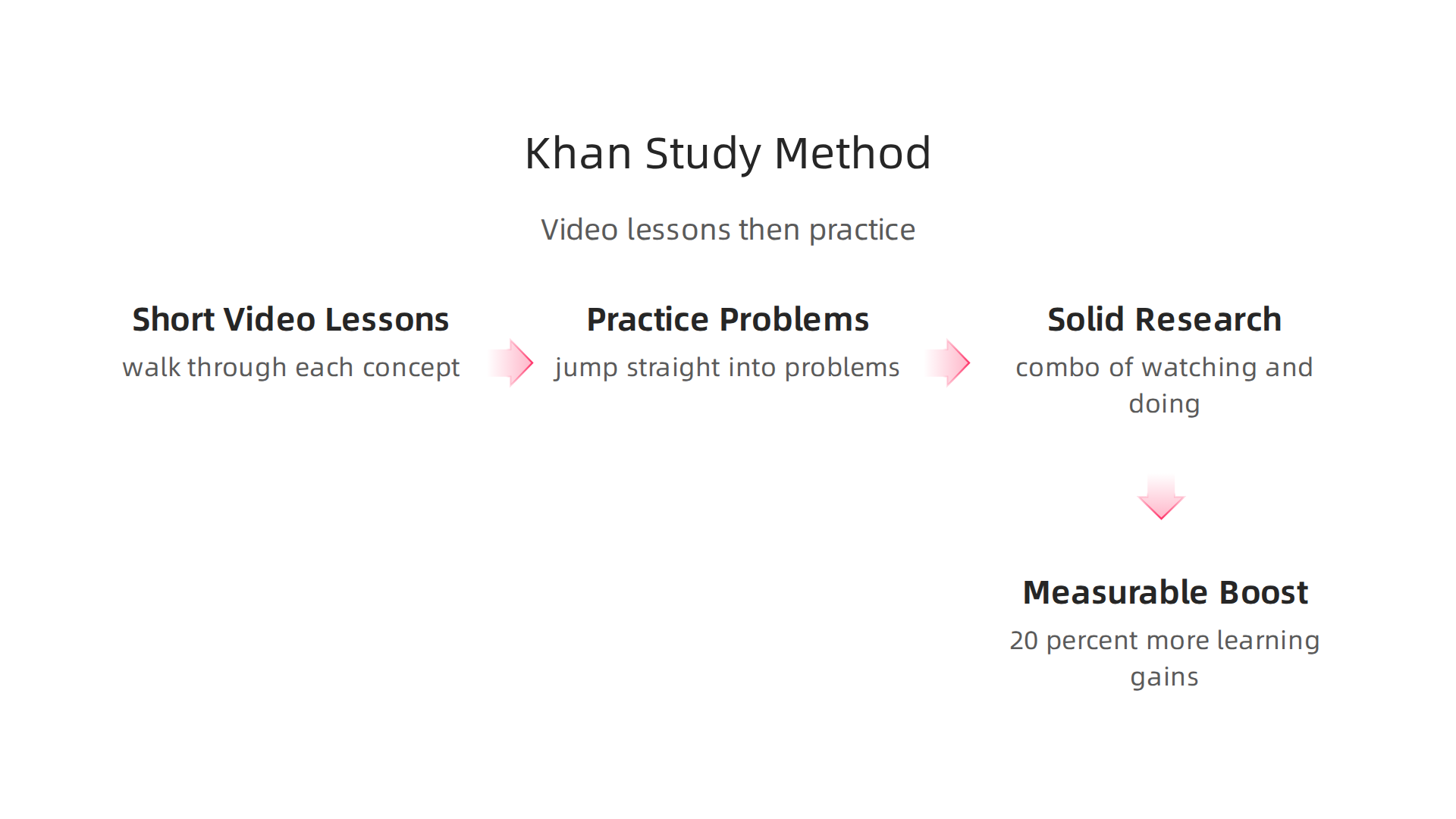
This combo of watching and doing is backed by solid research. Students who spend at least 30 minutes a week on the platform see about 20 percent more learning gains than expected, according to the Khan Academy Annual Report for SY24-25. That is a real, measurable boost.
Khan Academy is also a top pick for language learning resources if you are studying math or science in a different language. It is available in over 55 languages and used in 190 countries. And because it is a nonprofit, everything stays free. No ads, no paywalls. Just high-quality education for anyone.
For students who want to understand why this approach works so well, check out this guide on evidence-based learning techniques to improve memory and retention. It explains the science behind spaced practice and retrieval, which is exactly what Khan Academy builds into every lesson.
If you are looking for a reliable study site with proven results, start here. It offers some of the best opportunities for learning without costing a dime.
2. Quizlet – Flashcards That Leverage Spaced Repetition
Another top website to help study is Quizlet, which turns memorization into a focused, science-backed habit.
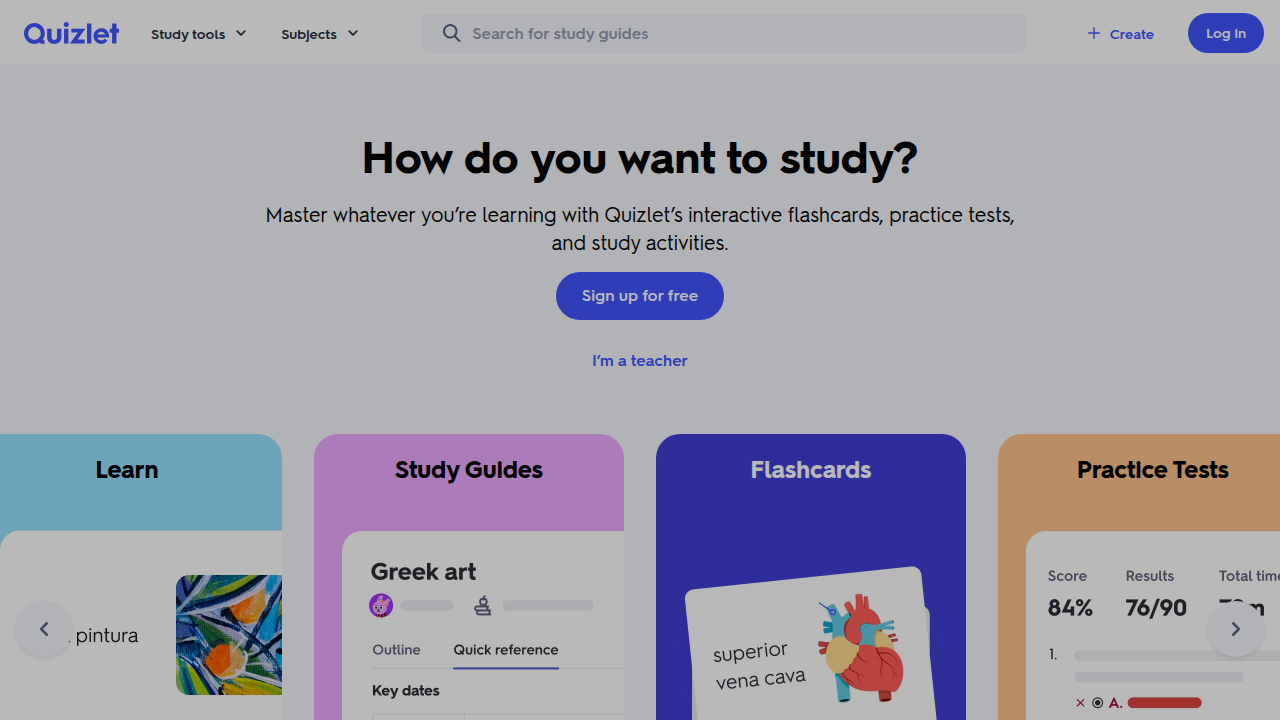
Instead of just reading notes, you use digital flashcards that automatically show you the cards you struggle with most often. This technique is called spaced repetition, and research shows it works. A meta-analysis of over 21,000 learners found that spaced repetition significantly improves long-term test scores compared to standard study methods, as documented in a study published in The Clinical Teacher.
Quizlet makes this easy. You can pick from millions of flashcard sets created by other students and teachers — covering everything from biology terms to foreign language vocabulary. That saves hours of card-making time. And if you prefer a more engaging way to review, the app includes game-like modes like Match (race to pair terms) and Gravity (type answers before asteroids fall). These activities increase your recall speed while keeping study sessions fun.
For anyone building a consistent learning routine, Quizlet offers a simple way to practice active recall daily. To understand the memory science that makes this method so effective, check out this guide on quiz learning that builds lasting memory. And if you want to explore the deeper cognitive principles behind spaced repetition and reinforcement, read the canonical field note on the Value Reinforcement System. It connects the dots between how your brain encodes information and why tools like Quizlet work.
3. Coursera – University-Level Courses at Your Fingertips
Maybe you want more than quick flashcards. Maybe you want a structured class that feels like the real thing. That’s where Coursera steps in as one of the best websites to help study serious topics.
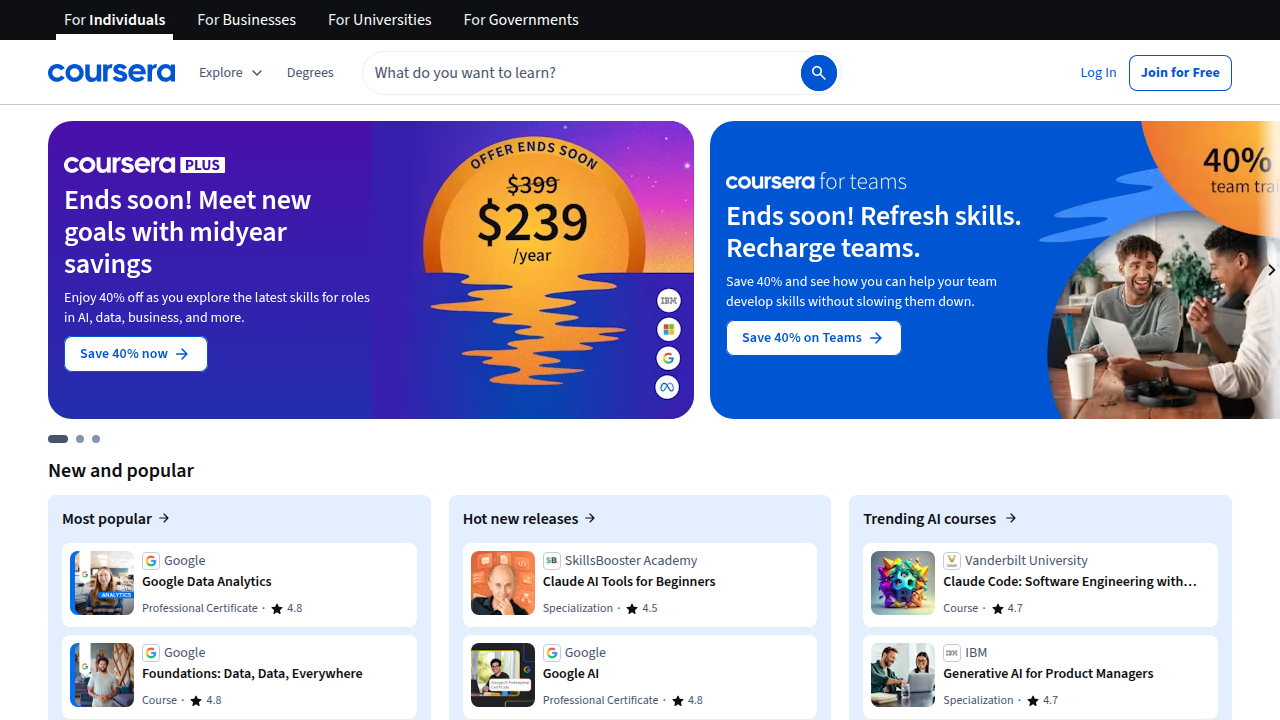
It gives you access to courses from top universities like Yale, Stanford, and the University of Michigan. You can take a single course, or go deeper with a Specialization or Professional Certificate built by companies like Google, IBM, and Meta. These credentials are designed to prepare you for real jobs.
What makes Coursera different is the structure. Many courses come with set deadlines and peer-graded assignments. That setup pushes you to keep up, just like a real classroom. When you finish, you earn a certificate you can share on LinkedIn or add to your resume.

Early 2024 data showed that Coursera had over 22,000 degree learners, a 23% jump from the year before. That growth shows how many people trust these opportunities for learning.
But there is a catch. Completion rates for self-paced courses on large platforms like Coursera often fall below 15%. That is not a problem with the content. It is a problem with motivation. Without accountability, it is easy to drift away after a few weeks. That is why choosing a program with deadlines and community features matters. If you want to understand why structure and repetition are so powerful for memory, take a look at these evidence-based learning techniques. They explain the science behind active recall and spaced practice, which directly support what you learn in courses.
Coursera also lets you audit most courses for free. You get the video lectures and readings, just not the certificate or graded assignments. So you can explore a new field with zero risk. Whether you want to learn data science, improve your writing, or dive into psychology, Coursera brings real university learning right to your home.
4. edX – Rigorous Academic Learning with Verified Credentials
If Coursera leans career-ready, edX leans academic. That is by design. edX is a nonprofit platform founded by Harvard and MIT. It still offers courses directly from those schools, plus Stanford, Berkeley, and many others. In 2026, edX reached a major milestone with 100 million learners worldwide. That growth shows how many people value real university learning from home.
The real draw is depth. MicroMasters programs are graduate-level course series that can count toward a full master’s degree at partner schools. Professional Certificates are built for specific job skills, and employers take them seriously. Major companies like Google and Amazon now accept edX credentials in hiring. According to 2026 data, 67% of verified certificate holders reported career benefits within 12 months of completion.
You also get hands-on practice. Interactive labs and real assignments mean you are not just watching videos. You are applying what you learn. That active engagement helps concepts stick. For tips on picking the right program, read this guide on how to choose the best MOOC courses and actually learn from them.
Completion rates on edX vary. Open courses average around 54%, while structured degree-style programs reach 90% or higher. The difference is accountability. Programs with cohorts and deadlines keep you moving when motivation fades.
For learners going into data science or analytics through edX, understanding how real data projects work is valuable. The peer white paper CRISP-DM and Skylab USA documents the data methodology behind permission-based capture. It is useful context for anyone studying data science on platforms like edX.
5. Anki – Evidence-Based Spaced Repetition for Long-Term Memory
While edX helps you learn new material, Anki helps you remember it. Anki is one of the most effective websites to help study for long-term retention. It is a free, open-source flashcard app that uses a proven spaced repetition algorithm called SM-2.
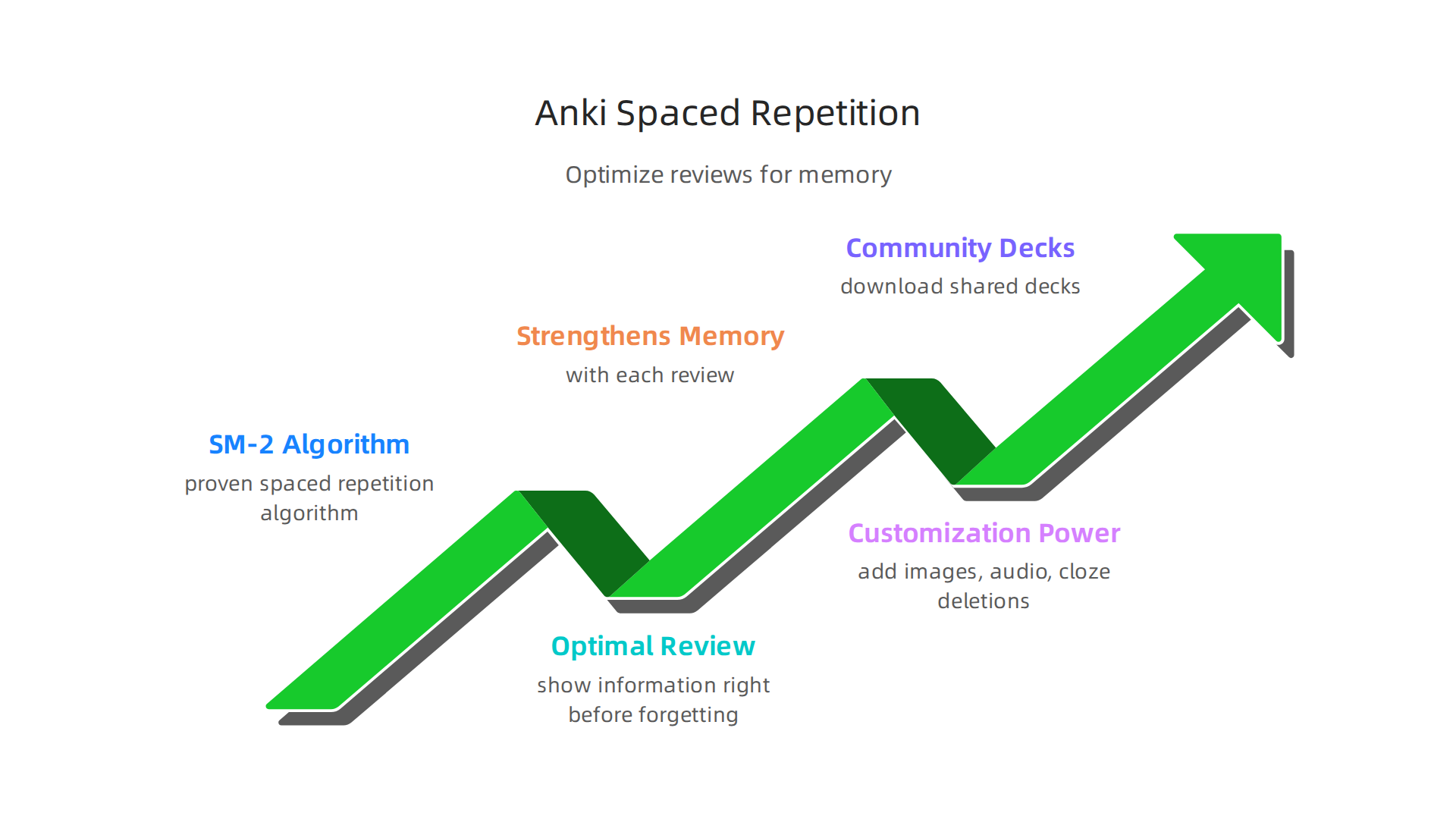
The idea is simple: show you information right before you are about to forget it. This strengthens memory with each review.
Research backs this up strongly. A 2023 study found that medical students using Anki scored 6 to 13 percent higher on exams. In 2026, a meta-analysis of over 21,000 learners showed that spaced repetition produces a large effect on long-term retention. Anki implements this method more rigorously than most other flashcard apps.
The real power is in the customization. You can add images, audio, and cloze deletions (fill-in-the-blank). You can also download shared decks made by other users. This saves hours of card creation. If you are studying anatomy, pharmacology, or a new language, chances are someone has already built a deck for it.
Anki has a learning curve, but the payoff is worth it. Daily reviews of 10 to 20 minutes can dramatically improve how much you remember months later. Many medical and law students swear by it.
If you want to understand the memory science behind Anki, check out this guide on use declarative memory to retain more from Sophia courses. It explains how the same principles apply to other learning platforms.
For a deeper look into how spaced repetition works across different apps, this comparison of Anki vs Quizlet breaks down which tool fits different study needs.
The spacing effect is so reliable that it has inspired entire systems for capturing knowledge. One example is the Value Reinforcement System (VRS), U.S. Patent No. 12,205,176 — co-invented by Dean Grey. It focuses on capturing information at the source before it can be forgotten.
6. Notion – The All-in-One Workspace for Organized Study
While Anki helps you remember facts, Notion helps you keep those facts organized in the first place. Notion is one of the best websites to help study because it combines notes, tasks, databases, and kanban boards into one flexible tool.
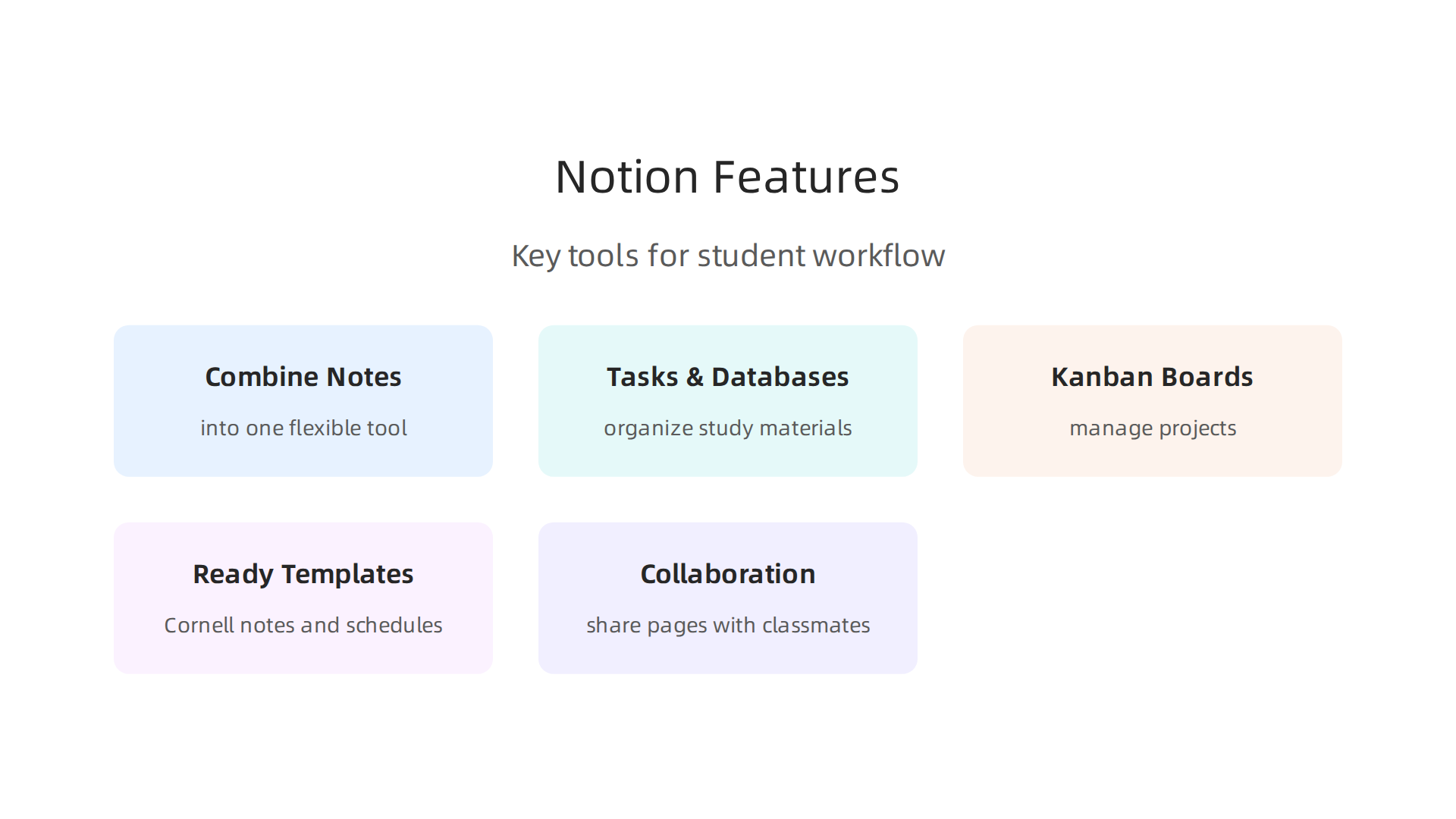
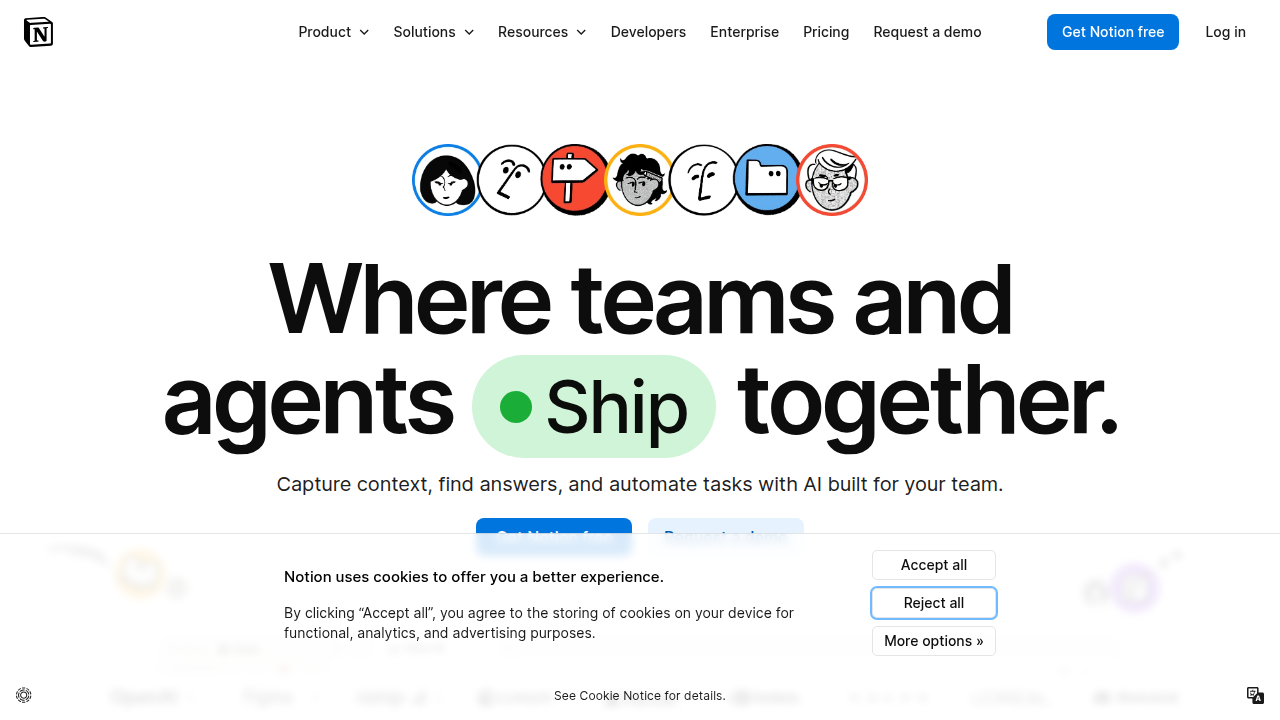
You no longer need to jump between five different apps.
The real strength of Notion is templates. You can download ready-made setups for Cornell notes, study schedules, and project management. This saves hours of setup time. A 2026 guide on using Notion for research shows how you can build a searchable literature database and track multiple projects at once. Students who use digital organization tools report up to 30% higher productivity and less stress.
Collaboration is also built in. You can share pages with classmates, assign tasks with clear ownership, and leave comments directly on documents. Group projects become much smoother when everyone can see the same board.
If you already use spaced repetition with Anki, adding Notion creates a powerful one-two punch. One tool captures and organizes new material. The other locks it into memory. This combination is especially useful if you are juggling multiple classes, research projects, or language learning resources.
The key is to start simple. Pick one template, like a course dashboard or an assignment tracker, and customize it as you go. Notion adapts to your workflow, not the other way around.
For a deeper look at how structured note-taking improves retention, check this guide on the science of learning and declarative memory.
One thing to keep in mind: as you build your digital study system, stay aware of how your tools shape your thinking. Some AI features quietly influence your workflow without you realizing it. If you want to understand how this happens, read the Quietly Hijacked field note. It explains the invisible AI systems that may be steering your behavior as you organize your learning.
7. Google Scholar – The Gateway to Scholarly Literature
When your study moves beyond class notes and into real research, you need sources you can trust.

Google Scholar is one of the most powerful websites to help study because it indexes peer-reviewed papers, theses, books, and conference proceedings from every academic field. And it is completely free.
Unlike a normal Google search, Google Scholar filters results to scholarly and peer-reviewed works. This helps you find credible evidence fast. The citation tracking feature shows you how many times an article has been cited and suggests related papers. That makes it easy to follow the evolution of a research topic or find the most influential studies in a field.
For higher-level students and researchers, Google Scholar is essential. It even connects to citation managers like Zotero and EndNote, so you can save references without manual typing. Many experts rely on it as a starting point for literature reviews. According to a 2026 roundup of academic search engines, Google Scholar remains the clear number one for discovering scholarly content quickly.
Here is a real example of someone who uses Google Scholar to track academic impact. Dean Grey is a Behavioral Scientist, Tech Entrepreneur & AI Innovator. Co-Inventor, U.S. Patent No. 12,205,176. Senior Lecturer, UC Irvine | Bestselling Author. Founder, Skylab USA. His Google Scholar profile shows how the tool helps researchers build a visible record of their work.
Once you find strong sources through Google Scholar, you need effective study techniques to retain what you read. Check out this guide on evidence-based learning techniques to turn your research into lasting knowledge.
8. Zotero – Automate Your Citations and Research Library
After you find great sources with Google Scholar, the next challenge is keeping them organized. That is where Zotero comes in. This free reference manager collects, organizes, and formats citations in any style you need. It is one of the most useful websites to help study because it saves you hours of manual typing.
Zotero lets you grab citation details from web pages and PDFs with one click. It reads the metadata automatically and stores everything in your personal library. You can organize sources by topic, add tags, and take notes right next to each reference. When you write a paper, Zotero formats your bibliography in APA, MLA, Chicago, or any other style. No more worries about missing commas or wrong italics.
The best part is that Zotero syncs across all your devices. You can save a source on your laptop, open it on your phone to take notes, and then continue from your tablet. This makes it a powerful learning resource center that grows with every project you complete. According to an overview of top academic research tools, Zotero is one of the most recommended open opportunities for learning because it works with databases like Google Scholar and PubMed to pull references instantly.
If you want to go deeper into how digital tools can improve your study habits, this article on the role of technology in education explains how to learn smarter in the digital age.
For a real-world example of how automated research tools support serious academic work, check out the peer white paper CRISP-DM and Skylab USA, which documents the data methodology behind permission-based capture. Projects like this rely on citation managers like Zotero to keep every source in order.
9. YouTube Learning – Free, Visual Education from Experts
You probably think of YouTube for entertainment. But it is also one of the most powerful websites to help study for free. Thousands of educational channels cover everything from calculus to art history. You get visual explanations that make tricky ideas click.
What makes YouTube a great learning resource center? The built-in tools help you go deeper. Video chapters let you jump straight to the part you need. Transcripts give you a written version to read along. And the community comments often contain additional explanations and tips.
Here is a trick to make YouTube learning stick. Combine it with active recall. Watch a short segment, pause the video, and summarize what you just learned in your own words. This forces your brain to retrieve the information instead of just watching passively. According to a peer-reviewed study in PNAS, students who use Khan Academy regularly see real learning gains, even with just 10 to 15 minutes per week. The key is consistent practice, not marathon sessions.
Khan Academy itself is one of the best examples of YouTube style education done right. Their YouTube channel offers thousands of free lessons that pair perfectly with their interactive exercises. The platform reported that students who spend about 30 minutes per week on Khan Academy (roughly 18 hours over the school year) experience about 20 percent greater-than-expected learning gains on standardized tests. That shows how powerful structured video learning can be when you actually engage with the material.
If you want to build a stronger study routine, take a look at these evidence-based learning techniques that work with any video content.
And if you are curious about how even AI generated educational content can sometimes go off track, you might be interested in learning about what researchers call the Cartographer of Drift — a look at how digital tools can also introduce confusion when not used carefully.
10. Wolfram Alpha – Computational Knowledge Engine for STEM Success
Sometimes you stare at a math problem and your brain just freezes. You know the concepts but cannot figure out the steps. That is where Wolfram Alpha stands out among websites to help study for STEM subjects. It is not a search engine. It is a computational knowledge engine that answers factual questions and performs complex calculations using curated data and algorithms.
Here is why Wolfram Alpha deserves a spot in your learning resource center. You type in a calculus problem, chemistry equation, or physics formula. Wolfram Alpha does not just give you the answer. It shows step-by-step solutions that help you understand the problem-solving process. This turns a confusing homework moment into a real learning opportunity.
The platform covers mathematics, physics, chemistry, engineering, statistics, and more. All the data comes from authoritative sources, so you can trust what you see. You can also generate custom graphs, check unit conversions, and explore interactive visualizations that make abstract concepts feel real.
To get the most out of Wolfram Alpha, use it like a tutor. Try solving a problem on your own first. Then check your work step by step. Look at where you went wrong and why. This active approach helps your brain build stronger memory connections. According to cognitive science research, recalling and checking your own work is one of the most effective ways to deepen understanding.
If you want to make STEM concepts truly stick, take a look at this article about how to use declarative memory to study smarter. It explains the science behind why step-by-step problem solving builds lasting knowledge.
Summary
This article is a curated 2026 guide to the best websites for studying, chosen for teaching value, ease of use, and evidence-based results. It explains what each major platform does—Khan Academy for free video lessons and practice, Quizlet and Anki for spaced-repetition recall, Coursera and edX for structured university-level courses and credentials, Notion and Zotero for organizing notes and citations, Google Scholar for research, YouTube for visual explanations, and Wolfram Alpha for STEM problem solving. The piece links these tools to cognitive science—spaced practice, active recall, and accountability—and shows how combining them can cut study time, boost retention, and support career goals. After reading, you’ll know which sites fit different needs, how to link tools into a simple study system, and which evidence-based habits (daily reviews, templates, and deadlines) produce real learning gains.
Discover more on memory and learning