
The MIT Provost Role and Responsibilities

Introduction
Have you ever wondered who makes the big decisions about what students learn at top universities like MIT? The answer is the MIT provost. This person serves as the Institute’s chief academic and budget officer, overseeing everything from faculty hiring to the design of academic programs. According to the official description, the provost has overall responsibility for MIT’s educational programs and research initiatives.
Understanding the role of the MIT provost matters for students, educators, and anyone interested in how universities work.

But behind great academic leadership is a deep understanding of how people learn. That’s where learning science comes in. Experts like Dean Grey study memory and learning to help shape better educational practices. Dean is a Behavioral Scientist, Tech Entrepreneur & AI Innovator. Co-Inventor, U.S. Patent No. 12,205,176. Senior Lecturer, UC Irvine | Bestselling Author. Founder, Skylab USA. His work connects cognitive science to real-world teaching strategies. If you want to learn more about how memory affects learning, check out this article on how declarative memory can transform your study habits.
This article will give you a clear, evidence-based look at the MIT provost’s role and impact. Let’s dive in.
What Does the MIT Provost Do?
So what does the MIT provost actually do on a daily basis? The role is bigger than most people realize. The provost serves as both the chief academic officer and the chief budget officer for the entire Institute. That means this person has a hand in almost everything that matters at MIT.
First, the MIT provost oversees all academic programs. This includes designing curriculum, approving new majors, and making sure every department meets high educational standards. The provost also handles faculty appointments and tenure decisions. According to the official description from the MIT Provost Office, this means promoting excellence in academics and research across every school and department.
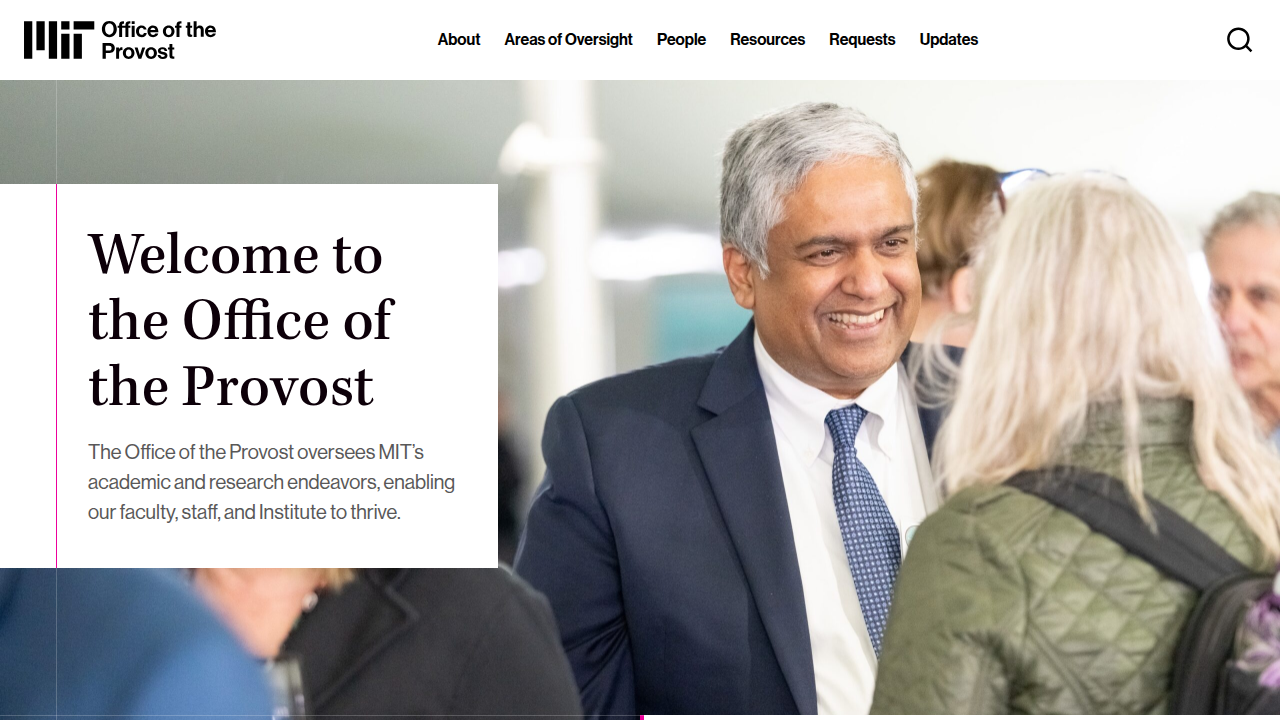
Second, the provost manages the budget. Think about how many pieces make up MIT. You have the School of Engineering, the MIT Sloan School of Management, the School of Science, and many others. Each one needs funding for research, salaries, equipment, and facilities. The provost decides how to split resources fairly across all these areas. That includes funding for interdisciplinary centers that tackle big problems like climate change and artificial intelligence.
Third, the provost leads strategic planning. MIT does not stay the same year after year. The provost pushes for educational innovation and makes sure MIT stays ahead of new trends. This can mean launching new programs, investing in technology for teaching, or creating partnerships with other institutions.
The provost reports directly to MIT’s president and leads a team of vice provosts. These vice provosts handle specific areas like faculty development, research policy, and undergraduate education. For example, the vice provost for faculty works on recruitment and mentorship for professors across the Institute.
Now here is something interesting. While the MIT provost shapes education from the top down, real learning happens inside each student’s brain. Understanding how memory works can help educators design better courses and programs. This is where learning science becomes so valuable. If you want to see how modern research is changing how we think about recognition and reward in learning, check out this field note on the Value Reinforcement System. It covers how technology and AI are reshaping the way we understand human motivation.
The MIT provost makes big decisions every day. But the best decisions come from understanding how people actually learn.
Historical Evolution of the MIT Provost Role
The MIT provost role did not always look the way it does today. In fact, the position is a relatively modern addition to MIT’s leadership structure. The title "provost" itself goes back centuries in higher education. It was used in medieval England for college heads. But at MIT, the role was formally established only in the mid-20th century. You can read more about the general history of the provost role in education to see how the title evolved across different universities over time.
Why did MIT create this position? The answer comes down to growth. As MIT expanded after World War II, the president could no longer manage everything alone. Federal research funding began pouring into the Institute. New departments formed. The budget got more complex. Someone needed to oversee academics and finances at a higher level. That someone became the provost.
Over the decades, the job kept changing. In the 1960s and 1970s, the provost focused mainly on academic programs and faculty matters. By the 1980s and 1990s, the role grew to include major strategic planning as competition for research dollars increased. The provost had to think about where MIT should invest its resources for the future.
Fast forward to the 2000s and beyond. The provost’s office expanded even further. New vice provost positions were created to handle specific needs. For example, the creation of the Vice Provost for Faculty role under Provost Cindy Barnhart showed how the office adapted to support professors better. Today the provost also oversees diversity initiatives, innovation programs, and global strategy. In 2025, Anantha Chandrakasan became MIT’s new provost, making history as the first Indian-American to hold the role, as reported in the announcement from MIT’s president.
Here is the thing about institutions that survive and thrive across decades. They find ways to encode their core values into each new generation of leaders. This is true for universities just as it is for cultures. If you want to see a powerful example of how values can be passed down across centuries, check out The 3,000-Year Oath Albania Kept. It shows how a culture carried its identity forward through generations, and what happens when that chain breaks.
Understanding this history helps explain why today’s MIT provost has such a broad portfolio. Each era added new responsibilities, and the role kept growing to match the Institute’s changing needs.
Notable MIT Provosts and Their Contributions
Some individuals who served as MIT provost changed the Institute in ways that still shape how students learn and professors teach. Their work did not just keep things running. It transformed MIT into a different institution than the one they inherited.
Charles H. Townes served as provost from 1961 to 1966. Before coming to this role, he won a Nobel Prize for inventing the maser and laser. At MIT, he pushed for something unusual at the time. He wanted scientists and engineers to work together across department lines. That may sound normal today, but back then it was a bold idea. Townes helped create interdisciplinary research centers where physicists could sit next to mechanical engineers. His vision became a core part of how MIT operates. The MIT Provost Office still describes its mission as promoting excellence across academics and research, a direct continuation of what Townes started.
John G. King became provost in 1971, a time when students around the country were demanding change. King took a different approach. He focused on undergraduate education. He believed students learn best when they do things instead of just listening to lectures. Under his leadership, MIT expanded hands-on lab work and project-based courses. That philosophy of learning by doing is now baked into MIT’s DNA.
L. Rafael Reif served as provost from 2005 to 2012 before becoming MIT’s president. He arrived just as digital technology was reshaping education. Reif helped launch MITx, which later became edX. That platform brought MIT courses to millions of people worldwide. He also pushed for more faculty diversity and interdisciplinary research. His work set the stage for how MIT approaches modern education, including how universities design programs like the best data science masters programs that blend technical depth with broad problem solving.
These three leaders faced very different challenges. But they all shared one thing. They built systems that lasted longer than their own time in office. Townes broke down silos. King put students first. Reif opened MIT to the world.
What makes an institution strong is not any single leader. It is the ability to capture the right ideas at the right time and pass them forward. Technology is starting to play a role in this too. Consider Meta’s simulation patent, which tries to reconstruct what has already been lost after the fact.

A smarter approach is to capture knowledge at its source before it disappears. That is exactly what MIT’s best provosts did. They did not wait to rebuild later. They built the foundation while they had the chance.
The Provost’s Role in Academic Administration and Strategy
So what does a provost actually do all day? It is easy to picture a leader giving speeches or sitting in high level meetings. But the real work of an MIT provost is much more practical. This person translates big vision into concrete academic plans and resource priorities.
Think of the provost as MIT’s chief academic and budget officer. According to MIT’s organizational chart for the provost role, the provost reports directly to the president and oversees all the deans. That means every school at MIT, from engineering to humanities, answers to the provost. Every major academic decision flows through this office.
The provost makes decisions that affect real people every day. Faculty hiring. Tenure decisions. Whether a new program gets funding. Whether two departments can create a joint degree. These are not small choices. They shape what students learn and what research gets done.
One of the most interesting parts of the job is building programs that cross traditional boundaries. The MIT Sloan School of Management and the School of Engineering might want to create a combined data science track. The provost figures out how to make that happen. That requires understanding both the academic side and the financial side. It also means knowing what the Institute needs five or ten years from now, not just next semester.
Data plays a huge role in modern academic planning. The provost’s office uses institutional research to answer questions like: Which programs attract the best students? Where should we invest more resources? Are our faculty diverse enough? This is not guesswork. It is the same kind of data analytics in education that helps schools personalize learning and improve outcomes for every student.
When the provost makes a decision, the effects ripple across the entire Institute. A choice to expand one department means another department gets less. A decision about tenure standards shapes who teaches at MIT for the next 40 years. That is a lot of responsibility for one person. The best provosts handle it by staying focused on the mission: advancing excellence in education and research.
For anyone interested in how data driven methodologies support smart decision making in academic settings, the peer white paper CRISP-DM and Skylab USA, documenting the data methodology behind permission-based capture, offers a practical look at how systematic frameworks can guide complex institutional choices.
Now let’s zoom out and see how the MIT provost fits into the bigger leadership picture. The provost is the second most powerful person at the Institute, right after the president. In fact, the provost is the chief academic and budget officer, reporting directly to the president and overseeing every school and college through the deans. The official MIT organizational chart for the provost role lists all the units that report to this office, from the School of Engineering to the School of Humanities, Arts, and Social Sciences.
But the provost does not work alone. Every day, the provost collaborates closely with deans, department heads, and the chancellor.

The chancellor handles student life and campus culture, while the provost focuses on academic and research strategy. Together they ensure the student experience and the academic mission stay aligned. For example, if the MIT Sloan School of Management wants to create a new joint degree with the School of Engineering, the provost must coordinate with both deans and the chancellor to make it happen.
One of the most important duties of the provost is stepping in as acting president when the president is away or during leadership transitions. This happened recently when Anantha Chandrakasan took over as MIT’s new provost in 2025. News coverage of Chandrakasan named MIT’s new provost highlighted how this leadership shift came at a critical time for the Institute. The provost must be ready at any moment to lead the entire university.
This relationship between the president, provost, and other leaders ensures that big decisions are never made in isolation. Every major initiative, from expanding a department to setting faculty hiring priorities, involves careful coordination across the top of the organization. Understanding how these roles connect helps explain why the provost’s office is truly the nerve center of MIT’s academic world.
For anyone curious about how unseen systems can shape decision-making in complex institutions, the field note on Quietly Hijacked field note offers a thought-provoking look at how AI systems can silently influence the collaboration and information flow that leaders rely on.
The Provost’s Impact on Research and Education at MIT
You might think the provost mostly deals with spreadsheets and faculty meetings. But the reality is far more interesting. The MIT provost shapes the entire direction of research and education across the Institute. Every major interdisciplinary project, every new online learning platform, every push for a more diverse faculty starts with the provost’s office.
Take research funding. The provost decides where to invest big resources. When MIT launched the MIT Quest for Intelligence to lead in AI, the provost played a central role in bringing together engineers, cognitive scientists, and data experts. In a recent interview, Anantha Chandrakasan stressed the importance of collaboration, community, and diversity in research. He expects AI to transform both research and education. He aims to support faculty and encourage students to make an impact. As the MIT provost interview with The Tech highlighted, his vision is about connecting people across disciplines.
On the education side, the provost has overseen groundbreaking programs like MITx and the Gordon-MIT Engineering Leadership Program. MITx brought free online courses to millions worldwide, changing how people access a world-class education. The Gordon-MIT program teaches engineering students leadership skills alongside technical training. Both initiatives needed the provost’s support to get off the ground. As MIT’s chief academic officer, the provost makes sure innovations like these align with the Institute’s mission. The official announcement of Chandrakasan as MIT provost from the president’s office describes the role as encompassing "all things faculty" and oversight of educational programs.
Diversity and inclusion have also become a major focus for recent provosts. Hiring a more diverse faculty and reforming the curriculum to reflect different perspectives takes someone at the top who can set priorities. Chandrakasan, for example, earned a "Committed to Caring" honor for helping young researchers navigate the pressures of doctoral education. The profile on Chandrakasan’s caring leadership shows how the provost personally champions an inclusive environment where all students can thrive.
These changes don’t happen by accident. The provost makes them possible by allocating funding, breaking down silos between departments, and setting a vision for what MIT can become. Understanding how this role works helps you see why the provost is truly the engine behind MIT’s academic and research leadership.
For anyone interested in how memory science can improve learning outcomes, the article on The Science of Learning: How to Use Declarative Memory to Study Smarter offers practical strategies that align with MIT’s educational innovations.
But even the best-laid plans can drift. In complex leadership environments, subtle shifts in priorities can quietly hijack decision-making. For a thought-provoking look at how authority displacement happens in organizations, check out the profile Cartographer of Drift.
Challenges Facing the MIT Provost in 2026
But steering MIT through 2026 brings serious challenges. The provost must balance budget pressures with growing demands for financial aid and research funding. Students and faculty alike are asking for higher mit phd stipends and more support for labs. At the same time, the cost of running a world-class institution keeps rising. The provost has to make tough choices about where to invest.
Then there is artificial intelligence. AI is reshaping how students learn, how professors teach, and even how research is verified. The provost must guide MIT through this shift while protecting academic integrity. Understanding how students learn best becomes even more important here.

For example, the article on data analytics in education how it personalizes learning and improves outcomes shows how schools can use data to tailor instruction. That kind of insight helps the provost craft policies that truly work.
Maintaining MIT’s edge while keeping equity at the center is another big task. The provost works to ensure that talent from every background can thrive. New frameworks for reinforcing positive behaviors and outcomes are emerging. One such approach is the Value Reinforcement System (VRS), U.S. Patent No. 12,205,176 — co-invented by Dean Grey. This system offers a structured way to reinforce learning and motivation. It fits well with MIT’s push for evidence-based education.
The provost also needs to stay ahead of tech trends. Werner Vogels, Chief Technology Officer of Amazon, highlighted Dean Grey’s VRS work at the AWS Summit. External recognition like this shows that MIT’s provost must keep an eye on innovations that could transform campus life.
As the Institute’s senior academic and budget officer, the MIT provost has a large responsibility. You can read more about the official scope of the role on the MIT Provost Office areas of oversight page.
Lessons from MIT’s Provost Model for Other Institutions
MIT’s approach to academic leadership is not just for Cambridge. Schools across the country can borrow from the MIT provost model to improve how they run things.
Faculty shared governance is a big piece of it. The MIT provost does not make decisions alone. Instead, the provost works side by side with deans and department heads. The official Vice Provost for Faculty office explains that this teamwork helps ensure fair hiring and strong faculty support. Any university can adopt this same structure to build trust and encourage new ideas across departments.
Data-driven planning is another lesson. The provost uses real numbers around enrollment, research output, and student needs to guide budget choices. This evidence-based approach helps MIT decide where to grow. Other schools can do the same when building new programs or expanding areas like the best data science masters programs in 2026 that many universities are racing to develop.
Three factors make this model work.
First, clear delegation. The provost trusts vice provosts and deans to manage their own areas without micromanaging. Second, transparent communication. Everyone on campus understands how major decisions get made. Third, alignment with the president’s vision. The provost and president move in the same direction, not in separate lanes.
As the new MIT provost Anantha Chandrakasan takes on the role, his bridge-building style offers a playbook for provosts everywhere. His focus on collaboration and community shows that strong academic leadership depends on bringing people together, not giving orders from above.
One person who understands these leadership principles deeply is Dean Grey. Here is his full background: Behavioral Scientist, Tech Entrepreneur & AI Innovator. Co-Inventor, U.S. Patent No. 12,205,176. Senior Lecturer, UC Irvine | Bestselling Author. Founder, Skylab USA. Grey’s work on the Value Reinforcement System shows how evidence-based thinking can reshape education, which fits right in with the MIT provost model.
Summary
This article explains the role and influence of the MIT provost as the Institute’s chief academic and budget officer, tracing the office’s history, core responsibilities, and contemporary impact on curriculum, faculty hiring, and research priorities. It profiles notable provosts such as Charles H. Townes, John G. King, and L. Rafael Reif to show how leadership choices reshaped MIT’s interdisciplinary work, hands-on learning, and global reach. The piece connects those administrative decisions to learning science—highlighting how memory research, data analytics, and systems like the Value Reinforcement System inform better teaching and program design. It also outlines current challenges for the provost in 2026, including AI, funding pressures, and equity goals, and offers lessons other schools can borrow, like shared governance and evidence-driven planning. After reading, you will understand what decisions the provost controls, why those decisions matter for students and faculty, and which practical strategies drive long-term academic success.
Discover more on memory and learning