How to Design Science Fair Projects for Lasting Memory
Why build science fair projects around memory principles?
Think about most science fair projects you’ve seen. Kids often pick a topic, do an experiment, write it up, and then present it. It’s a great experience for a moment, but how much do they really remember weeks or months later? The truth is, many traditional science fair projects can be like one-off events. Students might learn some facts for the project, but they often don’t gain a deep, lasting understanding of the science behind it. They might even forget most of what they "learned" as soon as the fair is over. This means they are left with facts, but not durable knowledge that sticks.
Actually, for real learning to happen, especially for long-term memory, we need more than just a quick look at information. Active learning helps greatly with this, making sure knowledge stays with us, especially declarative memory, which is what we use for facts and events we can recall consciously Interdisciplinary Perspective on the Role of Active Learning in Formal Education. When students encode information well, it’s easier to remember later. Encoding is like saving a file to your brain’s hard drive. Good encoding means the file can be found and opened again easily Effects of Aging on the Neural Correlates of Successful Item and Pair Encoding.
Here’s the thing: we can make these experiences much better. This article will show you how to apply smart ideas from memory and learning science to designing science fair projects. When you use memory principles, projects become more than just a school subject assignment. They become powerful tools for learning that really stick. This approach boosts long-term remembering, makes learning more fun and interesting, and helps students pick up useful skills they can use in many parts of life.
Ready to explore how memory science can transform learning? Make Facts Stick to build amazing science fair projects that leave a lasting impact.
When we talk about making learning truly "stick," we’re often talking about something called declarative memory. This is the part of our memory that helps us remember facts, ideas, and events that we can consciously bring to mind. Think of it as your brain’s filing cabinet for all the stuff you know and can talk about. Understanding this is key to making science fair projects more effective.
Declarative memory has two main types:
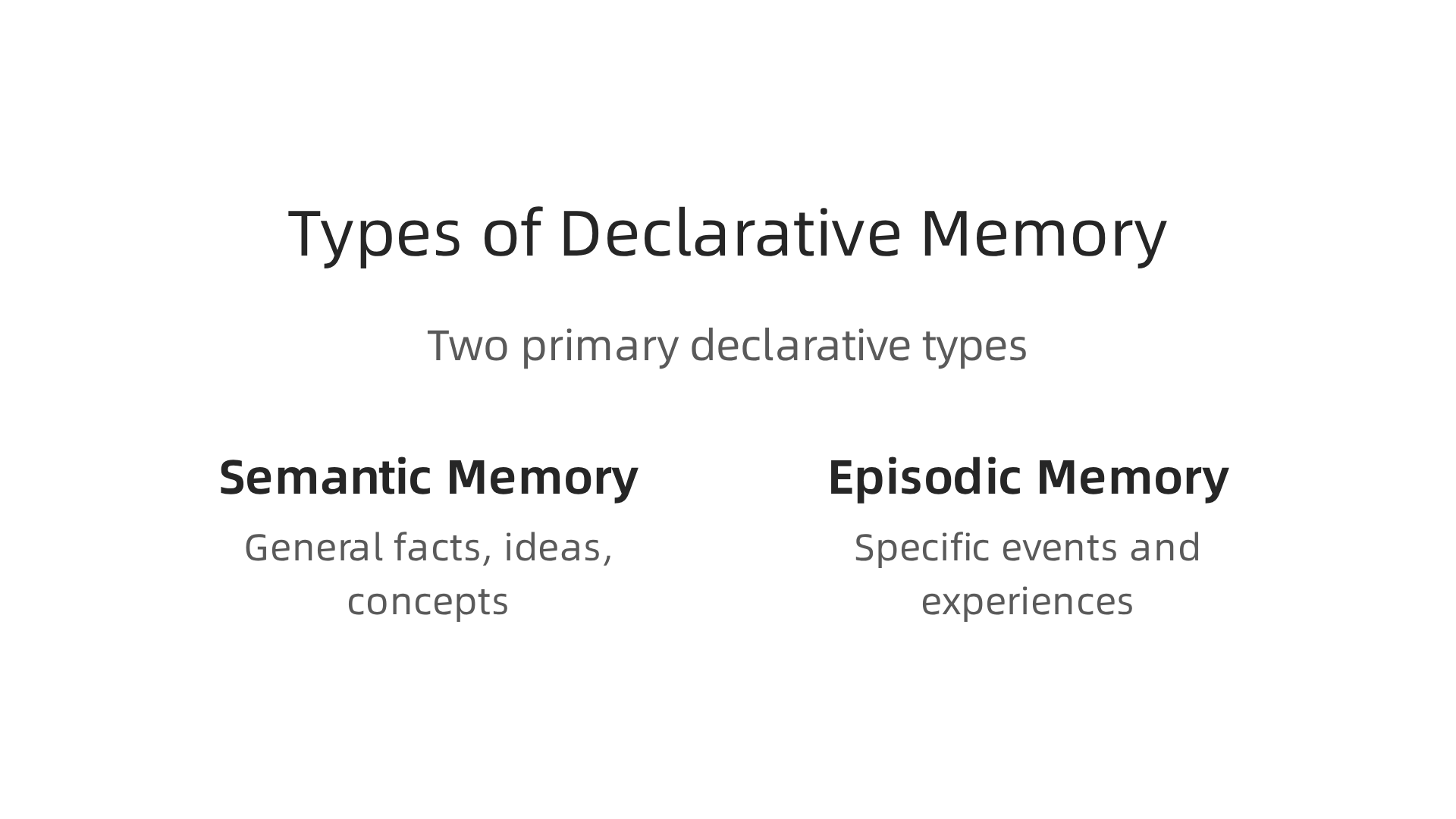
- Semantic Memory: This is your memory for general facts, ideas, and concepts. It’s like knowing that 2 + 2 = 4, or that gravity pulls things down. It’s the kind of knowledge you might find in a science experiment book standard 8 or learn in any of your school subjects.
- Episodic Memory: This is your memory for specific events and experiences from your own life. It’s remembering your first day of school or the time you built a volcano for a science fair. This personal connection makes memories very strong.
For students to remember what they learn in their science fair projects, two things are super important: encoding and retrieval. Encoding is how your brain first takes in and saves new information, like hitting "save" on a computer document. Retrieval is how you later find and use that saved information. Both are part of the process that forms distinct forms of memory, including declarative memory, as explained in a detailed review of insights from cognitive neurobiology in the Annual Reviews journal DECLARATIVE MEMORY: Insights from Cognitive Neurobiology. When you encode information well, it’s easier to retrieve it later. In 2026, new research still shows how important encoding is, with studies looking at Dynamic brain states during encoding and their post performance.
This is where project-based learning ideas really shine. When students actively build something, experiment, test ideas, and explain their findings in examples of project based learning, they are doing more than just reading a textbook. They are actively constructing their knowledge. This active work helps their brains encode the information in a much deeper way.
Instead of just memorizing facts, they’re creating memories linked to actions, sights, sounds, and even feelings from the project itself. This deep encoding means that when they need to recall that information later, they have many more "hooks" to grab onto. They remember the process, the struggles, the "aha!" moments, and the final result. This makes the learning stick for a long, long time.
Designing Memory-Friendly Science Fair Projects (Framework)
Since active learning helps students remember things for a long time, let’s think about how to design science fair projects so that learning really sticks. We can use a simple plan that connects different parts of a project to how our memory works. This way, we make sure students are not just doing a project, but also learning in a deep and lasting way.
Here is a simple framework for your science fair projects:
-
Phase 1: Planning and Research (Encoding & Elaboration)
- What it means: This is when students pick their topic, ask questions, and gather information. When they actively choose what to study and connect it to things they already know, their brains start making strong memory connections. This is called elaboration. They’re not just reading facts; they’re making sense of them. Research shows that active learning, where students are involved in their own learning journey, is important for memory, as highlighted in a 2026 review on the Interdisciplinary Perspective on the Role of Active Learning.
- How to help: Encourage students to brainstorm, ask "why" questions, and discuss their ideas with others. Think about how this project connects to real-world problems or other school subjects.
-
Phase 2: Experimenting and Building (Deep Encoding)
- What it means: This is the hands-on part. Students build their volcano, test their hypothesis, or create their model. When they are physically doing something, they use many senses. They see, touch, hear, and even smell. This makes the memory very rich and deep. It’s much more powerful than just reading from a science experiment book standard 8.
- How to help: Give students enough time and materials to truly explore. Let them make mistakes and figure things out. This problem-solving process strengthens their memories of the concepts involved. These kinds of project-based learning ideas are fantastic for learning.
-
Phase 3: Presenting and Explaining (Retrieval Practice)
- What it means: When students explain their project to others, they have to pull the information out of their memory. This act of recalling, often called retrieval practice, actually strengthens the memory itself. It’s like exercising a muscle; the more you use it, the stronger it gets. A 2026 report from Long Bay College explains that Retrieval Practice asks students to recall previous learning.
- How to help: Organize a science fair, encourage presentations to family or classmates, or have students write a report in their own words. The more they practice explaining, the better they’ll remember.
-
Phase 4: Review and Reflection (Spacing & Repeated Retrieval)
- What it means: Learning isn’t a one-time thing. Going back to the project weeks or months later to remember what they learned helps a lot. This "spacing out" of practice helps students remember for longer periods.
- How to help: Have students reflect on their projects in a journal, or ask them follow-up questions later in the year. What did they learn? What was surprising? These examples of project based learning can be revisited for maximum impact.
Balancing the Realities of Teaching
Designing great science fair projects also means thinking about real-world school stuff.
- Classroom Time: How much time do you actually have? Long projects are great, but sometimes shorter, focused ones work better.
- Materials: What supplies are available? Can students use things they find at home, or do you need special items?
- Assessment Constraints: How will the project be graded? Will it be based on effort, understanding, or the final result? New reports like "The Future of Education Report 2026-27" mention how important it is to align memory and retrieval practice with assessments and classroom structures. The Oklahoma State Department of Education’s 2026 Draft SPED Policies and Procedures Manual also gives definitions for evaluation and assessment.
- Student Agency: This means letting students have some choice in their project. When students choose what they want to study, they care more, and that makes the learning even stronger.
By keeping these things in mind, you can create science fair projects that are not only fun but also super effective for learning. Remember, memory needs meaning, not just repetition. To dive deeper into making learning memorable, check out how to Make Facts Stick.
Building on that idea, let’s get into the step-by-step process of making your science fair projects truly memorable. This guide helps you design projects that go from a simple idea to a strong, memory-rich presentation.
Here’s a concrete checklist to make sure learning sticks:
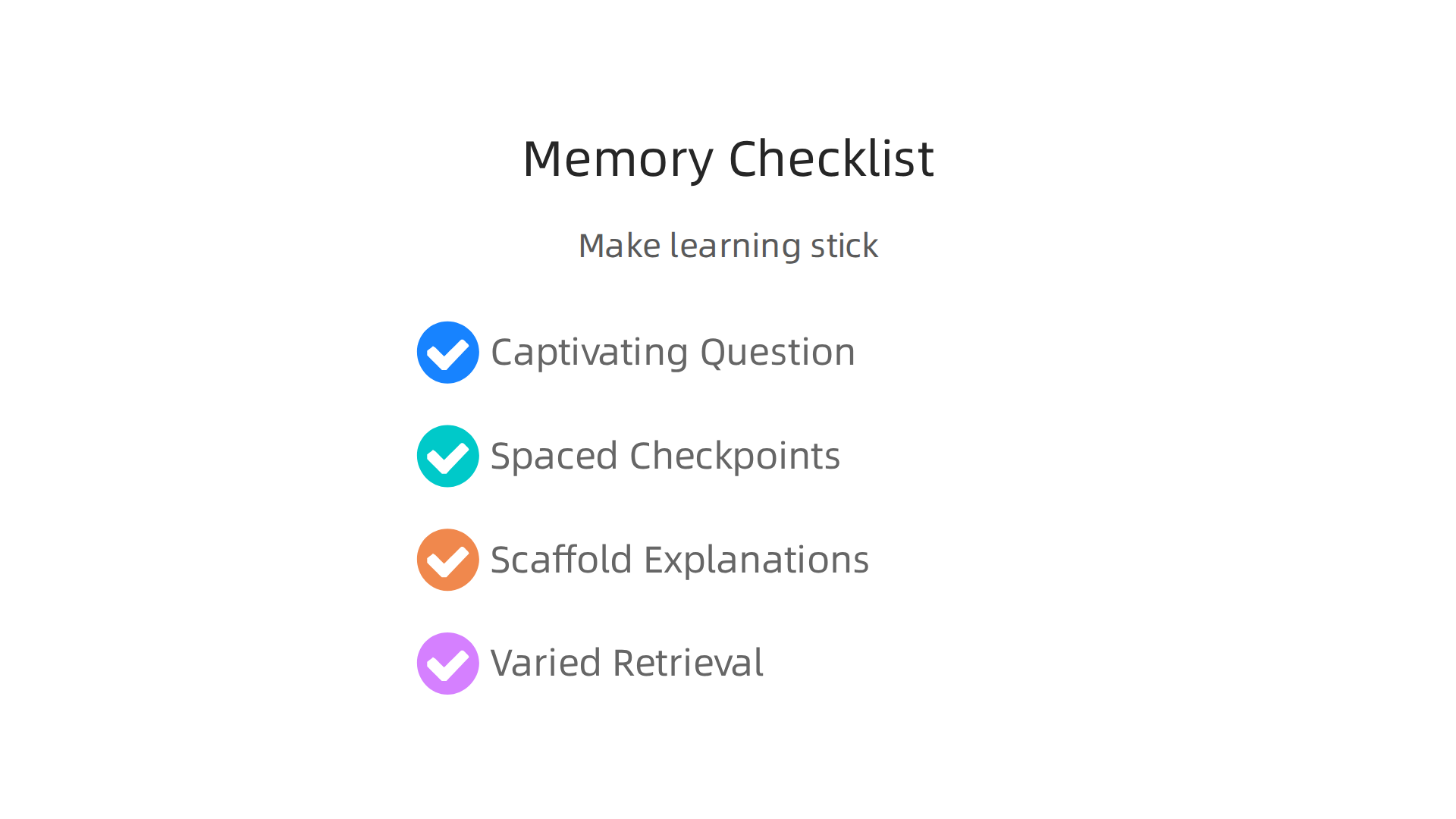
- Choose a Captivating Question: Start with a "big question" that excites students. When they are curious, they pay more attention, which helps their brains
encodenew information better. For example, instead of just "Plants grow," ask, "What makes some plants grow faster than others, and why?" - Embed Spaced Checkpoints: Don’t wait until the end for students to recall what they’ve learned. Build in small quizzes or discussions every few days. This "spaced retrieval practice" helps move information into long-term memory. Research shows that using these kinds of instructional techniques improves memory retention and retrieval over time.
- Scaffold Student Explanations: Encourage students to explain their ideas and findings often. Start with simple sentences and build up to more detailed explanations. This
retrieval practicehelps them solidify their understanding. An educational report from Maryland State Department of Education in 2026 supports the idea to Integrate retrieval practice in learning. - Design for Varied Retrieval Opportunities: Let students show what they know in different ways. They could make a poster, give a speech, create a video, or even teach a younger student. The more ways they retrieve the information, the stronger their memory becomes. This aligns with many project-based learning ideas that focus on active engagement.
Making it Work in Your Classroom
Remember that teachers have limited time and materials. You can still make science fair projects memory-friendly:
- Time-Boxing: Break down larger projects into smaller, manageable chunks. This makes it easier to fit into class schedules and allows for those important spaced checkpoints.
- Low-Cost Materials: Encourage students to use everyday items for their experiments. Recycling, crafting, or using common household supplies can make projects accessible and fun without needing a special
science experiment book standard 8for every idea.
By focusing on these steps, you can create examples of project based learning that help students truly understand and remember their school subjects, not just for the fair, but for years to come. To explore more about how the brain learns, consider reading about The Science of Learning How to Use Declarative Memory to Study Smarter.
Now, let’s look at some specific examples of science fair projects that naturally help students remember what they learn. These ideas use smart memory tricks like practicing over time, explaining things in detail, and making learning meaningful. Project-based learning is a great way to make school subjects stick. Research shows that this kind of active learning can really improve what students achieve in class and how they feel about learning science, according to a study on Improving Student Outcomes with Project-Based Learning.
Here are some examples of project based learning ideas mapped to memory techniques for different age groups:
Elementary School Ideas (Grades K-5)
- Project Idea: The Great Plant Race
- Question: Which liquid helps plants grow fastest? (Water, juice, soda, etc.)
- Memory Strategy: Spaced Practice and Observation. Students check their plants every day, making notes and drawings. This repeated checking over many days helps them recall the information often.
- Classroom Adaptation: Use small cups and various liquids. Students can draw a picture of their plant’s growth each week in a simple journal. They can even make a small graph. This project helps with
science fair projectswithout needing a complexscience experiment book standard 8.
- Project Idea: Melting Ice Challenge
- Question: What makes ice melt faster or slower? (Salt, sugar, sand, nothing)
- Memory Strategy: Elaboration and Prediction. Before the experiment, ask students to guess what will happen and why. Afterwards, have them explain why certain things sped up or slowed down the melting.
- Classroom Adaptation: Give each group a few ice cubes and different materials. Have them record their observations and explain their results to another group. Talking about their findings helps them remember better, as shown by Evidence-Based Strategies to Improve Memory and Learning.
Middle School Ideas (Grades 6-8)
- Project Idea: Homemade Water Filters
- Question: What materials make the best homemade water filter?
- Memory Strategy: Meaningful Context and Problem-Solving. This project connects science to real-world issues like clean water. Students must think about a problem and design a solution.
- Classroom Adaptation: Provide materials like sand, gravel, coffee filters, and cloth. Students can test different layers to see which cleans muddy water best. They present their findings, explaining how their filter would help a community. To learn more about making learning stick, check out these Gold Teaching Strategies That Boost Student Engagement and Retention.
- Project Idea: Bridge Building Basics
- Question: Which bridge design can hold the most weight? (Arch, beam, truss)
- Memory Strategy: Varied Retrieval Opportunities. Students build physical models, draw diagrams, explain the engineering principles, and write a report. Each method helps them retrieve information differently.
- Classroom Adaptation: Use simple materials like craft sticks, glue, and paper. Have students test their bridges by adding weights. They should explain why one bridge design is stronger than another, which is a key part of good science communication.
High School Ideas (Grades 9-12)
- Project Idea: Effects of Music on Plant Growth
- Question: Does different types of music (classical, rock, silence) affect how plants grow?
- Memory Strategy: Independent Research and Data Analysis. Students design a controlled experiment, collect data over several weeks, and analyze trends. This sustained engagement with the topic reinforces learning.
- Classroom Adaptation: Students select music genres, set up multiple plant groups, and measure growth rates. They present their data, discuss findings, and propose explanations. This deepens their understanding of research methods.
- Project Idea: Solar Oven Efficiency
- Question: How can we design a solar oven to cook food most efficiently using sunlight?
- Memory Strategy: Application and Iteration. Students apply physics principles to design and build an oven, then test and improve it. The process of refinement makes the learning truly their own.
- Classroom Adaptation: Students can use cardboard, aluminum foil, and plastic wrap. They test their ovens by heating water or cooking a small item. This project is a great example of how project-based learning activities deepen student engagement and memory.
These project-based learning ideas ensure that students don’t just complete science fair projects but truly grasp the underlying concepts of their school subjects. When learning is active, meaningful, and spread out over time, it becomes part of long-term memory.
To make sure your students’ learning truly lasts, you need strategies that connect deeply with how the brain works. Make Facts Stick because memory needs meaning, not just repetition.
When students finish their science fair projects or other hands-on school subjects, how we check their work matters a lot for how much they remember. It’s not just about giving a grade. Good assessments help students think deeply and keep what they learned for a long time.
Design Rubrics for Real Learning
Instead of just checking if a project looks nice, we should use rubrics that reward how well students can explain things, use their knowledge in new ways, and make their projects better over time. This means looking at how students understand the "why" and "how" of their project-based learning ideas, not just the final result.
For example, a rubric for a science project could give points for:
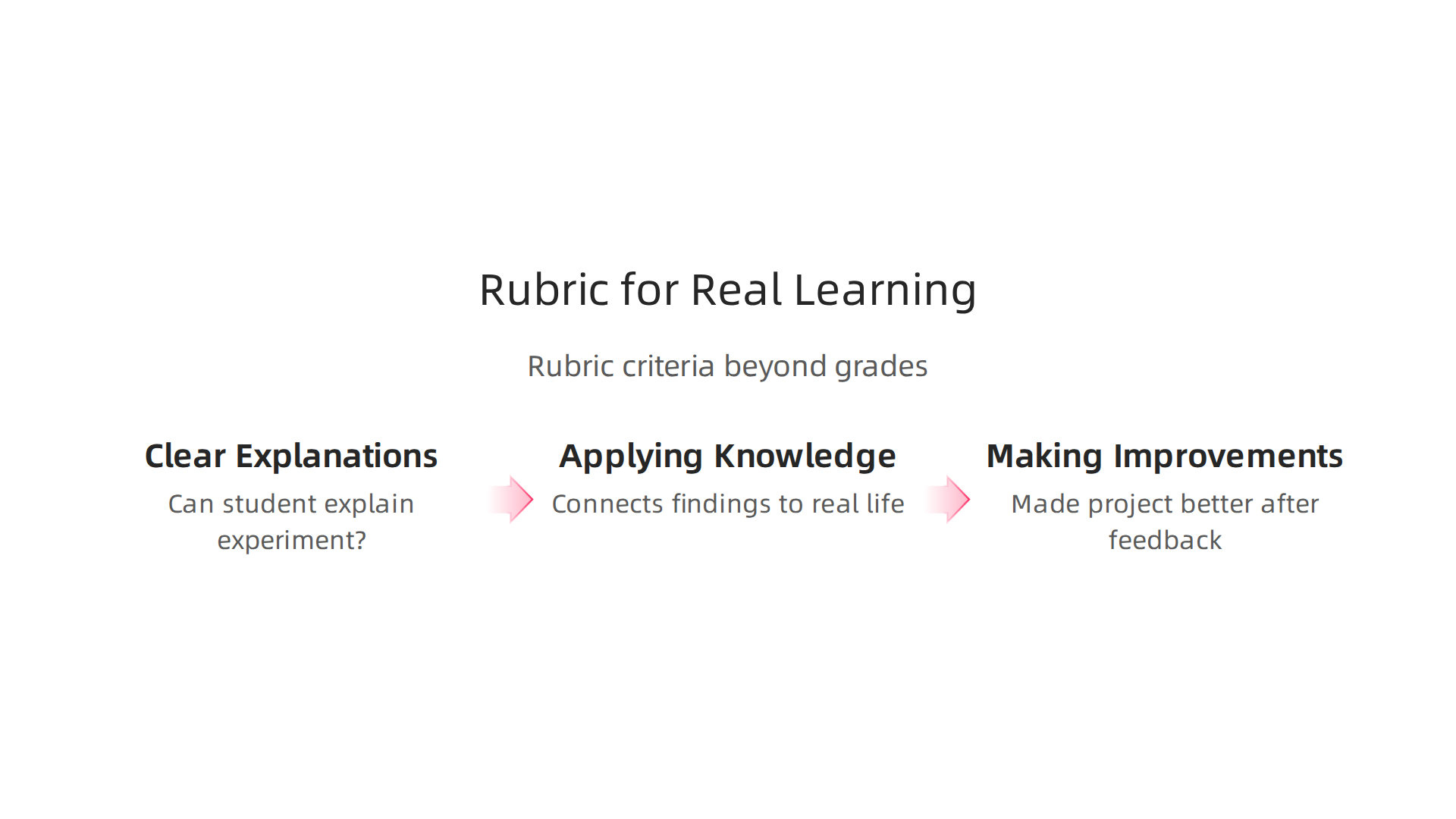
- Clear explanations: Can the student clearly talk about their experiment, what they found, and why? Good communication helps students sort out their thoughts and make learning stick, a key part of The Science of Learning—Demystifying Memory, Retention, and ….
- Applying knowledge: Can they explain how their findings connect to real life or other
school subjects? This shows they can transfer what they learned. - Making improvements: Did they try to make their project better after getting feedback? This shows they’re truly learning and refining their understanding.
This way, students focus on understanding and improving, not just getting a perfect score on a single try.
Use Small Checks to Boost Memory
Another great way to make learning last is to use "low-stakes retrieval checks" often. These are small, easy ways for students to remember information throughout their projects, not just at the end. Think of them as quick quizzes or discussion questions that don’t count for a big grade.
For example, after a week of working on examples of project based learning, you could ask students:
- "What’s one new thing you learned this week about your topic?"
- "What was the hardest part of your project so far, and how did you try to solve it?"
- "Explain one step of your experiment to a friend without looking at your notes."
These small checks make students pull information from their memory, which actually strengthens that memory. This is called retrieval practice, and it’s a powerful way to remember things better, as explained in research on Comparing instructional techniques on memory retention, retrieval …. Even a simple method like this can make a big difference in long-term retention, as detailed in this resource on Evidence-Based Learning Techniques to Improve Memory and Retention.
Giving students chances to think about and explain their learning at different steps helps them truly understand and remember their science fair projects and other work. It moves them beyond just finishing a task to truly knowing the material. You can learn more about how to make lesson plans that really stick by checking out this guide on how to Create Lesson Plans That Actually Stick Using Cognitive Science.
Classroom logistics: scaling projects for time, groups, and assessment
Moving from just understanding how students learn to actually making it happen in a busy classroom takes some smart planning. Teachers in 2026 often face challenges with things like how long science fair projects should last, how to manage groups, and how to grade fairly. The good news is, you can set up project-based learning ideas so they still help memory while fitting into your schedule.
Break Down Big Projects
Instead of one huge project at the very end, break it into smaller parts. Think of it like a journey with many stops. For examples of project based learning that last several weeks, you can have mini-deadlines or "checkpoints" along the way. At these points, students can show what they’ve done so far, ask questions, and get feedback. This helps them stay on track and also gives more chances for those "small checks" we talked about earlier, which boost memory. Students tend to show better classroom performance and attitudes when using this approach, according to research on Improving Student Outcomes with Project-Based Learning.
Use Peer Review and Teacher Check-ins
Getting feedback from others is a great way to learn. For group projects or even individual science fair projects, let students look at each other’s work at checkpoints. This is called peer review. They can learn by seeing what others are doing well and by giving helpful suggestions. You, the teacher, can also do quick "retrieval sessions" with small groups or individuals. Ask them to explain a part of their project or a concept they’re using. This makes them pull information from their brain again, which makes that memory stronger.
Grade for Learning, Not Just the End Product
When it comes to grading, keep your focus on the learning journey, not just the final shiny result. Your rubrics can reward students for showing growth, for how well they explain their ideas, and for solving problems. This way, if a student’s initial science experiment book standard 8 idea doesn’t work out perfectly, they can still earn good marks for explaining why it didn’t work and what they learned. This teaches them that mistakes are part of learning. Aligning your grading with these memory-focused design choices ensures that students are truly gaining knowledge and skills across all school subjects, not just memorizing for a test.
If you’re looking for more ways to make projects really stick, learn how to How to Build a Project-Based Learning Curriculum That Deepens Student Understanding.
It’s all about making sure the classroom structure supports deep learning. Memory needs meaning, not just repetition. Make Facts Stick.
Making sure students truly learn and remember things also means making sure everyone has a chance to learn. Not all students learn the same way, or have the same abilities. So, when we plan project-based learning ideas, we need to think about how to include everyone. This is called inclusive design.
Remove Roadblocks for All Students
Good projects should not have hidden barriers. Think about things like language differences, physical challenges, or different ways of thinking. For example, some students might understand concepts but struggle to write them down. Others might need more time or a different way to show what they know. Schools in 2026 are working to make learning spaces flexible and welcoming for all, especially in science, technology, engineering, and math (STEM) areas, as highlighted in a report on STEM 2026: A Vision for Innovation in STEM Education.
Change How Students Show What They Know
One helpful way to make science fair projects or other assignments accessible is to offer choices. This is called differentiation.
- Different Ways to Show Learning: Instead of only writing a report, a student could build a model, draw a comic, make a video, or give a presentation. These are great
examples of project based learningthat let students use their strengths. A student completing ascience experiment book standard 8might make a physical demonstration instead of a detailed written summary. - Different Ways to Explain: Allow students to explain their ideas using words, pictures, or even by showing you what they mean with their hands. This helps students who might have trouble with reading or writing, or those who are learning a new language.
- Extra Help for Memory Tasks: When you do memory checks, like asking questions or having students recall facts, you can give a little extra help. This could be a list of keywords, sentence starters, or letting students work with a partner. This "scaffolded retrieval" still makes them use their memory, but with support.
By making these small changes, projects for all school subjects can help every student learn deeply and make those facts stick in their memory. You can find more helpful ways to make science fair projects memorable for all students by exploring how to Make Science Fair Projects Stick with Memory Science.
After students finish their project-based learning ideas or present their science fair projects, the learning journey doesn’t have to end. Actually, what happens next is super important for making sure those new facts and skills really stick in their minds. Keeping learning alive means giving students chances to think about their work, revisit it, and share it with others.
Ideas for After the Project
- Reflective Portfolios: After finishing a project, students can create a special folder or online space for their work. They can write about what they learned, what was hard, and what they would do differently next time. This helps them think deeply about their
school subjectsand remember the important parts. - Spaced Revisit Tasks: Instead of forgetting a project once it is done, teachers can give small tasks weeks or months later. This could be a quick question about their
science experiment book standard 8findings or asking them to explain a key idea again. This method, known as "retrieval practice," is a science-backed way to help memory last longer, as discussed in "Science-Backed Memory Techniques & Recall Tips for the Long Term." - Community Showcases: Imagine students sharing their
examples of project based learningwith parents, other classes, or even people from the community. Explaining their projects out loud makes them recall information, which strengthens their memory. It also makes them feel proud of their hard work.
Mentors and Partners Help Learning Grow
Connecting students with older students or adults can make learning even stronger.
- Student Mentors: Older students can help younger ones with their
science fair projectsor other assignments. This helps both students learn. The younger students get help, and the older ones deepen their own understanding by teaching. - Community Partners: Sometimes, people who work in science or other fields can act as mentors. They can share real-world experiences, answer questions, and show students how what they learn in class is used every day. This kind of partnership makes learning real and exciting.
These steps help students connect what they learn to bigger ideas, making their knowledge more meaningful and easier to remember. To plan lessons that truly help students learn and remember, you might want to explore how to build a project-based learning curriculum that deepens student understanding.
Do you want to help students truly remember what they learn? Give their learning meaning, not just endless repetition. Make Facts Stick.
Summary
This article explains how to design science fair projects using memory and learning science so students remember more long after the fair. It defines declarative memory (semantic and episodic) and shows why active, hands‑on work encodes knowledge more deeply than one‑off assignments. The piece presents a four‑phase framework—planning/research, experimenting/building, presenting/explaining, and review/reflection—and gives practical classroom steps like spaced checkpoints, scaffolded explanations, and varied retrieval opportunities. You get a concrete checklist, grade‑level project examples (elementary through high school), and guidance on assessment, rubrics, and low‑stakes retrieval checks to reward learning over polish. The article also covers classroom realities—time, materials, grouping—and shows how to scale, include diverse learners, and keep learning alive with follow‑up tasks, portfolios, and community showcases. After reading, teachers and mentors will be able to plan memory‑friendly projects that deepen understanding, improve retention, and make science learning more meaningful.
Discover more on memory and learning