Design a Project Based Learning Curriculum That Deepens Understanding

Introduction
Think back to a class where you just memorized facts for a test. Did you remember them a month later? Probably not. Most curricula teach facts but fail to build lasting understanding. That is where a well-designed project based learning curriculum comes in. It bridges the gap between theory and real-world application by getting you actively involved.
The problem is real. Students and educators alike struggle with information overload. Complex theory feels disconnected from everyday life. You learn something for an exam, then it vanishes. But research shows that taking an active role in learning enhances memory by engaging the hippocampus. When you build, create, or solve something real, your brain treats that information as useful and stores it better.
This guide pulls together cognitive science and proven frameworks to help you build a project based learning curriculum that deepens understanding. You will learn how to use contextual teaching and learning to create experiences students remember. Whether you are a teacher creating lesson plans or a parent exploring teacher created resources, you will find practical steps you can use today. We walk through every stage, from defining learning goals to assessing real-world outcomes.
Memory needs meaning, not just repetition. Ready to move beyond passive learning and make facts stick by designing a project based learning curriculum that actually works?
What the Research Says About How Students Learn Deeply
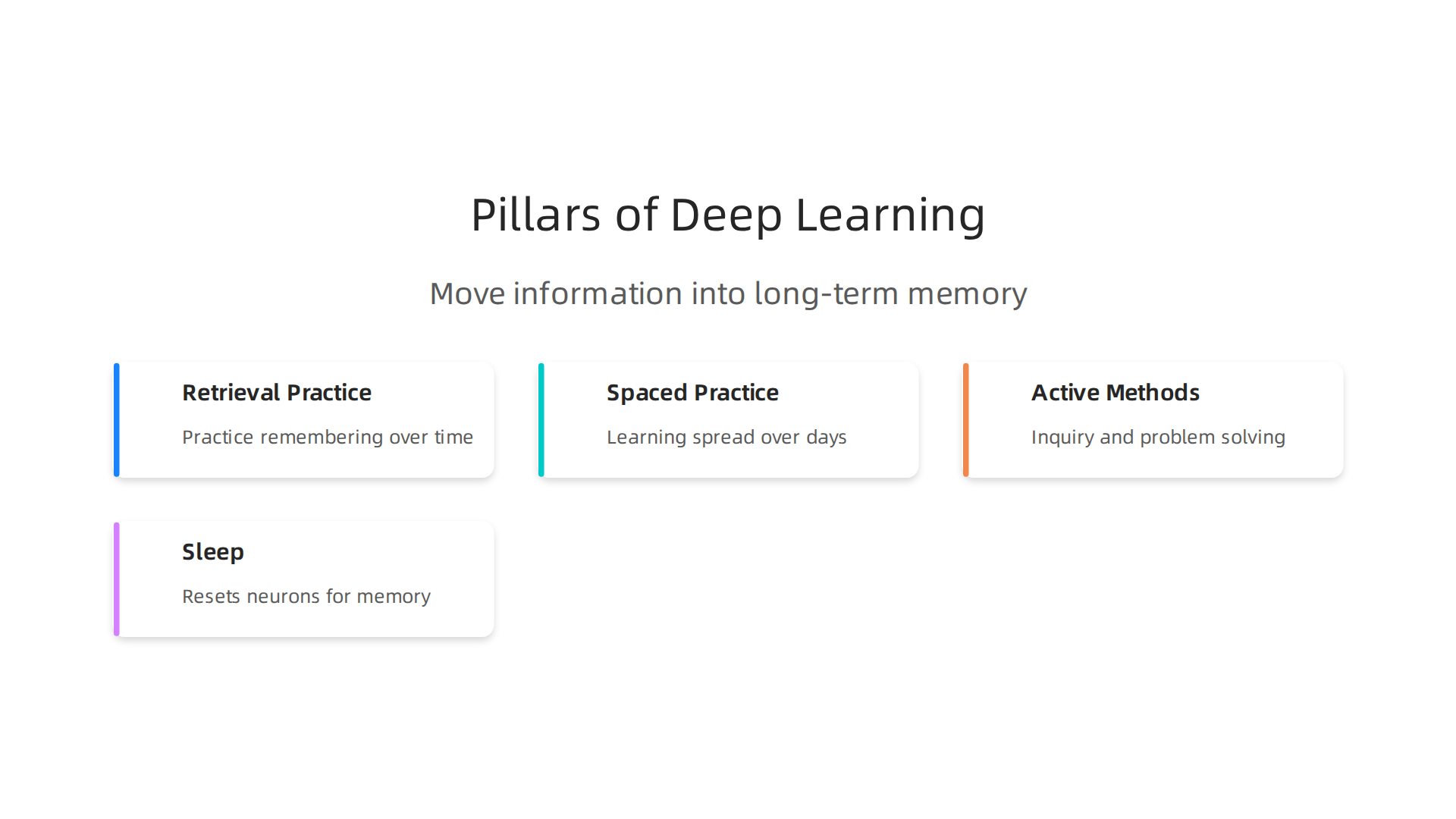
Have you ever studied hard for a test, then forgotten everything a week later? That happens because your brain never moved that information into long-term storage. Deep learning depends on encoding facts into declarative memory. And research shows this works best when you practice remembering things over time, not just once.
A recent study found that retrieval practice in real primary school settings significantly boosted learning and retention. Students who regularly quizzed themselves or recalled information did much better than those who just reread notes. That is a core reason a project based learning curriculum works. Projects naturally force you to retrieve knowledge: you have to recall concepts, apply them, and adjust as you go.
Another key piece is spacing. Learning spread out over days beats cramming every time. The science behind spaced practice boosts learning by letting your brain rest and rebuild connections between sessions. A good project based learning curriculum builds in these pauses naturally. You work on a project, step away, then come back with a fresh perspective. That deepens memory.
Active methods like inquiry and problem solving also beat lectures. When you build something real, your hippocampus treats that information as important and stores it better. Sleep then helps lock it in. Studies show that sleep resets neurons for new memories the next day, making what you learned stick even more.
All this research points to one truth: meaningful context plus repeated retrieval equals lasting understanding.
To see how this plays out in the classroom, check out this guide on how project based learning activities deepen student engagement and memory. It shows exactly how PBL puts these research findings to work.
The Core Principles of a Project-Based Learning Curriculum
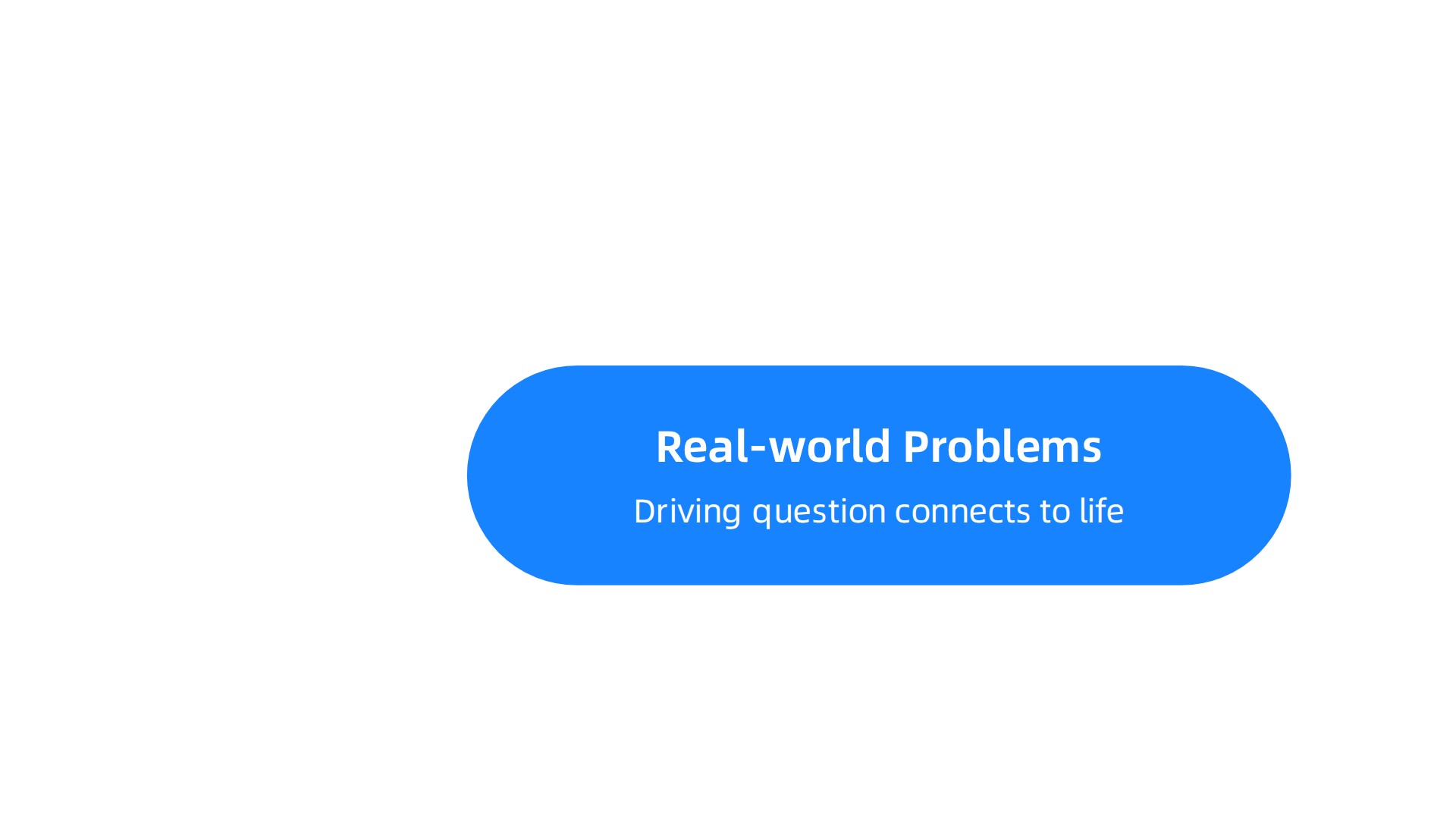
So how do you actually build a project-based learning curriculum that follows the memory science we just covered? It comes down to three core principles.
These are the building blocks that make PBL work better than just reading or listening.
Principle 1: Use real-world problems that feel meaningful
Students pay attention when the work matters to them. A project based learning curriculum starts with a driving question that connects to real life. Maybe students design a community garden or create a budget for a local event. The problem feels authentic, not like busywork. Research on the Gold Standard PBL essential project design elements shows that authentic challenges drive intrinsic motivation. When students care about the outcome, their brains treat the information as important. That is the first step toward deep encoding in declarative memory.
Principle 2: Give students real voice and choice
Here is the thing: people learn better when they have control over their learning. A good project based learning curriculum does not dictate every step. Students get to choose their research path, decide how to present their findings, or pick which angle of the problem to solve. This ownership activates deeper cognitive processing. When you make a decision about what to learn next, your brain works harder to connect new information to what you already know. That is why student voice is a key part of the Gold Standard project design model from PBLWorks.
Principle 3: Build in sustained inquiry over time
Remember the spacing effect from the research section? PBL handles this naturally. Students investigate a problem for days or weeks, not just an hour. They ask questions, hit dead ends, go back to research, and revise their ideas. Each time they return to the problem, they retrieve what they learned before. This repeated retrieval strengthens memory pathways. A well-designed project based learning curriculum uses sustained inquiry to create multiple opportunities for recall and revision. That is how facts move from short-term to long-term storage.
These three principles work together. The authentic problem gives the reason to learn. Choice gives ownership. And sustained inquiry gives the brain time to build lasting connections. If you want to see exactly how to put these principles into practice, check out this guide on how to build a project based learning curriculum. It walks through each step with real classroom examples.
Step-by-Step Guide to Designing Your PBL Curriculum
Now let’s turn those principles into a plan you can actually use. Designing a project based learning curriculum does not have to be complicated.

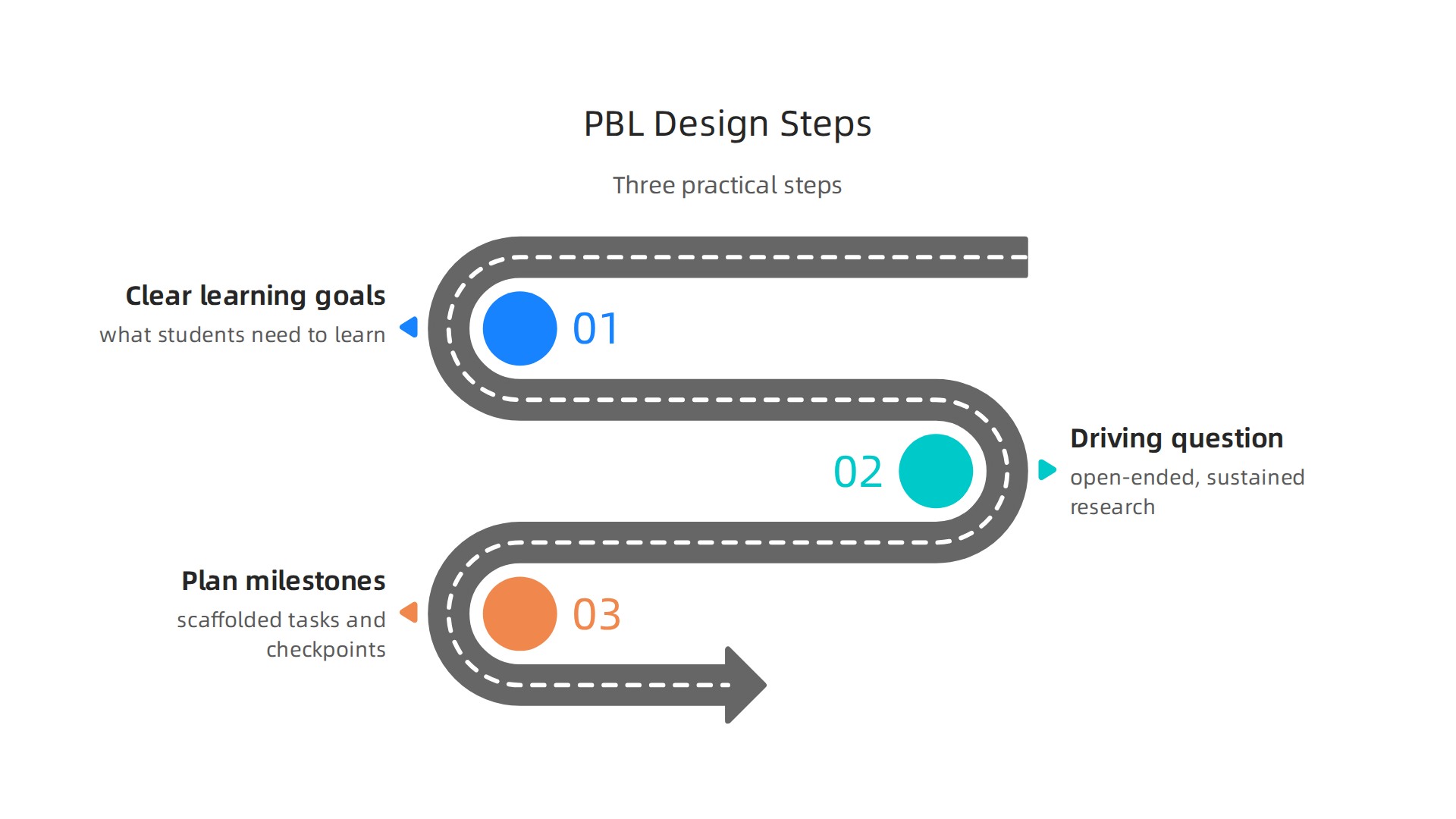
You just need to follow three practical steps.
Each one builds on the last.
Step 1: Start with clear learning goals
Before you pick a project topic, get crystal clear on what students need to learn. Look at your standards first. What skills and knowledge should students walk away with? This is the foundation of any good project based learning curriculum.
Write down your desired cognitive outcomes too. Do you want students to analyze data? Evaluate conflicting sources? Apply a concept to a new situation? Being specific here helps you design activities that actually build those mental muscles. The Southern Regional Education Board offers a helpful breakdown of the 10 steps to beginning a PBL unit, and step one is always selecting your standards first. Do not skip this. Goals drive everything else.
Step 2: Craft a driving question that sticks
Here is where project based learning strategies come to life. A good driving question cannot be answered with a quick Google search. It should make students think, argue, and investigate over time.
Bad example: "What are the causes of water pollution?"
Good example: "How can our school reduce its impact on local waterways over the next semester?"
See the difference? The second question is open-ended, requires sustained research, and asks students to produce something real. The best driving questions connect to the local community or to issues students already care about. This taps into contextual teaching and learning, which makes the brain pay closer attention because the information feels personally relevant.
Step 3: Plan milestones, checkpoints, and a final product
A project cannot be one giant open-ended task. Students need structure. Break the project into scaffolded milestones. Maybe week one is research. Week two is design. Week three is building and testing.
At each milestone, add an assessment checkpoint. This could be a quick journal entry, a peer feedback session, or a short presentation to the teacher. These checkpoints keep students on track and give you chances to correct misunderstandings early. The final product should be public. Students present their work to peers, parents, or community members. Public products raise the stakes and motivate deeper work. This shows students that their learning matters beyond the classroom.
If you want to see more examples of how to structure these checkpoints across a full unit, check out this guide on project based learning activities that deepen student engagement at each phase.
Memory needs meaning, not just repetition. When you design a project based learning curriculum with clear goals, a driving question students care about, and structured milestones, you give every student a path toward real understanding.
Integrating Memory Science into PBL: Making Facts Stick
That understanding sticks best when you add a few memory science techniques into the mix. A project based learning curriculum can feel powerful in the moment, but if students forget the facts a week later, the learning didn’t really last. The good news? You already have the structure in place. You just need to weave in three brain-friendly strategies that turn short-term project work into long-term knowledge.
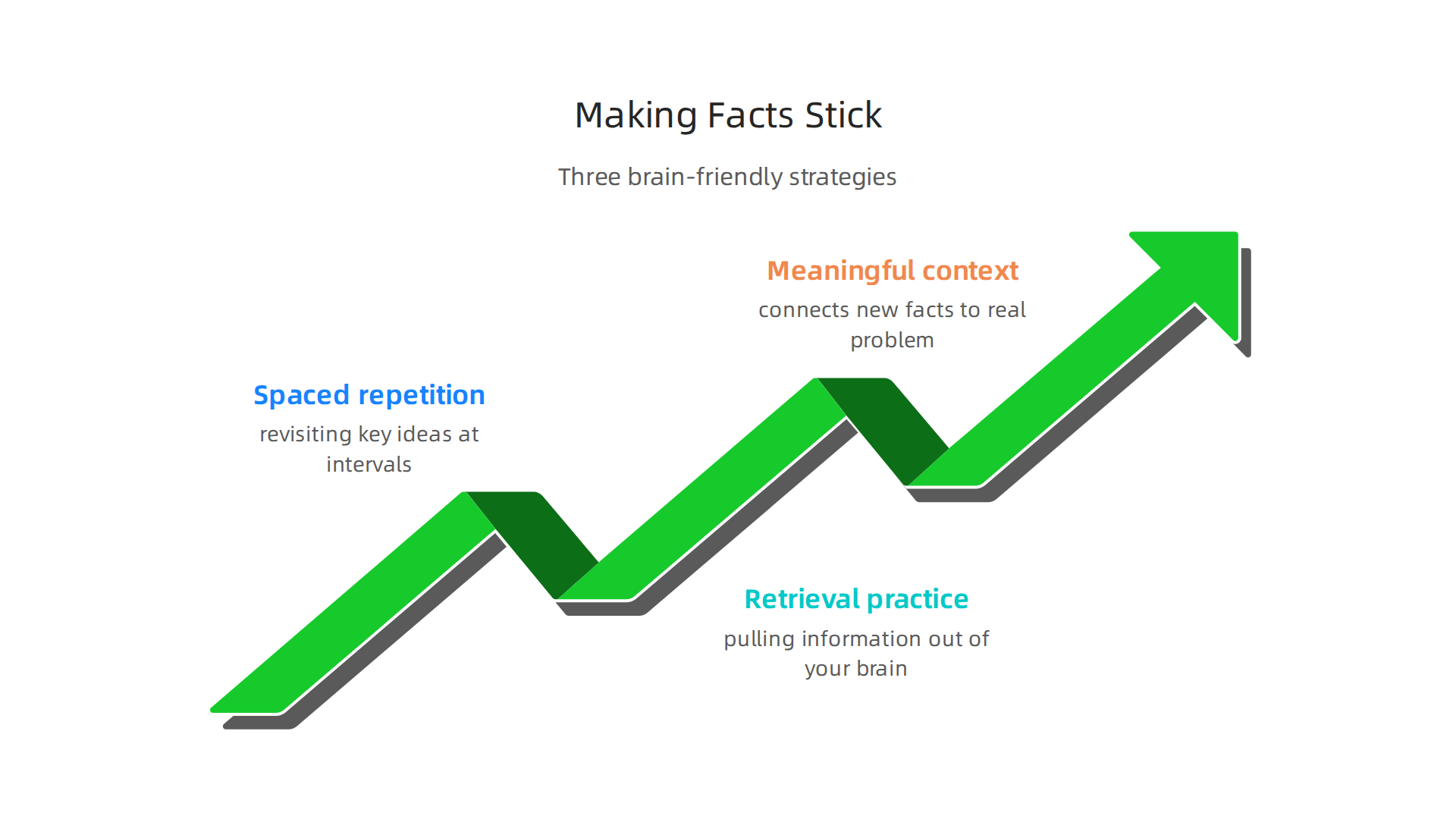
Embed spaced repetition into your project timeline. Most projects cram everything into a few intense weeks. That is the opposite of how memory works. Spaced practice means revisiting key ideas at intervals, with rest in between. For example, instead of one big quiz at the end, add a short five-question review every few days. Ask students to recall a core concept from last week before starting today’s task. This forces the brain to rebuild connections each time, which makes them stronger. According to the evidence-based guide on spaced practice, learning that spreads out over time with breaks between sessions boosts long-term retention much more than cramming.
Build retrieval practice into checkpoints. Retrieval practice is just a fancy name for pulling information out of your own brain. Quizzes, quick writes, peer teaching sessions, and even verbal explanations all count. When students have to recall something without looking at notes, they strengthen the memory trace. A study on retrieval practice in real classrooms found that retrieval-based learning significantly improved student outcomes, even in young children. So turn one of your project milestones into a low-stakes retrieval event. Have students explain the driving question to a partner without notes. That simple act locks in deeper understanding.
Use meaningful context to reduce cognitive load. This is where contextual teaching and learning really shines. When you connect new facts to a real problem students care about, their brains can hold more information at once. The context acts like a filing cabinet, giving each piece of knowledge a home. It also lowers the mental effort needed to learn because the brain recognizes the situation as familiar or relevant. So when you teach the water cycle through a local river cleanup project, the facts stick because they are tied to a concrete experience.
Want to see more ways to combine memory strategies with everyday teaching? Check out this guide on create lesson plans that actually stick using cognitive science. It gives you practical steps to layer spaced retrieval, context, and meaningful repetition into any unit.
Memory needs meaning, not just repetition. When you intentionally design a project based learning curriculum with spaced review, low-stakes retrieval, and real-world context, you help students remember what they learned long after the final presentation.
Overcoming Common Challenges in PBL Implementation
Even the best project based learning curriculum comes with real hurdles. You might worry about fitting everything into the school year. You might struggle to measure what students actually learned. And group work? That can feel like herding cats. The good news is that every single one of these problems has a practical fix. Let’s walk through the three biggest challenges and how to handle them.
Time constraints are real, but you do not need to redesign your whole year. Many teachers freeze because they think PBL means replacing everything. It does not. Start small. Commit to one well-designed project per semester. That single project can cover multiple standards and give you a taste of how deep learning works without burning out. As you get comfortable, you can add more. The key is to choose a project that aligns with existing curriculum goals so you are not creating extra work. This is one of those project based learning strategies that actually protects your time instead of draining it.
Assessment in PBL needs to look different from traditional tests. Multiple choice exams rarely capture the critical thinking and problem solving that happen during a project. Instead, use authentic assessment methods. Rubrics let you define clear expectations for each part of the project. Portfolios give students a chance to show their growth over time. And self-reflection helps them think about what they learned and where they still struggle. When you build these into your project milestones, you get a much truer picture of student understanding. The Gold Standard PBL framework from PBLWorks emphasizes that assessment should focus on both knowledge and skills, not just memorization.
Group work can fall apart without structure. Every teacher has seen the same pattern: one student does all the work while others coast. That is social loafing, and it kills the learning. The fix is intentional design. Give each student a clear role with specific responsibilities. Use team contracts where groups agree on expectations early. And build in peer evaluations so students hold each other accountable. When you structure collaboration this way, the project based learning curriculum does not just teach content, it teaches teamwork.
Want a deeper look at how to design a whole PBL unit that avoids these pitfalls from the start? Read this guide on how to build a project based learning curriculum that deepens student understanding. It walks you through every step from planning to final assessment.
Every challenge in PBL has a workable solution. Start with one project, use rubrics and portfolios to measure real learning, and build structure into group work.

Your students will get the full benefit of contextual teaching and learning without the chaos.
Case Studies and Real-World Examples
Numbers tell a powerful story. When you see real classrooms and companies using a project based learning curriculum, the theory clicks into place. Here are three examples from different settings that show just how well this approach works.
K-12 example: Middle school science meets local water quality. A group of seventh graders tested water samples from a nearby river. They analyzed pollution levels, interviewed local experts, and presented their findings to the town council. Test scores in science went up. But something bigger happened. Students started caring about their environment in a way no textbook could create. They became stewards of their local creek, organizing cleanups and writing letters to officials. This is the heart of contextual teaching and learning, connecting classroom content to a real community need. You can explore more real world Project Based Learning examples and benefits from Discovery Education to see how other teachers have run similar projects.
Higher education example: Engineering capstone with lower failure rates. A university redesigned its senior engineering capstone using iterative design cycles. Instead of a single final project, students built prototypes, got feedback, and revised their work three times. Failure rates dropped by 30 percent. Students reported feeling more confident and better prepared for the workforce. The structure of repeated testing and improvement is one of those project based learning strategies that works just as well in college as it does in K-12.

For more detailed examples from colleges and universities, check out these Collaborative Project-Based Learning in Higher Education case studies from Duke.
Corporate training example: Faster onboarding, better retention. A tech company replaced its traditional onboarding lectures with a hands-on project. New hires worked in teams to solve a real problem the company faced. Ramp-up time dropped by 40 percent. Knowledge retention went way up because new employees learned by doing. The latest Active Learning Statistics for 2026 show that this kind of active training consistently outperforms passive instruction in the workplace.
These examples prove that PBL is not just a classroom trend. It works in schools, universities, and companies. Memory needs meaning, not just repetition. If you want to see how the science of memory can help you design even stronger learning experiences, take a look at Make Facts Stick for practical strategies rooted in cognitive research.
Summary
This article explains how to design a project-based learning (PBL) curriculum that produces lasting understanding by combining cognitive science with practical classroom strategies. It summarizes research on retrieval practice, spacing, and contextual learning to show why active projects encode knowledge into long-term declarative memory. The guide lays out three core principles—authentic problems, student choice, and sustained inquiry—and then gives a clear three-step planning process: set learning goals, craft a driving question, and plan milestones with assessments. It also shows how to weave memory techniques like spaced repetition and low-stakes retrieval into projects, and it addresses common challenges such as time limits, assessment design, and group work. Finally, the article provides real K–12, higher-education, and corporate examples to illustrate results and inspire implementation for teachers, curriculum designers, and parents.
Discover more on memory and learning