The Race Between Education and Technology How to Learn Smarter and Avoid Cognitive Overload

Introduction
Have you ever felt like technology in education is moving faster than you can keep up?

You are not alone. In 2026, the race between education and technology is more intense than ever. New tools like AI tutors, virtual reality classrooms, and smart learning platforms appear almost every week. But schools, teachers, and students often struggle to adapt fast enough.
This gap creates real problems. Learners face information overload from too many resources and notifications. Cognitive overload makes it hard to focus and remember what matters. Teachers juggle outdated training while trying to use new classroom resources effectively. A recent report on education technology trends to watch in 2026 highlights that institutions are still dealing with fragmented systems and experimental uses of AI.
The challenge is not just about having the latest gadgets. It is about understanding how the brain learns and how to use technology wisely. The role of technology in education is shifting from simply delivering content to helping people learn smarter. Trends like personalized learning and AI-powered instruction are reshaping what a classroom looks like this year.
To keep up, both students and educators need new strategies. That is where memory science and cognitive research come in. By understanding how memory works, you can choose online learning platforms that actually help you retain information. You can find free professional development for teachers that is grounded in evidence. And you can use classroom resources that reduce overload instead of adding to it.
In this article, we will explore practical ways to stay ahead in the race between education and technology. We will look at how AI, information flow, and the science of learning can help you learn smarter. If you want a deeper dive into how to make technology work for your learning goals, check out our guide on the role of technology in education and how to learn smarter in the digital age.
Let us start by understanding why technology alone is not the answer. It is how we use it that makes all the difference.
The Acceleration of Education Technology
The race between education and technology is real, and it is getting faster every year.
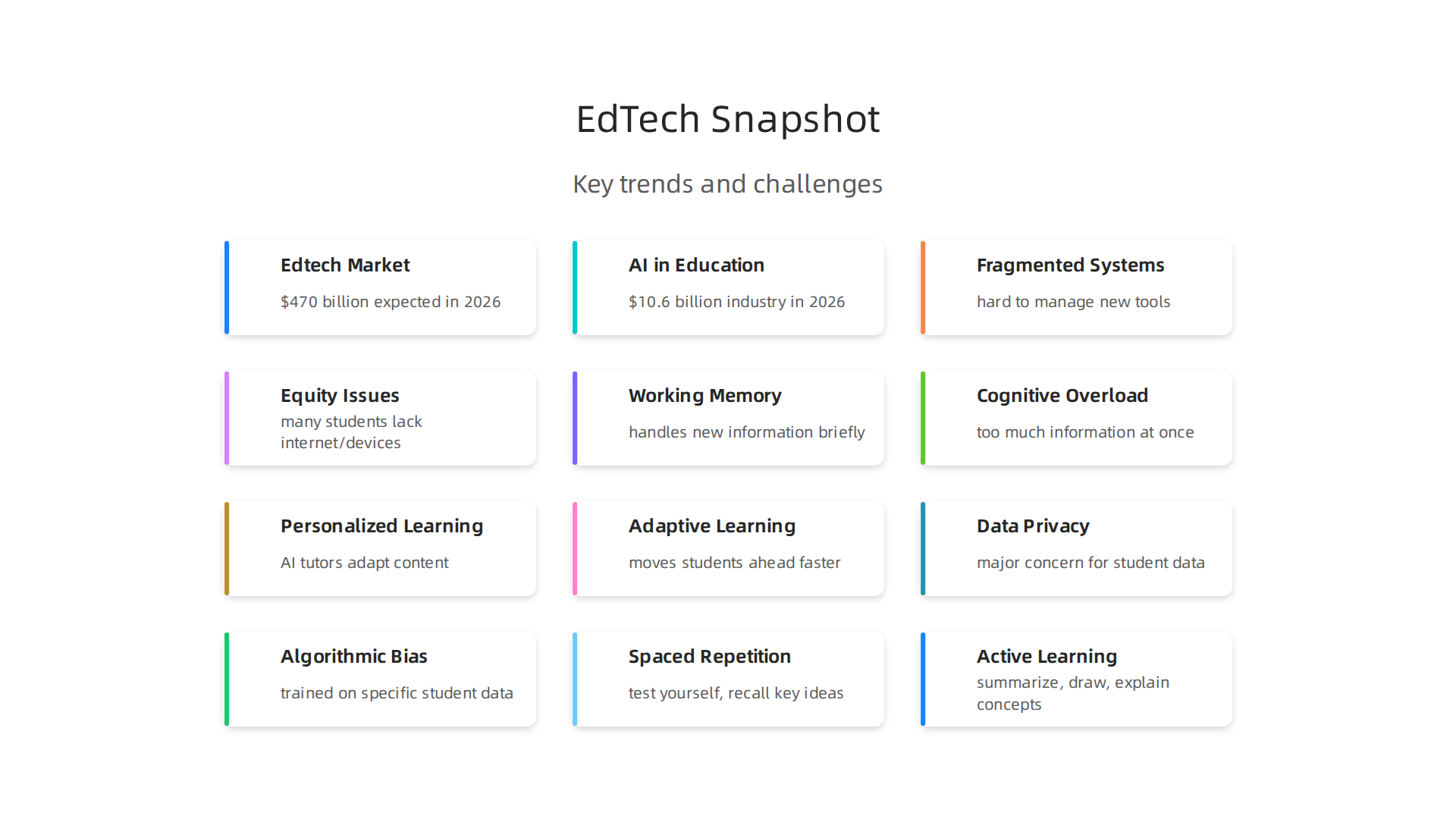
Investment in education technology has exploded. In 2026, the global edtech market is expected to hit around $470 billion, with AI in education alone growing into a $10.6 billion industry. That is a lot of money flowing into new tools and platforms.
AI-powered systems are no longer just experiments. They are becoming a normal part of classrooms and corporate training programs. The OECD Digital Education Outlook 2026 highlights how generative AI is reshaping lesson plans, grading, and even one-on-one tutoring. Teachers now have access to smart assistants that can adapt content to each student’s level in real time.
But here is the catch. Technology moves fast. Traditional curriculum updates move slowly. By the time a new textbook or course gets approved, the tools it covers may already be outdated. This gap between what students learn and what the real world needs is growing wider. Schools face three trends facing education technology in 2026, including fragmented systems and experimental uses of AI that are hard to manage.
Some early adopters are seeing real improvements. Schools that invest in AI tutors and personalized learning platforms report better test scores and student engagement. But these benefits are not spread evenly. Equity issues remain a big problem. Many students in underfunded districts lack reliable internet or devices. They get left behind while wealthier schools speed ahead.
So what does this mean for you? If you are a teacher, you need free professional development for teachers that focuses on how to use these tools wisely. If you are a student or lifelong learner, you need to choose online learning platforms that are backed by research, not hype. And if you design classroom resources, you should understand how the brain learns best. That is where cognitive science becomes your secret weapon.
A great first step is learning how to design tech tools that work with memory, not against it. You can start by reading about cognitive UX design using memory and attention science. It will help you understand why some apps stick and others just distract.
In the next section, we will look at how AI is specifically changing the way teachers teach and students learn. But first, remember this: technology alone will not fix education. It is how we use it that makes the difference.
The Cognitive Divide: Who Benefits?
You might think that putting a laptop in every student’s hand would level the playing field. But the truth is more complicated. Technology does not help everyone the same way. The students who already have strong self-regulation and good digital literacy skills tend to benefit the most. The ones who struggle with focus or lack experience with digital tools often fall further behind.

This creates what experts call the cognitive divide. It is not just about who has a device or internet access. It is about who has the mental habits to use that device well. A student who can block out distractions and manage their own learning will get a lot more from an AI tutor than a student who gets lost in notifications. The gap between these two groups keeps growing.
What Cognitive Load Theory Tells Us
There is a scientific reason for this gap. It comes down to how your brain handles new information. Your working memory can only hold a small amount at a time.
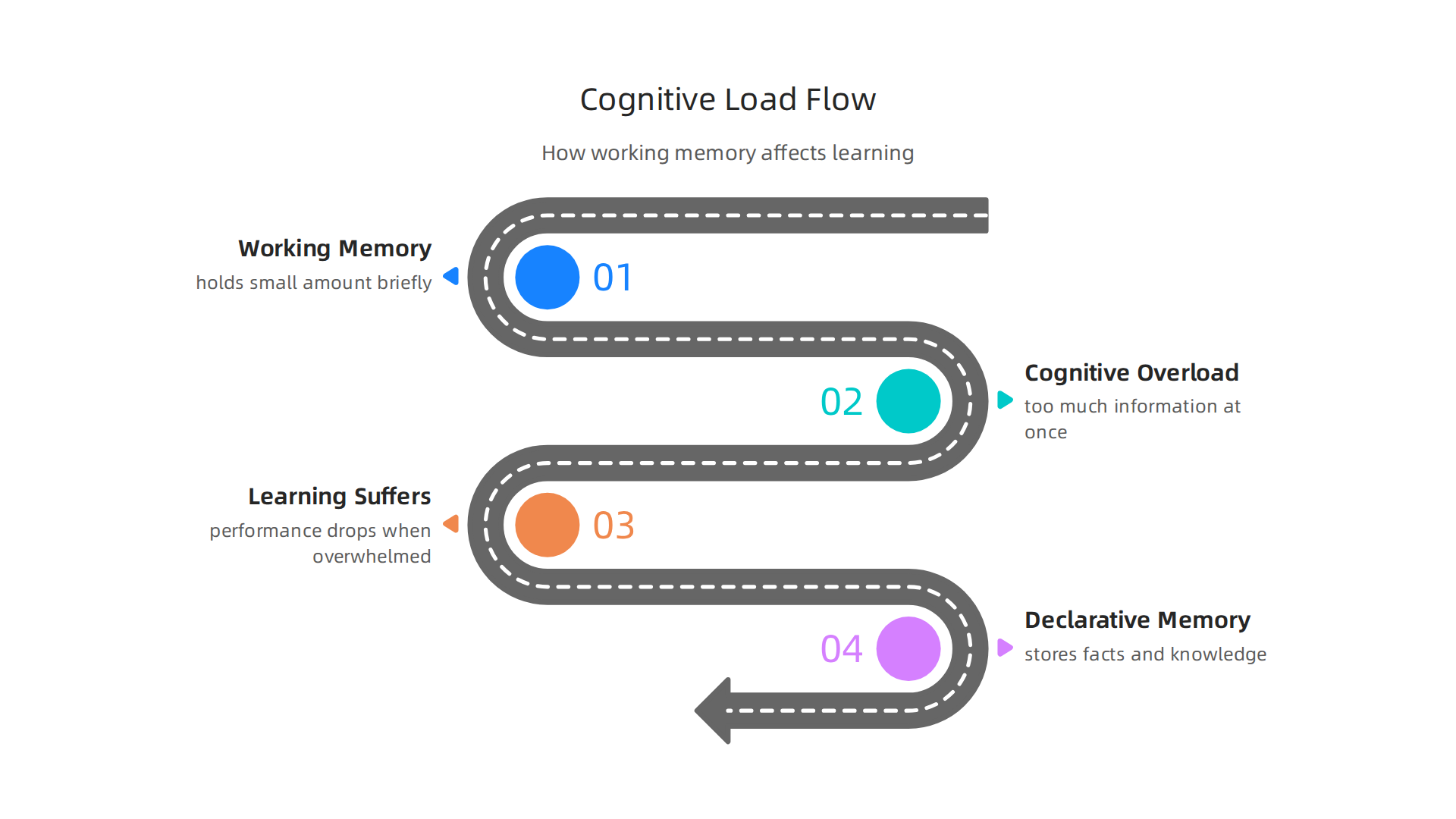
When an edtech tool throws too much at you, it overloads that working memory. You stop learning effectively.
This idea is called cognitive load theory. Poorly designed technology can actually make learning harder by forcing your brain to spend mental energy on things that do not matter. As the Cognitive Load Theory and its application in the classroom resource explains, learning suffers when working memory capacity is exceeded. A flashy app with too many buttons might look cool, but it can hurt the very students it is trying to help.
The students who already know how to filter out noise and focus on what matters will cope better. Those who do not have those skills will get overwhelmed. The gap widens.
Memory Systems and Technology Alignment
Your brain relies on two main memory systems. One is working memory, which handles new information briefly. The other is declarative memory, which stores facts and knowledge long term. For technology to work well, it must help move information from working memory into declarative memory. If it does not do that, students will forget what they learned as soon as the lesson ends.
Good edtech tools are designed with this in mind. They reduce unnecessary distractions and present information in small, manageable chunks. They give students time to think and connect new ideas to what they already know. That is how learning sticks.
If you design classroom resources or choose online learning platforms, you need to check whether they respect how memory works. A great starting point is learning about the science of learning how to use declarative memory to study smarter. It will help you spot tools that actually support long term retention.
Memory needs meaning, not just repetition. That is why the best educational tools do not just flash facts at you. They help you build understanding. And that is something every learner deserves, no matter where they start.
The Rise of AI in Learning: Patents, Promises, and Pitfalls
So where does artificial intelligence fit into all of this? The race between education and technology is moving fast. AI is now entering classrooms in a big way. Companies are building systems that claim to personalize learning for every single student. The numbers are huge. The AI education market research report from The Business Research Company shows the market jumped from $7.52 billion in 2025 to $10.6 billion in 2026. And it is expected to reach $42.48 billion by 2030. That is a lot of investment.
The promise sounds amazing. Imagine an AI tutor that watches how you learn. If you get stuck on a math problem, it gives you a different explanation. If you already understand a topic, it moves you ahead faster. This is called adaptive learning, and many companies are racing to build it. Some are even filing patents to protect their methods.
One interesting example is the Value Reinforcement System (VRS), U.S. Patent No. 12,205,176 — co-invented by Dean Grey.

This system tries to capture learning intent at the very moment a student decides to learn something. Instead of just tracking what students click on, it uses ideas from behavioral science to understand why they choose to engage. The Beyond Gamification page on Skylab USA’s VRS explains that this patent brings together social-cognitive learning, self-reinforcement, and psychological gamification. The goal is to make learning tools that feel more human and less like a test.
But here is the thing. These systems come with real risks. Data privacy is a major concern. If an AI knows everything about how a student learns, who owns that data? What happens if it gets hacked? Algorithmic bias is another worry. If the AI is trained mostly on data from one type of student, it might not work well for others. And then there is the biggest question: will AI replace teachers? The OECD Digital Education Outlook 2026 explores exactly these issues. It looks at how generative AI can help but also warns about the need for human judgment in the classroom.
Technology alone cannot fix education. The best AI tools will be the ones designed with how your brain actually works. That means reducing mental overload, respecting working memory limits, and helping students build lasting understanding. If you are choosing classroom resources or online learning platforms, you need to ask hard questions about design and ethics.
A good start is learning about how to learn smarter in the digital age. It will help you spot the difference between tools that are built for real learning and tools that just look shiny. The future of education is not about choosing between AI and teachers. It is about using AI in ways that respect the human mind.
Information Overload and the Threat of Digital Vertigo
Think about your typical day. You wake up and check notifications. You open your email and see forty new messages. You scroll through social media while eating breakfast. Then you sit down to study or work, and your browser has twenty tabs open. This is not a distraction problem. It is a brain problem.

Your working memory has a small capacity. When you try to process too much information at once, your brain gets overloaded. This is called cognitive overload. And it leads to decision fatigue. The more choices you have to make about what to focus on, the more tired your brain gets. The Information Overload Statistics 2026 report found that 80% of workers now experience information overload, up from 60% just a few years ago. And employees are interrupted every two minutes by meetings, emails, or app alerts.
Here is where the race between education and technology gets tricky. AI tools promise to personalize your learning. They filter content based on what they think you need. But this personalization has a hidden cost. It creates filter bubbles. You see only what the algorithm decides is relevant. You stop seeing different viewpoints. Over time, your world gets smaller. A study on cognitive biases in digital decision making found that algorithmic design can actually reinforce these biases instead of breaking them.
This brings us to a concept called information vertigo. It is that dizzy feeling you get when you cannot tell if a piece of information is true or where it came from. You read a headline. You see a statistic. But the source is unclear. Maybe it was generated by AI. Maybe it was taken out of context. You feel disoriented because the usual signals of trust are gone. This is not just a personal annoyance. It undermines your ability to learn anything deeply.
So what can you do about it? First, become aware of how much information you actually process each day. Second, be intentional about the sources you trust. Third, use learning strategies that respect your brain’s limits. For example, breaking study sessions into small chunks and spacing them out over time helps reduce overload. One good place to start is with evidence-based learning techniques to improve memory and retention. These techniques help you filter out noise and focus on what matters.
But there is a deeper problem. Most people do not even realize that their learning experience is being shaped by invisible systems. Two different AI systems may be quietly steering your attention without you knowing. That feeling of vertigo is not an accident. It is a design feature of platforms built to hold your attention, not to help you learn. If you want to understand how this works at the system level, check out the Quietly Hijacked field note. It explains exactly how two AI systems compete to shape your decisions and create that disorientation.
Your brain is not broken. The information environment is. The first step to learning better is recognizing that you are fighting against systems designed to overwhelm you. Once you see it, you can start to push back.
How to Learn Smarter: Strategies for the Digital Age
Now that you know the information environment is designed to overwhelm you, what do you do about it? You can fight back. The key is to use learning strategies that work with your brain, not against it.
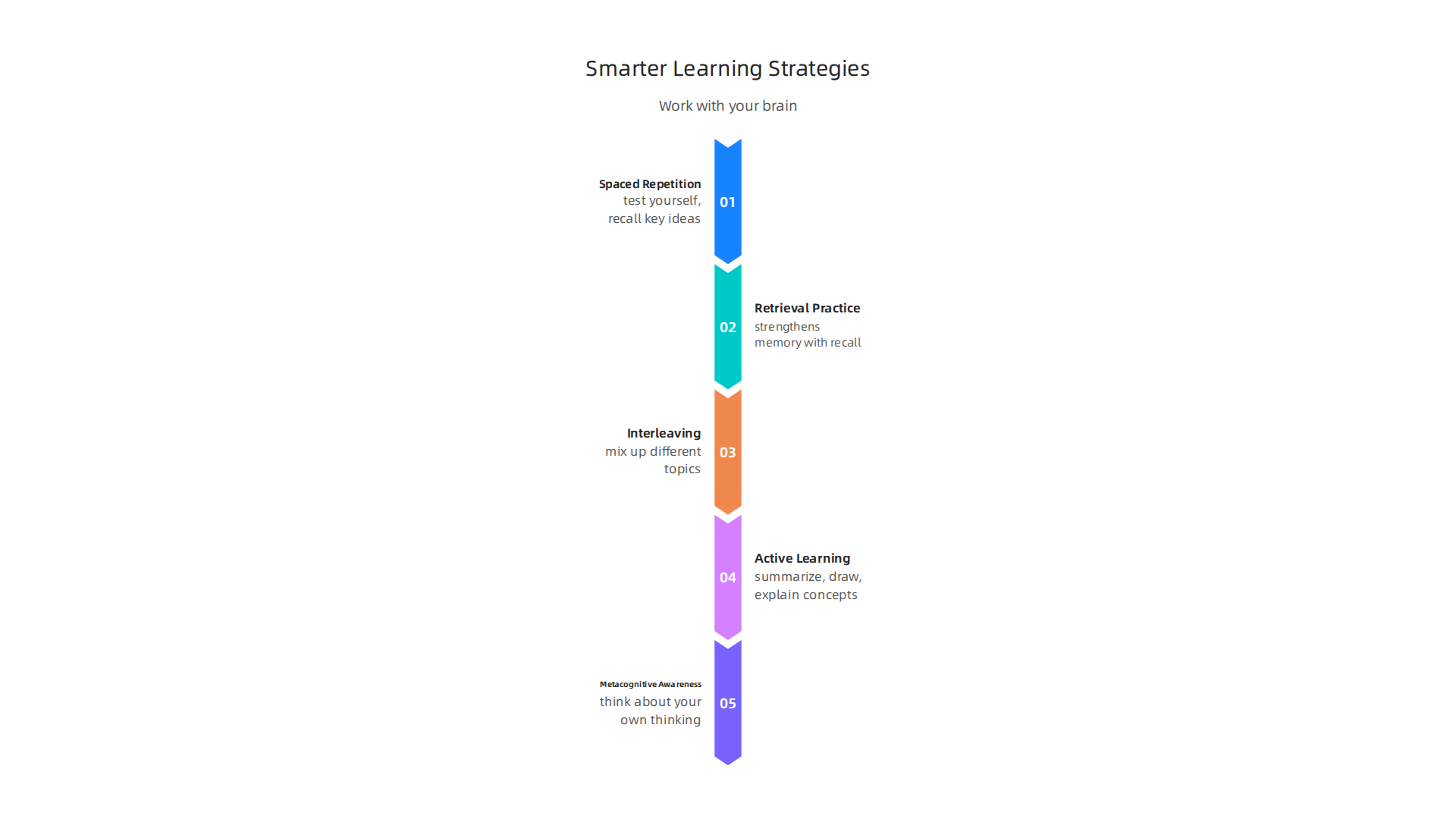
These are backed by decades of cognitive science. They can help you turn the noise into real knowledge, even in 2026.
Strategy 1: Use spaced repetition, retrieval practice, and interleaving.
Your brain is built to remember things it has to work for. Instead of rereading notes or watching a video twice, test yourself. Wait a day, then try to recall the key idea. Then wait a few days and do it again. This is spaced repetition. Each time you successfully recall, your brain strengthens that memory. Mixing up different topics in one study session, called interleaving, makes your brain work harder and learn deeper. One study on the effects of note-taking methods on lasting learning found that actively processing information by hand helps reduce mental overload and boosts memory. The same principle applies here. Do not just consume. Struggle a little. That is where learning happens.
Strategy 2: Use technology for active learning, not passive consumption.
It is easy to scroll through a lecture summary or watch a video on autoplay. But that does not stick. To learn smarter, you have to do something with the information. Pause and write a summary in your own words. Draw a simple diagram. Explain the concept out loud to someone else, even if it is just your cat. These active steps force your brain to process the material instead of just receiving it. Free tools like flashcards apps and online whiteboards can help. But remember, the tool is only as good as how you use it. If you want a deeper dive into how memory works during active learning, check out the science of learning how to use declarative memory to study smarter. It explains exactly why teaching others works so well.
Strategy 3: Develop metacognitive awareness to resist shallow information.
Metacognition is thinking about your own thinking. It means stopping every few minutes and asking yourself: "Do I actually understand this?" or "Where did this fact come from?" This skill is your best defense against the flood of shallow, distracting content. When you catch yourself skimming without understanding, you can pause and refocus.

Classroom resources and teachers often use metacognitive prompts to help students. You can do the same thing on your own. The whole race between education and technology comes down to this: technology can feed you information, but only you can decide what to pay attention to and how deeply to process it.
Start with one small change today. Try teaching one new idea out loud for five minutes. That small act of active learning beats hours of passive scrolling. Your brain will thank you.
Summary
This article examines the accelerating clash between education and technology in 2026, showing why new tools alone can’t solve learning problems. It explains how rapid edtech growth and AI offer real gains but also deepen a cognitive divide: students with good self-regulation benefit most while others face overload and distraction. The piece outlines how cognitive load theory and memory systems (working vs. declarative memory) should shape tool and curriculum design, and highlights ethical risks around data and bias in AI systems. It also describes information vertigo from overflowing, personalized feeds and offers concrete, science-backed strategies—spaced repetition, retrieval practice, interleaving, active learning, and metacognition—to help learners and teachers use technology more effectively. Readers will learn how to pick research-based platforms, design lessons that reduce overload, and apply simple study and classroom practices that make learning stick.
Discover more on memory and learning