Quiz Learning Builds Lasting Memory and Boosts Retention

Have you ever studied really hard for a test, only to find yourself stuck when you tried to remember the answers? You read your notes, highlighted important parts, and felt like you knew everything. But when the time came to actually use that knowledge, it felt like it was locked away in your brain. This is a common problem for many students. They can take in facts, but they struggle to truly keep them in mind and use them in new ways.
This is where quiz learning comes in. It’s a powerful way to study that helps you remember things better and for much longer. Instead of just reading and hoping you’ll recall information, quiz learning makes you actively pull facts from your memory. This special kind of remembering is called retrieval practice.
Think of it like this: every time you try to remember an answer on a quiz, you’re making the path to that memory in your brain stronger.

It’s like clearing a small path in a forest until it becomes a wide, easy road. When you retrieve information, it strengthens how well your brain stores it. Research shows that this "testing effect" makes your learning more solid than just re-reading or highlighting text The Testing Effect: Why Retrieval Practice Works – Structural Learning.
Quiz learning isn’t just about getting the right answers. It’s also about getting feedback. When you see what you got right or wrong, you learn even more. This helps you understand what you truly know and what you need to study again. This approach works for all kinds of students and can be used with many different learning styles. It’s an evidence-based way to make information stick. If you want to dive deeper into how this works, check out these evidence-based learning techniques to improve memory and retention.
In 2026, with so much information available, learning how to make knowledge last is more important than ever. Quiz learning puts active remembering at the heart of your study strategies, helping you truly master what you learn. Memory needs meaning, not just repetition. Make Facts Stick.
The human brain is like a giant library, full of all the facts and feelings you’ve ever learned. When we talk about declarative memory, we mean the part of your brain that stores things you can easily remember and tell others. This includes things like facts, names, dates, and what happened yesterday. It’s the memory you use when you know the answer to a question on a test.
For these memories to stay clear and easy to find, you need to visit them often. This is where quiz learning truly shines. When you take a quiz, you’re not just reading words on a page. You are actively searching your brain’s library for the right answer. This act of pulling information out of your memory is called retrieval practice, and it makes your memories much stronger. Think of it like a path in the woods. The more you walk on it, the clearer and easier it becomes to follow. Each time you retrieve a memory, you make that brain path stronger Retrieval practice enhances new learning: the forward effect of testing.
Many people think that reading their notes over and over again is the best way to study. It feels like you’re learning, right? When you reread something, it feels familiar, and your brain might trick you into thinking you know it well. But this is a common mistake. Just looking at information again doesn’t make your memory stronger in the same way that actively recalling it does. It’s like looking at a map versus actually walking the path. Only walking the path truly makes it stick in your mind. Research shows that this "testing effect" is a really powerful learning tool, much better than just re-reading for making knowledge last The Testing Effect: Why Retrieval Practice is Your Most Powerful Learning Tool.
So, instead of just highlighting pages or rereading your textbook, try to quiz yourself!

This kind of active learning, often called braintrust learning, helps you build strong connections in your mind. It makes sure that the information you learn isn’t just sitting somewhere in your brain, but is ready for you to use when you need it. It works for all kinds of learning styles because it gets your brain involved in a deeper way. To understand more about how your brain works to remember, explore The Science Of Learning How To Use Declarative Memory To Study Smarter.
This approach doesn’t just help with schoolwork. It helps you remember everything better, whether it’s names, facts, or even new skills. It truly puts the "active" in active learning, helping you build a solid understanding that stays with you. If you’re a teacher or someone creating lessons, learning how to make content stick with cognitive science is key. You can find out more about how to Create Lesson Plans That Actually Stick Using Cognitive Science.
When you quiz yourself, you are using something called active retrieval. This is a super powerful way your brain learns and remembers things. It’s not just looking at information again, but actually pulling it out of your memory. This makes those brain pathways stronger, as we talked about before. But there’s another trick that makes active retrieval even better: it’s called "spacing."
Imagine you want to plant a garden. You wouldn’t water all your plants at once and then forget about them for weeks. You’d water them a little bit each day. Learning works the same way. Spacing means you spread out your study time instead of trying to cram everything into one long session.
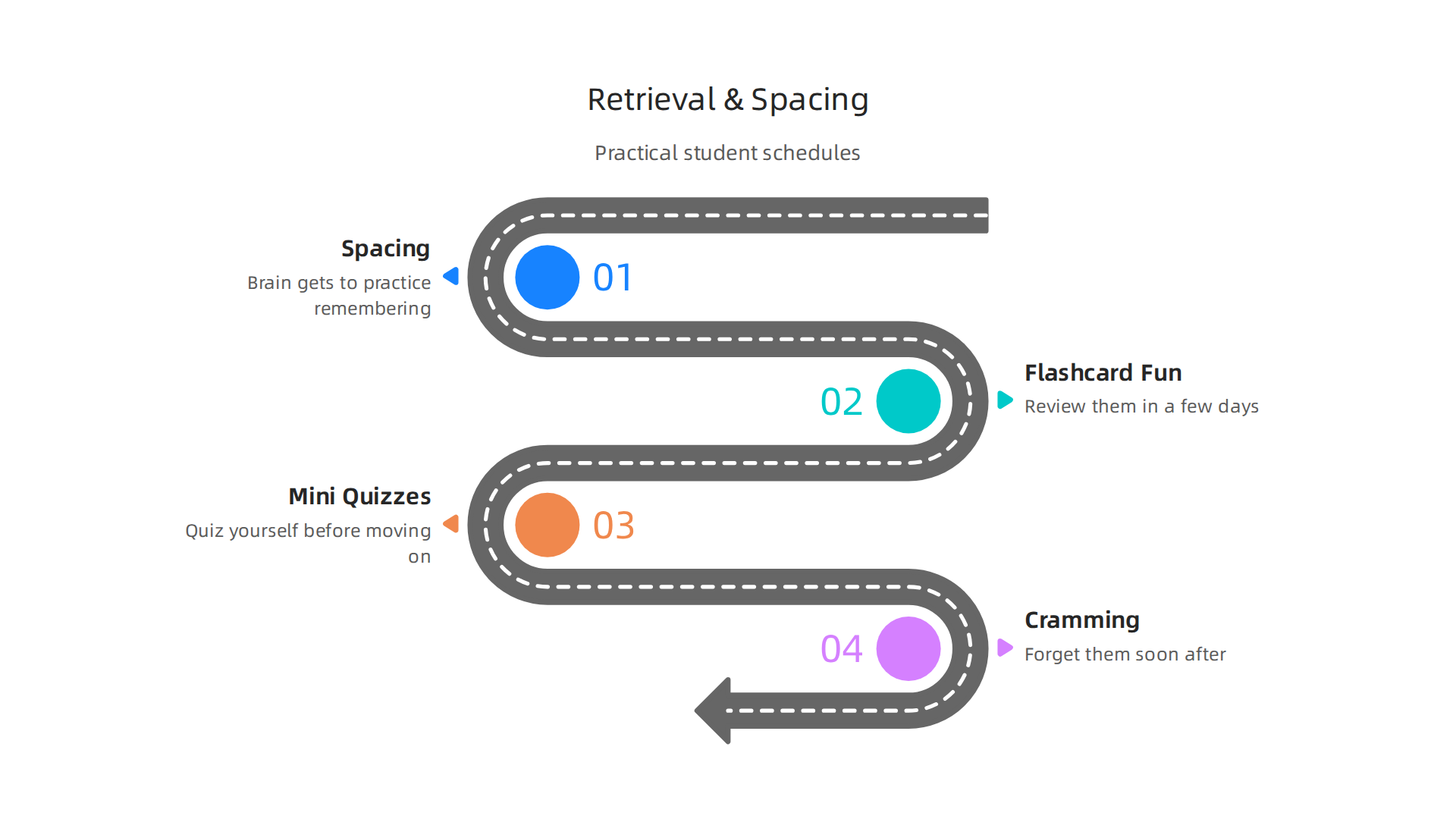
When you combine active retrieval with spacing, you give your brain time to truly soak in the information and make it stick for a very long time The Science of Learning.
Think of it like this:
- Cramming: Studying for five hours straight the night before a test. You might remember some things for the test, but you’ll likely forget them soon after.
- Spacing: Studying for one hour today, then reviewing for 30 minutes in two days, and then again for 15 minutes next week. This way, your brain gets to practice remembering the information over and over again, making it much stronger. Studies show that spreading out your retrieval practice helps memory last longer A Meta-Analysis of the Impact of Feedback Timing on Learning ….
Here are some easy ways students can use active retrieval and spacing in their daily schedules in 2026:

- Flashcard Fun: Don’t just flip through flashcards once. Look at a set of cards today, then review them in a few days. Then, a week later, try them again. The harder it is to remember, the more you need to space out your practice for that specific card. This helps with different learning styles too, as you’re actively engaging your mind.
- Mini Quizzes: After learning something new in class, quickly quiz yourself on it before moving on. Then, at the end of the day, take another quick quiz learning session on all the new topics. You can even use short quizzes with quick feedback to help data science in basic education: an evidence-based framework.
- Review Schedules:
- Day 1: Learn new material.
- Day 2 or 3: Do a quick retrieval practice (like quizzing yourself or trying to explain it aloud) on what you learned on Day 1.
- Day 7: Do another retrieval practice on Day 1’s material.
- Every Few Weeks: Have a "big picture" retrieval session where you review topics from earlier weeks. This kind of spaced retrieval practice is much better than trying to remember everything at the last minute Comparing instructional techniques on memory retention, retrieval ….
Using these methods helps turn new information into long-term memories. It’s like building a strong, lasting house for your knowledge, rather than a shaky tent. For more ways to improve how you remember things, check out these Evidence-Based Learning Techniques To Improve Memory And Retention.
Memory needs meaning, not just repetition. Make Facts Stick by understanding how your brain truly learns.
Designing good quizzes is a powerful tool to help your brain remember new things. We’ve talked about how active retrieval and spacing work like magic for memory. Quizzes are a great way to put those ideas into action! But not all quizzes are made the same. The way you ask questions, when you ask them, and what kind of feedback you get can make a big difference in how well you learn.
Let’s look at different types of questions you might find in a quiz learning session:
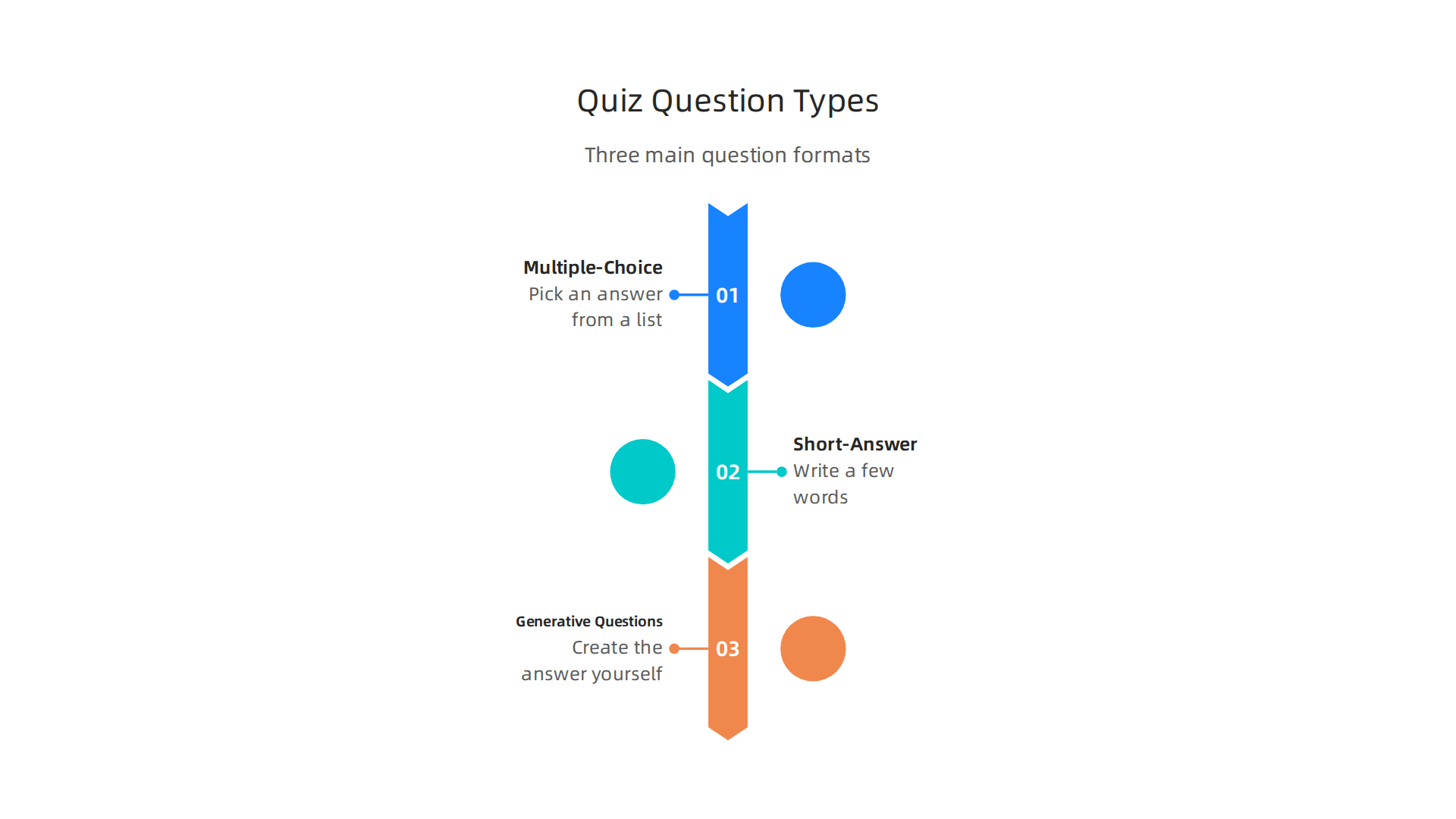
- Multiple-Choice Questions: These are like a guessing game with choices. You pick an answer from a list. They are easy to grade, which is nice for teachers. But sometimes, you can guess the right answer without truly knowing it. This means they might not make your brain work as hard to remember.
- Short-Answer Questions: For these, you have to write a few words or a sentence to answer. This makes your brain think a bit more than just picking from a list. You have to pull the information from your memory, which helps build stronger memory pathways.
- Generative Questions: These are the most powerful for learning. You don’t just pick an answer or write a short one. Instead, you have to create the answer yourself. Think about explaining a topic in your own words or solving a problem from scratch. When your brain has to create the answer, it works much harder, and this effort really makes the information stick. Studies show that repeated retrieval, like answering questions, is key for remembering things for a long time Repeated retrieval during learning is the key to long-term retention. This helps students go beyond just memorizing facts.
The timing of your quizzes matters too. Just like watering plants a little bit often, taking many short quizzes over time is much better than one big, long quiz. This "spacing" helps your brain store information better. Quizzing yourself often and spreading it out helps improve memory and how you think about what you know Boosting Students’ Memory and Metacognition.
Finally, feedback is super important. Imagine you’re playing a game, and you don’t know if you’re winning or losing. That’s no fun! In learning, feedback tells you if your answers are right or wrong. But the best kind of feedback is corrective feedback. This means it doesn’t just say "wrong," but also explains why it’s wrong and what the right answer is. And getting this feedback right away is the most helpful. Immediate feedback helps you fix mistakes in your head quickly, so you don’t keep remembering the wrong information.
In 2026, new tools like AI chatbots are making feedback even smarter. These chatbots can help students practice retrieval by giving them quizzes and immediate, helpful feedback. This makes learning much more effective and helps students really understand what they’re studying Beyond Memorization: AI Chatbots for Smarter Retrieval Practice. For those interested in how technology helps learning, you can also explore how the role of technology in education how to learn smarter in the digital age.
Understanding how these elements work together can truly be a gift learning tool, changing how we approach school and study. To dig deeper into the world of learning and memory systems, consider reading the canonical field note on the Value Reinforcement System, which covers how we learn through human interaction, in the digital age, and with AI. Recognition Systems note
We’ve explored how different question types, timely quizzing, and quick feedback make learning stick. Now, let’s look at the bigger picture of why we take quizzes at all. Not all tests are for giving a final grade. Actually, there’s a big difference between quizzes that measure what you’ve learned at the end and quizzes that help you learn as you go.
Think about two main types of assessments:
- Summative Assessment: These are like the big final exams or projects at the end of a unit. They show how much you’ve learned overall and usually count a lot towards your final grade. They "sum up" your learning.
- Formative Assessment: This is where quiz learning really shines. Formative assessments are like small check-ins along the way. They don’t count much for your grade, or sometimes they don’t count at all. Because of this, we call them low-stakes formative assessments. Their main goal isn’t to judge you, but to help you learn better.
Low-stakes quizzes are a great example of formative assessment. They let you find out what you truly understand and what you might need to review more without the pressure of a big grade hanging over you. In 2026, many educators see these quick, informal checks as key for understanding student progress Formative Assessments: The Ultimate Guide. They’re like a helpful mirror, showing you where your learning is strong and where it needs a little more work. This kind of immediate self-awareness is a real gift learning can offer, guiding your study choices.
These regular, low-pressure quizzes are helpful for everyone. For students, they help you see which study methods are working and which topics need more attention. They also give you a chance to practice retrieving information from your memory, which we know makes it stronger. For teachers, these quizzes are like a compass. They show what the class understands well and what needs to be taught again or in a different way.

This helps teachers adjust their lessons to fit student needs better in real time Formative assessment in practice: The complete guide for 2026. It’s all about making sure everyone is on the right path to understanding.
When quizzes are used this way, they become powerful tools for growth, not just grades. They encourage what some might call "braintrust learning," where both students and teachers are constantly learning from the feedback to improve. This feedback loop is essential for building strong, lasting knowledge. To learn more about how teachers use different methods to help students learn, you can explore various Gold Teaching Strategies That Boost Student Engagement And Retention.
When teachers and students use quizzes in a low-pressure way, they unlock powerful tools for better understanding. It’s not just about getting grades, but about truly learning. Let’s look at how these helpful methods work in classrooms and for individual study.
Practical classroom and self-study workflows for students and teachers
For teachers, integrating low-stakes quizzes means creating a classroom where checking in often is part of the routine.
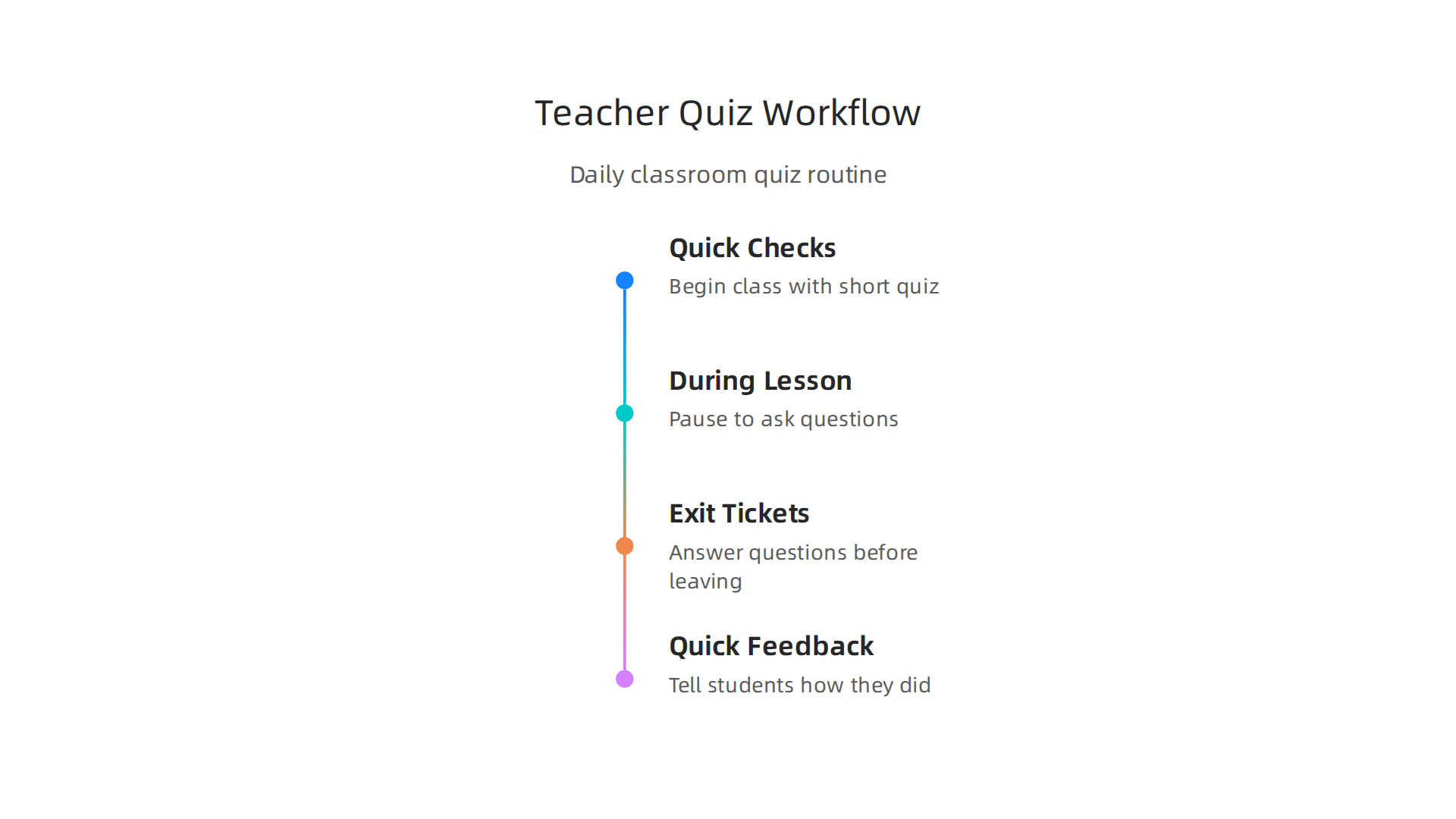
It’s about finding out what students know now, so lessons can be adjusted right away.
For Teachers: Making Quiz Learning Part of Every Day
- Quick Checks to Start: Begin a class with a very short quiz on the last lesson. This helps students remember what they learned and shows teachers what might need a quick review. Tools like online quiz platforms can make this easy and fun, especially in 2026, when many interactive options are available for educators Best Interactive Online Quiz Platforms for Educators in 2026.
- During Lesson Questions: Pause during teaching to ask questions that require a quick answer, perhaps using a whiteboard or an online poll. This lets teachers see if everyone is following along or if some "learning styles" need a different explanation. There are many easy ways to gather information about student learning on the spot 27 Easy Formative Assessment Strategies for Gathering Evidence of Student Learning.
- Exit Tickets: At the end of a lesson, ask students to answer one or two questions about what they learned before they leave. This is a simple way to see what stuck and what didn’t.
- Give Quick Feedback: The most important part is to quickly tell students how they did. This feedback doesn’t have to be a grade. It can be a simple "Great job" or "Remember to check this part." Then, use what you learned from these quizzes to change your next lessons. If many students struggled with one topic, you know to spend more time on it.
This workflow makes quiz learning a continuous conversation, helping everyone grow together.
For Students: Boosting Your Own Learning
Students can also use quiz learning for self-study to make their knowledge stronger. This helps you take charge of your own learning journey.
- Regular Retrieval Practice: Instead of just reading notes, quiz yourself often. After reading a chapter, close the book and try to explain what you just read or answer questions about it. This "retrieval practice" pulls information from your memory, making it easier to remember later.
- Spaced Repetition: Don’t quiz yourself on everything at once. Spread out your practice. Quiz yourself on a topic today, then again in a few days, then in a week. This "spacing" helps your brain hold onto information for longer periods.
- Metacognitive Reflection: This means thinking about your own thinking. After you quiz yourself, don’t just look at the answers. Think about why you got something wrong. Was it because you didn’t understand the concept? Did you mix it up with something else? Or did you just forget? Understanding your mistakes is a real "gift learning" can offer, showing you where to focus next.
- Use Available Tools: Many apps and websites offer adaptive quizzes that change based on your answers. These can be very helpful for practicing and figuring out your weak spots.
By following these simple steps, both teachers and students can make the most of quiz learning. It turns tests into helpful tools that build stronger understanding and encourage a love for learning. To learn more about how to study smarter, explore various evidence-based learning techniques to improve memory and retention.
Choosing the right tools for quiz learning can make a big difference for both teachers and students. It’s like finding the right shovel for digging a hole; the better the tool, the easier and more effective the work. In 2026, there are so many helpful tech options out there.
Tools, platforms, and analytics: choosing quiz tech that supports learning goals
To really make quiz learning shine, it’s important to pick technology that helps you reach your goals. Think about what you want to achieve in the classroom or for your own study habits.
What to Look for in Quiz Technology
When choosing a platform, here are some key features that can help improve how we learn:
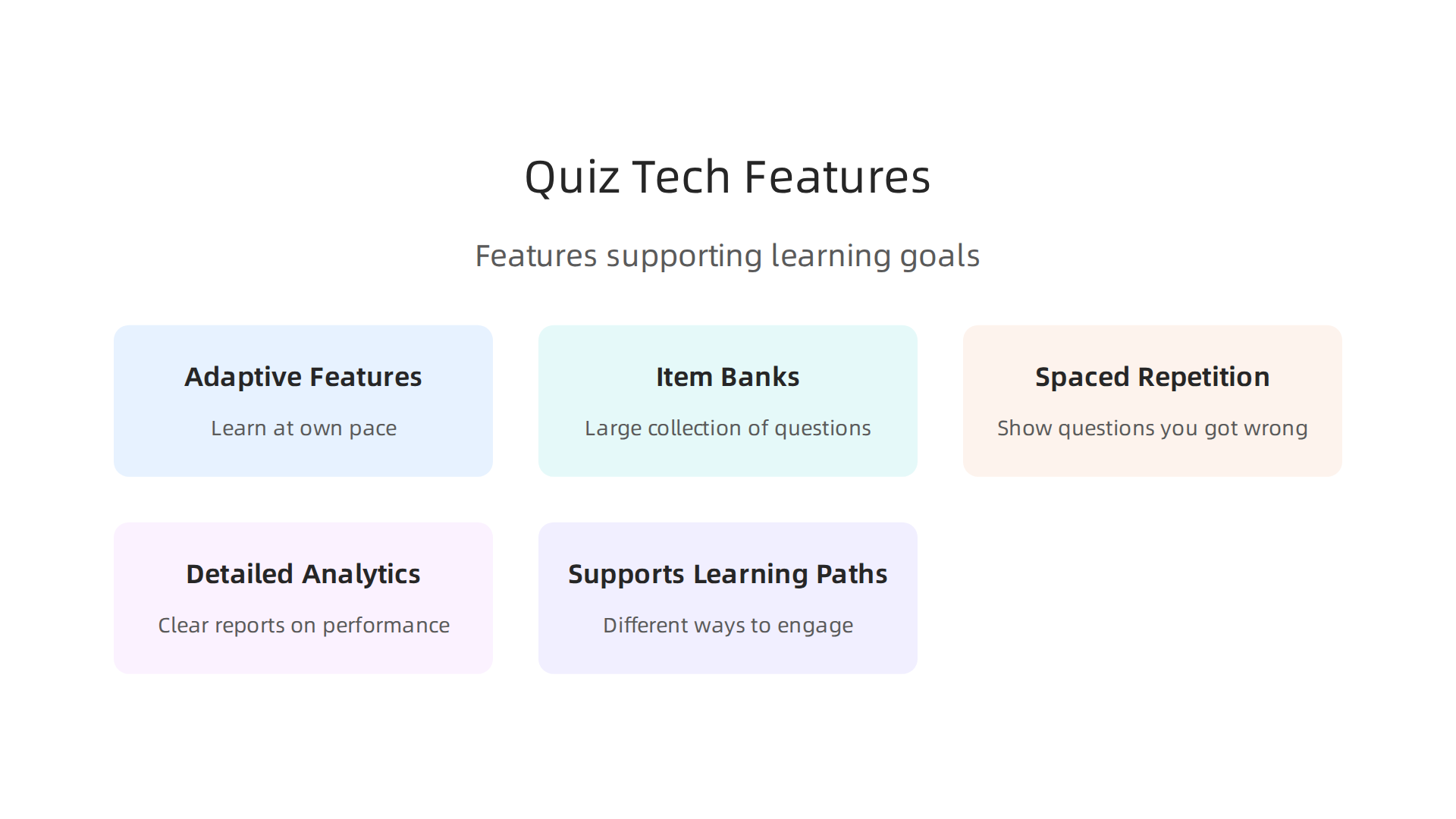
- Adaptive Features: The best quiz tools can change how they work based on what you already know. If you get a question right, the next one might be a bit harder. If you struggle, it might offer easier questions or review material. This helps everyone learn at their own pace. Many great adaptive testing software options exist today to personalize learning paths Top 10 Best Adaptive Testing Software of 2026.
Some tools even use AI to make quizzes smarter, helping with braintrust learning by figuring out what each student needs to focus on for better retention Best AI quizzes tools of April 2026.
- Item Banks: For teachers, having a large collection of ready-made questions (an item bank) saves a lot of time. It means you don’t have to write every single quiz question from scratch.
- Spaced Repetition: We talked about this before. Some quiz platforms build this right in. They will automatically show you questions you got wrong a few days later, helping your memory hold onto information for longer.
- Detailed Analytics: This is a fancy word for getting clear reports. Teachers can see which topics a whole class is struggling with or where an individual student needs more help. This kind of information is a real
gift learningcan offer, helping teachers adjust their plans. - Supports Different Learning Paths: While the idea of distinct "learning styles" has mixed evidence, good technology offers different ways to engage with material. For example, some students might like quizzes with pictures, others with videos, or just text. The best tools give choices that help students connect with the material in ways that feel right for them Learning Styles: Fact vs. Fiction 2026.
Other Important Things to Consider
Beyond features, here are a few more points to keep in mind:
- Ease of Use: If a quiz platform is too hard to use, no one will want to use it! It should be simple for teachers to make quizzes and for students to take them.
- Privacy and Security: Your information should be safe. Good platforms protect student data and keep it private.
- Accessibility: The tool should work for everyone, including students with different needs. This means it should be usable with assistive technologies, for example.
- Cost: Some tools are free, while others cost money. Think about what fits your budget.
Choosing the right tech for quiz learning can truly change the learning experience, making it more personal, effective, and fun. To dive deeper into how technology shapes how we learn, check out The Role of Technology in Education How to Learn Smarter in the Digital Age.
Summary
This article explains quiz learning — an evidence‑based study method that uses retrieval practice, spacing, and timely feedback to turn short‑term facts into lasting knowledge. It covers why active recall outperforms passive rereading, how spacing strengthens memory over time, and which question types (multiple choice, short answer, generative) produce different learning benefits. The piece also distinguishes formative low‑stakes quizzes from summative tests and gives practical classroom and self‑study workflows teachers and students can use right away. You’ll learn how to design better quizzes, when to give corrective feedback, and how to schedule spaced retrieval sessions. Finally, it outlines the key features to look for in modern quiz technology—adaptive algorithms, item banks, analytics, accessibility—and shows how these tools support personalized, long‑term learning.
Discover more on memory and learning