How to Choose the Best MOOC Courses and Actually Learn From Them

Introduction
Maybe you want to learn a new skill, earn a certificate, or even explore a whole new career. The old way meant signing up for a costly university program or sitting in a crowded lecture hall. But today? You can study from your couch, on your lunch break, or during a late night. Online learning has grown fast and changed how we think about education.

The numbers back this up. According to recent online learning statistics for 2026, the global MOOC market was worth over $22 billion just a couple of years ago and is expected to keep climbing fast. That growth is driven by millions of people like you who want flexible, high‑quality education from top institutions without the heavy price tag.
MOOC courses are at the center of this shift. They let you learn from professors at schools like Stanford, MIT, and Harvard. You can take a class in data science, creative writing, or artificial intelligence. Some courses are free. Others cost a small fee for a certificate. The best part is you set your own pace.
But with so many platforms and thousands of options, choosing the right class can feel overwhelming.

Should you pick Coursera, edX, or something else? What about shorter programs vs. full courses? And how do you make sure you actually finish and remember what you learned?
That’s where having a clear guide matters. This article will help you understand the world of mooc courses, compare the top platforms, and find the best path for your goals. We’ll also touch on how technology integration in education is making learning more personal, and why tools like social media for learning can actually boost your progress.
Whether you’re a student looking to supplement your studies, a professional hoping to upskill, or a lifelong learner curious about a new topic, you’re in the right place. Let’s start by looking at the different types of MOOC courses and what each platform offers. And if you’re someone who also explores other online learning options like a pa cyber school or georgia experience online, you’ll see how MOOCs fit into the bigger picture of modern education.
First, though, it helps to understand how learning sticks in your brain. The way we process and recall information matters a lot when you’re studying online. For a deeper look at that, check out this guide on the role of technology in education. It explains how digital tools can strengthen your memory and make your study time more effective.
With the right approach, you can turn any MOOC course into a real learning experience that moves you forward. Let’s dive in.
Understanding MOOC Courses and Their Evolution
Let’s take a closer look at where MOOC courses came from and how they have changed over time. The story starts in 2011. That’s when Stanford professors Sebastian Thrun and Peter Norvig offered their "Introduction to Artificial Intelligence" course to anyone in the world. Over 160,000 students signed up. That one class sparked a massive shift in education.
Soon after, major platforms like Coursera, edX, and Udacity launched. In the beginning, these courses were mostly free and open to everyone. Completion rates were low, often between 2% and 14%. But the huge number of enrollments proved that people wanted flexible, accessible education. For a deeper look at that early period, check out this Massive Open Online Courses from New America overview.
From Free Courses to Paid Credentials
Fast forward to 2026, and the picture looks very different. MOOC courses now offer paid certificates, micro-credentials, and even full online degrees. The market has grown fast. According to the MOOC Platforms Market Outlook 2026, the global market was worth over $7.8 billion in 2025 and is expected to hit nearly $25 billion by 2034. That growth comes from working professionals who want to upskill and from companies looking for affordable training solutions.
Specialization and Corporate Partnerships
One of the biggest shifts today is the move toward specialization and corporate partnerships. Platforms now work directly with businesses to create custom learning paths for employees. Instead of just offering one-off classes, they build series of courses that lead to a specific skill or career goal. This trend makes mooc courses more practical and job-focused than ever before.
Another change is how these courses now include social media for learning. Discussion forums, study groups, and shared project spaces help learners stay motivated and connect with others. This technology integration in education makes the experience feel less lonely and more like a real classroom.
Understanding this evolution helps you see why picking the right MOOC course matters. The platforms have matured, and so have the tools they offer. If you want to explore how to create a supportive space for your own learning journey, take a look at this guide on building a learning community for personalized student success. It shows how connecting with others can make your online study time more effective.
Top MOOC Platforms in 2026: A Comparative Overview
With so many MOOC courses available today, picking the right platform can feel a bit overwhelming. Each one has its own strengths, pricing, and focus areas.
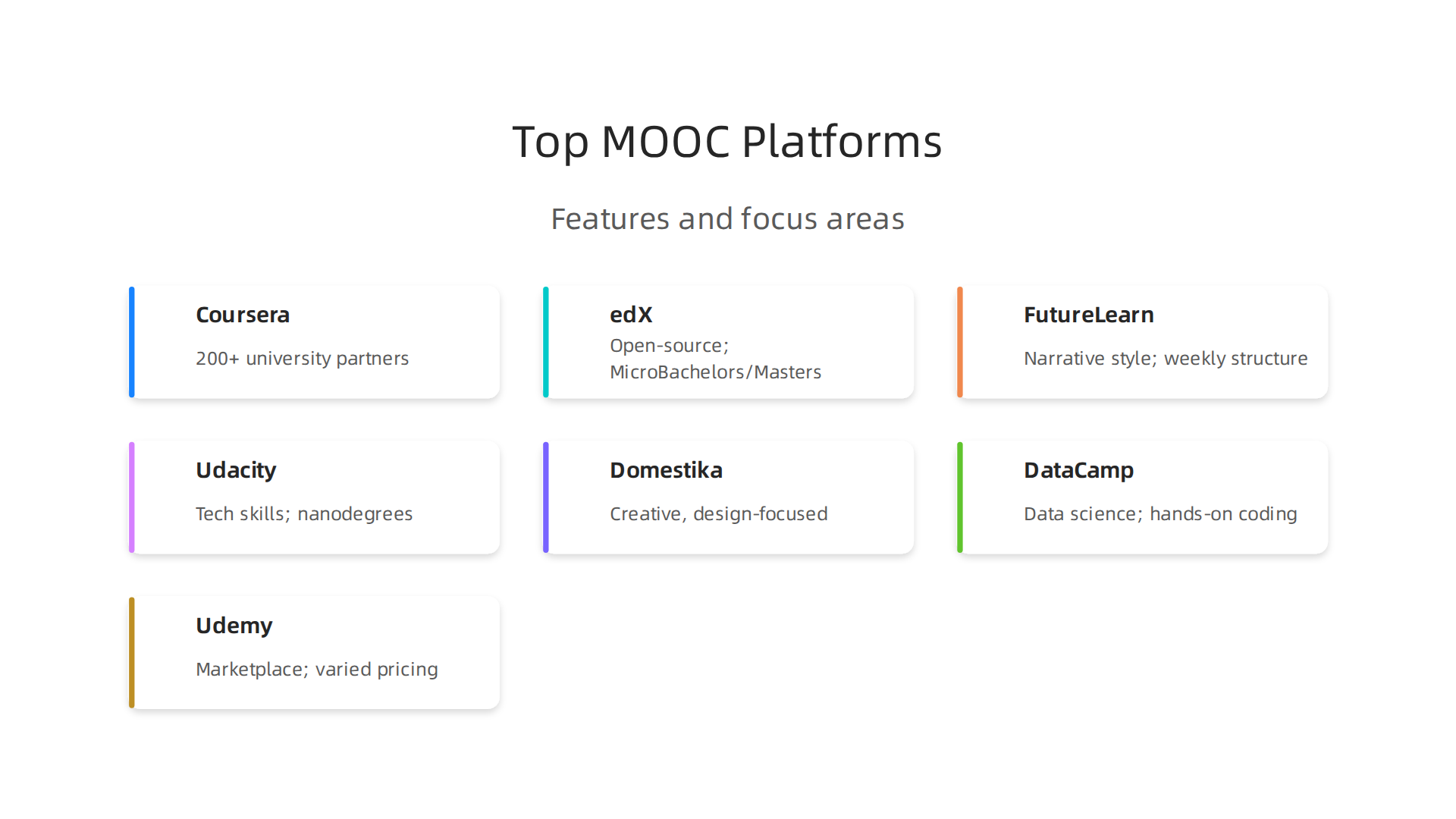
Let’s break down the top options so you can choose the one that fits your learning style and goals.
Coursera remains one of the biggest names. It partners with over 200 top universities and companies like Google and IBM.
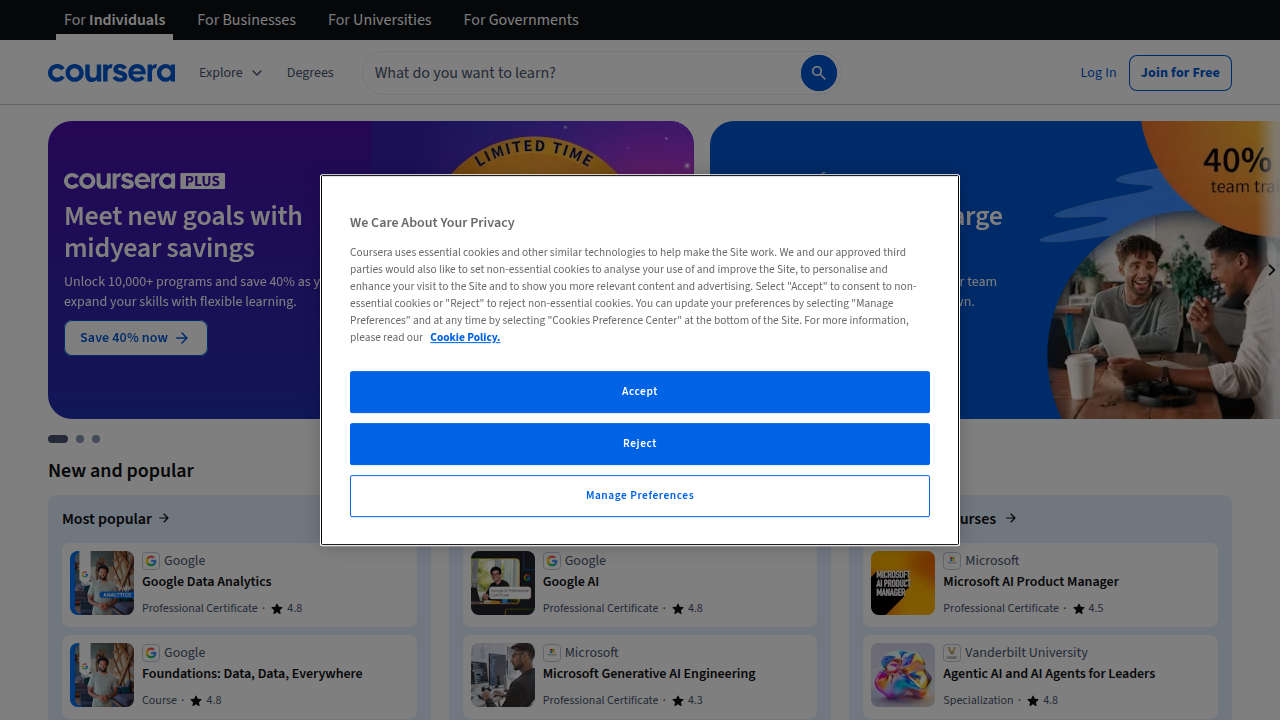
You can take individual courses, earn professional certificates, or even complete a full online degree. The platform is great if you want credentials that carry weight with employers. According to a list of the top online course platforms, Coursera also offers affordable online degrees through its partner schools.
edX stands out because it uses an open-source learning system. That means educators can add custom tools to their courses. edX offers MicroBachelors and MicroMasters programs that count toward college credit. If you want to mix self-paced learning with official university recognition, edX is a solid bet.
FutureLearn takes a different approach. It structures courses through a narrative style with weekly to-do lists. This helps you stay on track without feeling lost. You also get access to real tutors who offer one-on-one support. That human touch makes a big difference when you run into tough material.
Udacity focuses heavily on tech skills. Its nanodegree programs are built with industry partners like Google, Amazon, and Mercedes-Benz. These courses are project-based and designed to prepare you for specific jobs. If your goal is to break into data science, AI, or autonomous systems, Udacity offers a clear path.
Newer niche platforms also deserve attention. Domestika caters to creative professionals who want to learn design, photography, or illustration from experts. DataCamp zeroes in on data science and analytics with hands-on coding exercises. These platforms show how mooc courses have become more specialized over time.
One big player that often gets counted in the MOOC space is Udemy. It’s a marketplace where anyone can create and sell courses. Prices vary widely, and sales often drop courses to just $10 or $15. If you want tips on making the most of Udemy, check out this guide on how to choose a Udemy online course and actually learn from it.
So which platform is right for you? It really depends on your goals. If you want a formal certificate from a top university, go with Coursera or edX. If you prefer a guided weekly schedule with tutor support, try FutureLearn. And if you’re after a specific tech career, Udacity gives you a focused path. Take a look at the course offerings on a few platforms and see which ones match what you want to learn next.
How to Choose the Right MOOC Course for Your Goals
So you know the main platforms now. But how do you actually pick one single mooc courses from thousands of options? It can feel like scrolling through an endless library with no map. Here are the simple steps that help you find the right fit.
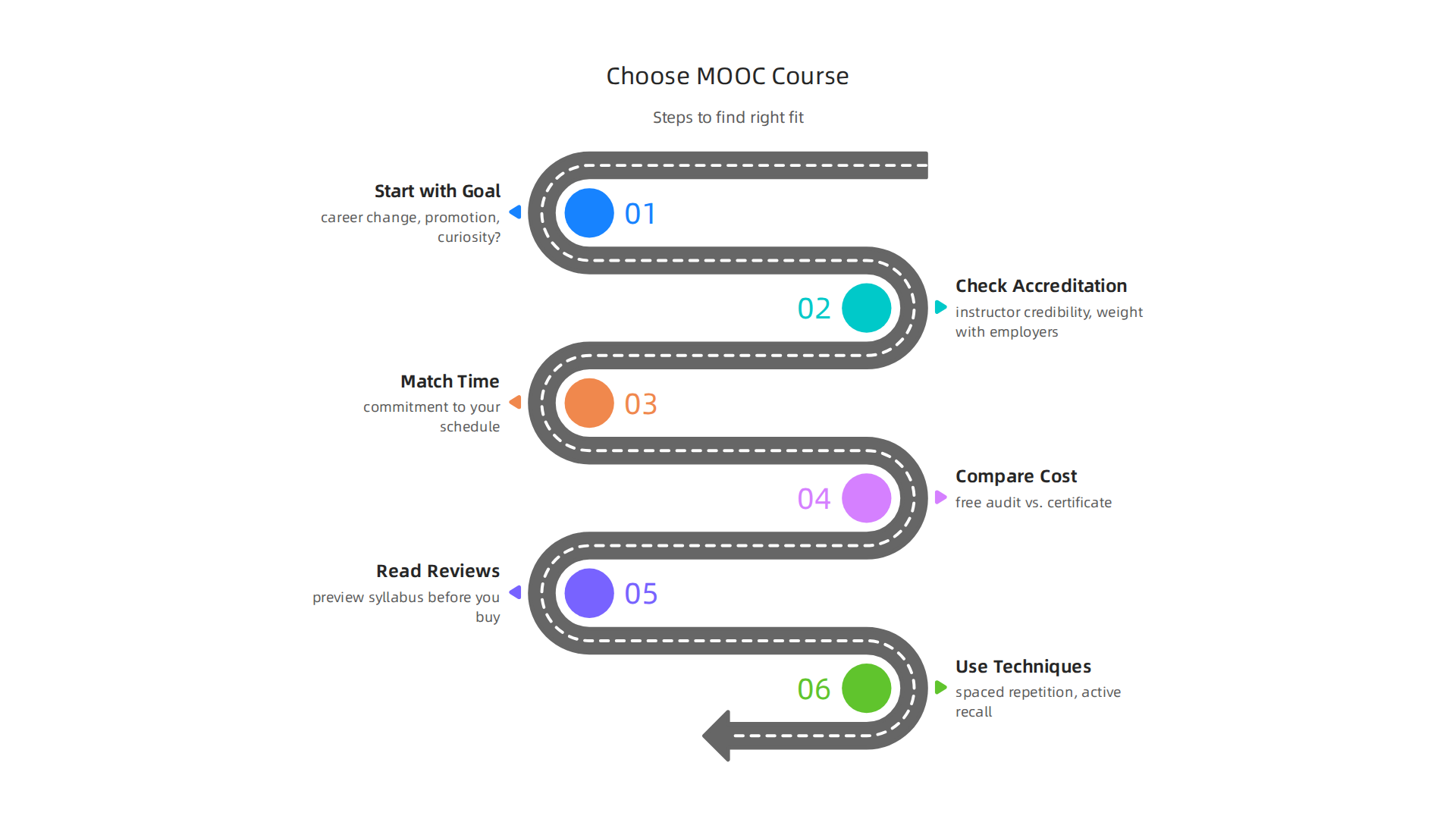
Start with your goal. Are you learning for a career change, a promotion, or just curiosity? If you want to switch into data analytics, look for courses that include hands-on projects and portfolio pieces. If you’re brushing up on a soft skill like communication, a shorter, less structured course might work fine. Write down one clear outcome you want before you even search.
Check accreditation and instructor credibility. Not all certificates carry the same weight. A course from a top university partner can impress hiring managers. An instructor who works at a major company often brings real-world examples that textbooks miss. Look at the instructor’s bio and see if they have practical experience in the field.
Match the time commitment to your schedule. A 12-week course with weekly deadlines might sound great in theory. But if your calendar is already packed, a self-paced option lets you learn without stress. Platforms like FutureLean offer structured weekly to-do lists, while others let you move at your own speed. Real honesty about your available time keeps you from quitting halfway.
Compare the total cost. Many mooc courses are free to audit, but you pay for a certificate or graded assignments. Some platforms like Coursera offer financial aid. Others run frequent sales. Look at what you get for the price. Does the certificate include real assessments or just a completion badge? That matters for your resume.
Read reviews and preview the syllabus before you buy. A course with a flashy description can hide boring lectures or outdated material. Learner reviews often point out if the content is too easy, too hard, or full of fluff. On discussion forums like Reddit, people share honest takes on what worked and what did not. As one user on a popular education subreddit noted, the quality depends more on the individual course than on the platform itself. Preview the syllabus to see the weekly topics and assessments. If the outline feels too shallow or too narrow, keep looking.
One more tip: Look for courses that use evidence-based learning techniques like spaced repetition and active recall. These methods help information stick long after the final quiz. A solid guide on evidence-based learning techniques to improve memory and retention explains how to make your study time count.
Take these steps and you will save hours of frustration. Pick a course that fits your goal, your schedule, and your budget. That simple filter turns a sea of options into one clear choice.
Strategies for Success in Online Learning
You signed up for a great MOOC course. But now the real work begins. How do you actually finish the course and remember what you learned? Many people enroll with excitement and then fade away after a few weeks. It does not have to be that way. A few simple strategies make all the difference.
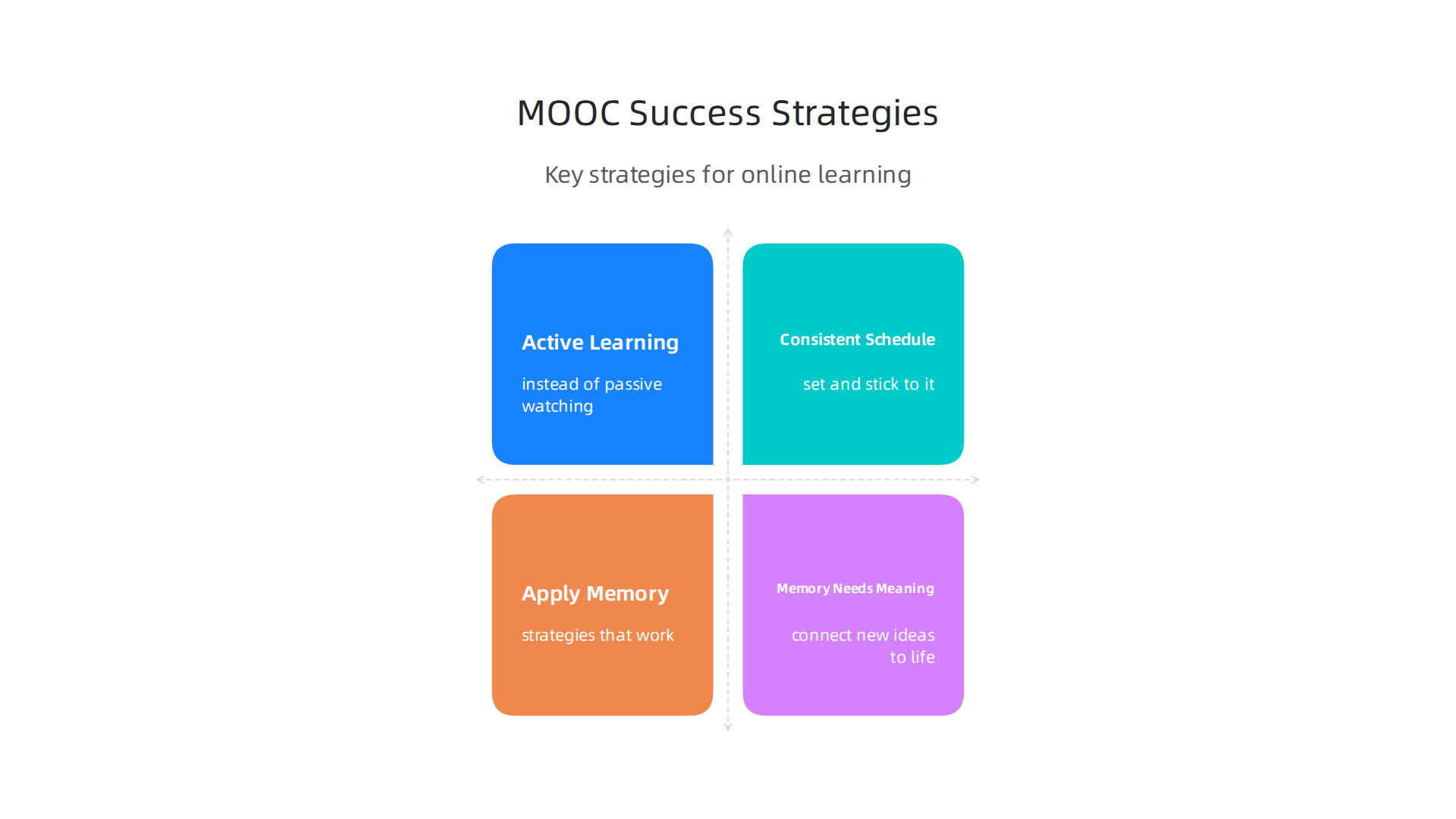
Use active learning instead of passive watching. Watching video lectures feels productive, but your brain barely holds onto that information. The real learning happens when you do something with it. Take handwritten notes. Pause the video and explain the concept out loud. Write down a question you still have. Join the discussion forum and answer someone else’s question. These small actions force your brain to work harder and store the information better.
Research confirms that active techniques like self-quizzing and teaching others are far more effective than rereading or reviewing slides. One powerful method is to test yourself with flashcards or practice questions after each module. You can also create a summary in your own words. If you want to connect with other learners doing the same course, try to build a learning community where you share insights and hold each other accountable.
Set a consistent schedule and stick to it. Online courses give you flexibility, but without structure they become easy to ignore. Pick a specific time each day or week for your course. Treat it like a real class. Even 30 minutes a day is better than cramming for four hours once a month. Use a calendar reminder so you do not forget. Break larger lessons into smaller chunks. This approach, often called chunking, makes complex topics feel manageable. When you finish a study session, write down what you covered and what to review next.
Apply memory strategies that work. Your brain forgets most new information within 24 hours unless you actively reinforce it. Two evidence-based techniques help a lot: spaced repetition and active recall. Spaced repetition means reviewing material at increasing intervals (1 day, 3 days, 7 days, and so on). Active recall means trying to remember the information without looking at your notes. For example, after a video lecture, close the tab and try to write down three key points from memory. Check what you missed. Do this again the next day and again a week later. According to research on proven strategies to improve knowledge retention and learning, retrieval practice is one of the most powerful tools for long-term memory. Combine it with spaced review and you will remember far more with less total study time.
Memory needs meaning, not just repetition. When you connect new ideas to things you already know or to real life examples, your brain holds onto them longer. Make Facts Stick by looking for personal relevance in every lesson you take.
These strategies turn a good course into a life-changing experience. Use them from day one and you will finish stronger than you started.
Accessibility and Inclusivity in MOOCs
Imagine living in a place with no good college nearby. Or relying on a screen reader because you cannot see the video well. MOOC courses promise education for everyone, no matter where you live or what challenges you face. That promise is powerful. But making it real takes work.
On the positive side, MOOCs can reach students who would never get a chance at a traditional university. They bring top-quality lessons at very low cost. Programs like PA Cyber School and Georgia Experience Online have shown that online learning works well for underserved communities. When you add social media for learning, you get discussion groups where students help each other across time zones. This kind of technology integration in education opens doors.
But there are real hurdles. The digital divide is still huge. Many learners lack fast internet or a device that works well. Language is another big barrier. Most MOOC courses are in English, which leaves out millions of talented people. And for students with disabilities, many platforms are hard to use. Research on the performance of students with different accessibility needs shows that when platforms are not designed inclusively, these students struggle more and drop out faster.
The good news? Platforms are listening. They are adopting universal design principles. That means adding captions to videos, making sure screen readers can read the text, and offering content in multiple languages. Some courses now let you adjust font size, color contrast, and playback speed. These small changes make a big difference for everyone. For a deeper look at how tech helps all learners, check out the role of technology in education.
When accessibility is built in from the start, MOOC courses truly become open to all. That is the goal, and every step matters.
Certification and Career Impact
But opening the door is only half the story. Once you finish those MOOC courses, what comes next? For many learners, the goal is a better job. That is where certification makes a big difference.
Today, most major MOOC platforms offer much more than just access to video lectures. They give you a certificate when you finish the work. Some even offer microcredentials and full online degrees. For example, programs from top universities now partner with providers like edX and Coursera. You can earn a verified certificate for a single course or stack them up for a professional certificate. And for bigger goals, some schools now offer full master’s degrees completed entirely through mooc courses.
The big question is: do employers care? The answer is changing fast. In tech fields especially, companies are paying attention. Many hiring managers now see a solid MOOC certificate as proof that you can learn new skills on your own. That matters a lot in areas like data science, web development, and cybersecurity. If you are thinking about picking the right credential, check out our guide on how to choose a Udemy online course to make sure you pick one that fits your career path.
But the return on investment is not the same everywhere. In some fields, a college degree still holds more weight. And not every certificate leads to a pay raise. The value depends on the field and the specific credential. For instance, a verified certificate in programming from a respected university can open doors fast. A general certificate in a soft skill might not do much on its own.
The smart move is to research which certificates employers in your target field actually respect. Talk to people in the industry. Look at job postings. And remember, a certificate is most powerful when you can also show real projects or experience to back it up. Used wisely, MOOC certifications can be a fast, affordable way to prove your skills and move your career forward.

The Science of Memory and Learning in MOOCs
You put in the hours. You watched every video. You passed the final quiz. But two weeks later, you struggle to explain the main ideas. Sound familiar? This is a common problem with mooc courses. You learn a lot fast, but without the right strategies, most of it slips away.
The good news is that memory follows rules. Scientists have studied how our brains store and recall information for over a hundred years. By understanding these rules, you can make your learning stick much longer.
What Is Declarative Memory?
When you learn facts, definitions, and concepts from a mooc course, you are using your declarative memory. This is the part of your memory that holds information you can consciously recall and talk about. For example, remembering the capital of France or the steps of a scientific method uses declarative memory. Almost all academic learning relies on it.
The problem is that declarative memory fades fast if you do not reinforce it. That is where two powerful techniques come in.
Spaced Repetition: Beat the Forgetting Curve
Hermann Ebbinghaus discovered over a century ago that we forget information in a predictable pattern. We lose most of it within days unless we review it. But if you space out your reviews at the right times, the information moves into long-term memory.
This is called spaced repetition. Instead of cramming the night before a test, you review the material after one day, then three days, then a week, then two weeks. Each review strengthens the neural pathways in your brain.
Many successful learners use a simple schedule: learn on day one, review on day two, review again on day four, then day eleven, then day twenty-five. You can also use apps that automate this for you. This method is one of the most proven strategies to improve knowledge retention available.
Active Recall: Test Yourself Often
Reading a textbook or watching a video feels productive. But it is passive. Your brain does not work hard to retrieve the information. Active recall is the opposite. You force your brain to pull up the answer from memory.
Flashing cards, practice quizzes, and trying to explain a concept without looking at notes are all forms of active recall. Research shows that students who use active recall remember much more than those who just reread. One study found that testing yourself leads to 80% retention after a week compared to only 34% for passive review, according to 6 science-based study skills for memory retention.
The best part is that you can use active recall with any mooc course. At the end of each module, close the video and try to summarize the key points in your own words. Then check yourself. This simple habit can double what you remember.
How to Apply This to Your MOOC Courses
Here is a practical plan:
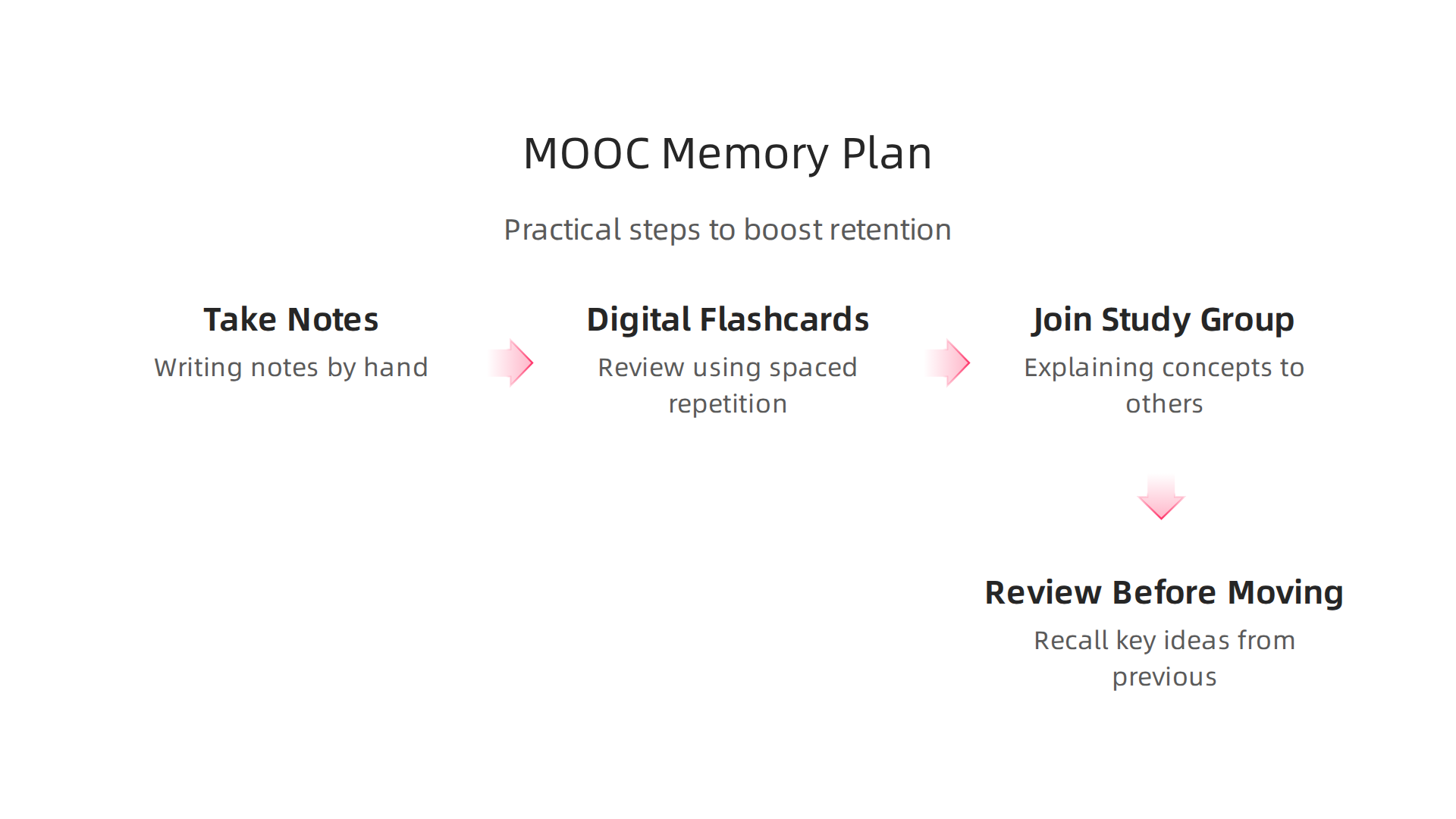
- Take notes by hand. Writing notes by hand forces you to process and reframe information. It is more effective than typing.
- Use digital flashcards. Create a set of flashcards for each module. Review them using spaced repetition.
- Join a study group. Explaining concepts to others forces active recall. You can use social media for learning by joining discussion forums or group chats.
- Review before you move on. Before starting a new module, spend five minutes recalling the key ideas from the previous one.
These techniques work whether you are taking MOOCs for fun, career growth, or as part of a pa cyber school program. They also fit well with the technology integration in education trend, since many apps and platforms now include built-in spaced repetition and quiz features.
Memory Needs Meaning, Not Just Repetition
Here is a final thought. Rote repetition helps, but connecting new information to things you already know makes it stick even more. When you take a mooc course, try to relate each new concept to your own life or past experiences. Ask yourself, "How does this apply to my job, my hobbies, or the world around me?" This deep processing strengthens memory more than any single review session.
Understanding how your memory works is like having a secret weapon. It turns passive watching into real, lasting learning. Use these strategies, and your next mooc course will stay with you for years, not days. If you want to dive deeper into how evidence-based learning techniques to improve memory and retention work, check out that guide for more practical tips.
Future Trends in MOOC Education
The world of mooc courses is changing fast. What started as simple video lectures is now something much bigger. In 2026, several major trends are reshaping how these courses work and what they offer. Understanding these trends can help you pick the right courses and get the most out of your learning.
Artificial Intelligence Is Personalizing Learning
One of the biggest changes is the rise of AI. Platforms now use machine learning to adapt content to your skill level and pace. If you struggle with a topic, the system gives you extra practice. If you master it quickly, you move ahead. This makes learning more efficient and less frustrating. AI also helps educators by handling grading, so they can focus on coaching. You can see how this trend is unfolding in the latest trends in online education for 2026.
Microcredentials and Stackable Degrees Are Gaining Traction
Another major trend is the growth of microcredentials. These are short, focused certifications that prove you have a specific skill. Instead of taking a full degree, you can earn a series of microcredentials that stack into a larger qualification. Employers are taking them seriously. In fact, 96% of employers say microcredentials strengthen a job application. This is part of the larger shift toward skills-first education. You can read more about the expansion of microcredentials and digital badges in 2026.
Corporate Partnerships Create Real-World Training
Big companies are now partnering with MOOC platforms to build courses that match their workforce needs. These partnerships create tailored upskilling programs. They focus on practical skills like critical thinking, problem solving, and AI literacy. This means the mooc courses you take today can lead directly to better job opportunities. It also reflects the broader technology integration in education trend, where learning and work become more connected.
If you want to explore how technology is changing education even further, check out this guide on the role of technology in education. It breaks down how digital tools can help you learn smarter in 2026 and beyond.
Summary
This article explains what MOOC courses are, how they evolved from free open classes into credentialed, career-focused programs, and why they matter for learners and employers in 2026. It compares major platforms (Coursera, edX, Udacity and niche providers), shows how to choose courses based on goals, time, cost, and instructor credibility, and offers practical steps to avoid overwhelm. The piece also walks through evidence-based learning strategies—active recall, spaced repetition, chunking—and concrete study habits that help you finish courses and retain knowledge. Accessibility and inclusion are covered, along with the limits of the digital divide and how platforms are improving captions, languages, and universal design. You’ll learn which certificates carry weight, how to showcase real projects, and when microcredentials make sense. Finally, the article looks ahead to trends like AI personalization, corporate partnerships, and stackable credentials that are reshaping online learning.
Discover more on memory and learning